The pet shop buys its beloved dog, not to think of it as a “week dog” and takes it home for a few days, is beset by diseases such as tiny, dog-pest, and even endangers the life of the pet ... Not only does it cause great psychological harm to the pet owner, but it is even more difficult for consumers to defend their rights.

The dog gets sick soon after he's bought it.
It is not easy to make a determination to have a dog, and when the dog who leads the merchant's promise of “health” comes home, he sees the pain of his illness, Li Lok's heart cut.
In February of this year, citizen Lee Lok found a “Bear” pet dog in a pet store at the City of Xi'an, “when he bought it, the puppy looked so cute and alive, it did not look like the disease, the live shop had a quick test paper test, and there were no symptoms of disease”. Lee Lok said the dog spent $1,200 on itself and bought $800 of dog food in the shop at the advice of the shop manager. She was very worried that, in the absence of a few days of careful care at home, the dog was in a state of frequent coughing and very poor mental state, “I consulted with the merchants, who said it was due to weather changes, and asked me to buy a little cold medicine for the puppy, but after two or three days of feeding, it became worse”.
Lee Lok said that he and his family had taken the dog to a nearby pet hospital and, after examination, had been told by the pet doctor that the dog was suffering from a “dog plague”. She learned that early symptoms of canine plague included cough, vomiting, fever and lack of appetite, and were also latent: “We have been kept at home and never left, so it is unlikely that we will be infected by other dogs.” Lee Lok said there was a problem with the dog before buying it.
Promised pet dogs were vaccinated.
The vaccine was delayed.
In a chat between Lee Lorell and the businessman, "Sian pet wholesale" (cats, dogs), Lee Lorell clearly told each other, "Did your dog have a vaccine or not, and if we hadn't, we'd hit again, and you tell us the truth, so we wouldn't have to do antibody tests to pump blood." And the buyer's response is, "One shot is a few dozen, and we must have." And it says, "There's money for an antibody test, it's better to give the dog two more shots."
Lee Lok said that when buying a dog, the merchant had stated that he had been given triple vaccine, including canine fever, tiny viruses and gland viruses, “I asked for a vaccine book from the merchant, said to mail it to me later, but I seized it. After this situation, I kept pressing the merchants for a vaccine book, but the other guy didn't give it to me so far.
In the contract for the sale of pets between the parties, the number of vaccines was shown three times, but the type of vaccine could not be specified in fonts, and the contract also provided that: “A party (buyer) has an obligation to maintain and direct the purchase of pets in accordance with the rearing methods provided by B (seller) for improper personal feeding, in the event of illness or death as a result of unreasonable behaviour, such as a bathing or cold or an outbreak of the virus; the other party is not responsible; because it is a living commodity, it has artificial factors that cannot be predicted or conceal a sudden factor, and once sold, it does not recant.”
Lee Lok said that she was also the first to have a dog, and that she was overwhelmed by the situation, which was then dealt with in consultation with the merchants, and that the agreement to send the dog to a pet hospital with which the buyer contacted him had cost thousands of dollars, time and effort, and had finally saved the dog.
“I later learned online that many of the citizens were in this shop after they bought dogs, that the dogs were ill, that many of them had their first dog, and that they had little experience of it, and that they wanted to remind you of it.”
Shopkeeper: The dog's fine.
There's no way to make sure the dog doesn't get sick later.
In a social APP search, journalists found that a number of citizens had indicated that they had purchased suspected “week dogs” at the pet shop. A number of netizens have said: “When the dog was bought in this shop, there were signs such as coughing in less than two days and found to be infected with the virus ...” and that the merchants claimed that the dog had been vaccinated before the sale, but in fact the vaccine had never been given.
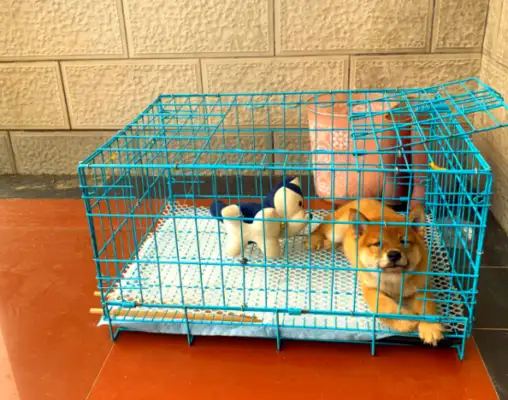
On the afternoon of 22 June, the director of the pet shop told the reporters that they had taken over in April, and that he also knew a number of customers who had described the illness of buying a dog. “Some dog vaccines were not finished, were weak, and the owner did not take care of them, and were prone to outbreaks of disease, in addition to the recent cold and hot weather, which made dogs as vulnerable as men.” The officer-in-charge stated that there was no deliberate sale of sick dogs and that they also had long-term businesses to do. “If you have problems buying a dog, you can take it to the hospital for testing, and if you have problems, I can return it or change it, but you can't say that after some time you've gone home and raised it, the dog has a problem saying I sold it.”
The officer-in-charge said that many dogs were taken from the doghouse, that they would supply them with a vaccine, that they could not, and that the pet shop had no capacity to provide and issue the vaccine. “We all have a contract to test them with trial paper before leaving the store, to make sure that the dog is okay, and to help the client manage it, but there is no way to make sure that the later dog is not sick.”
Professionals: Buying dogs and raising dogs is impulsive.
Do more homework to avoid prejudice.
What's the point of buying a dog that's still alive, and getting sick and dying just a few days after he comes home? How can we avoid buying such dogs?
A doctor at a pet hospital described “week dog” as a larvae who, when bought home, usually had a sudden illness or even died within a week. “Some traders enter dogs from dogs or farms, because they used to live in overcrowded conditions and in poor hygiene. Many doggies are already infected with infectious diseases such as canine fever and small diseases, but in order to sell them successfully, some doggies hide the symptoms that dogs may exhibit by injecting drugs such as stimulants, and some do not look at the dogs at the same time and turn the risk onto consumers.” The doctor also stated that it was impossible to detect the virus with test paper during the incubation period, and that the outbreak would take place sooner or later when the dog was overstretched or stimulated. Moreover, even if the dog had already been vaccinated before it was purchased, the vaccine would take time to produce immunity and would not eliminate the risk of infection.
“Many people have seen the cute look of a dog, and have been impulsive to buy it without having had experience or knowledge of it, which in fact poses a danger to themselves.” The worker reminds that dog-buying means taking responsibility for its entire life, and that citizens buy dogs by learning to make a preliminary assessment of whether the dog's eyes and nose are clear or not, whether the nose is wet or cold during its activities, whether it is in good mental condition, etc.
> Related News
Is healthy in a pet trade necessary for delivery?
How does the law protect consumer rights when pets trade with “health hazards”? Recently, a case of a contract dispute for the purchase and sale of pets was heard by the New City Court in Sian.
The plaintiff, Zheng Yi (buyer), purchased the pet dog from the defendant, Zheng Chi (seller) at a price of $800 through the idle fish platform, and the parties agreed to trade it offline. Before the deal, Zheng pointed out that the pet dog had completed internal and external deworming, rabies vaccination and seedlings. At the trading site, Zheng Zheng asked to see the relevant information on the confirmation of the vaccine, but Zheng Zheng requested an extension of the examination on the grounds that the vaccine was still in the pet hospital, and paid for the purchase of dogs and received them back. During the night, when the dog was sick, such as vomiting, the plaintiff informed the defendant in a timely manner and questioned him that he had not responded and then deleted the plaintiff ' s tweets, which prevented him from contacting.
On the evening of the following day, when a dog is self-testing for minor positiveness, the dog is taken to the pet hospital for medical attention, and the dog is diagnosed for minor positiveness.
The court found that the case was a contract dispute for the purchase and sale of pet dogs and that the sale of healthy pet dogs was a fundamental obligation of the seller. On several occasions, the plaintiff confirmed to the defendant, before and after the purchase, whether the dog had been vaccinated and asked to produce a vaccine book, etc., but the defendant failed to do so. In the light of the evidence in the present case, the time taken by the dog to detect the infection was only two days from the time of delivery, and it can be concluded that the dog was infected at the time of sale. The plaintiff ' s request that the defendant return the purchase price of the pet dog paid at $800 should be supported. The cost of treating pet dogs is a loss resulting from the defendant ' s breach of contract, which is borne by the defendant.
The judge held that health should be a necessary condition for the delivery of pets when the contract was for living animals such as cats and dogs. If the seller fails to deliver healthy pets to the buyer due to wilful or gross negligence, where the buyer has done its due diligence obligation, the buyer has the right to require the seller to refund the purchase costs of the pets and to pay the reasonable expenses incurred in treating the pets. If the seller is unable to prove the health of the pet at the time of sale at the time of sale of live pets, it should bear the corresponding burden of security for quality defects. Thus, in the case of a pet trade, the seller should provide and retain the pet vaccine book or health certificate to the buyer in a timely manner, choose the appropriate way to deliver the pet to the buyer, and avoid unnecessary loss to both parties as the pet is injured during the transport.