No.: PET6520
English name: Cavia porcellus
Character: Wimble
National origin: Peru, Brazil
Vulnerability: gastrointestinal disease
Life: 10-year brief description of the species of hairy rats
Long-rolled carcasses, also known as long-rolled Dutch pigs and long-rolled porpoises, are located in Peru, Brazil, etc. Dolphin is a small pet species that is now common and is loved and raised by many.
Programme: Lactation Programme
C: Dinosaurs
Latin name: Cavia porcellus
Context: Animals
I'm not going anywhere.
Yes: Dinosaurs are morphous in the shape of long-twistered rats
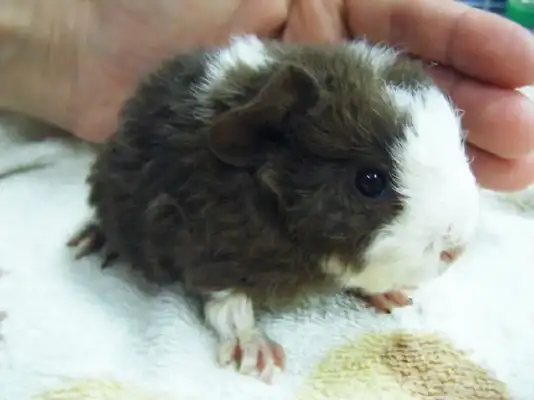
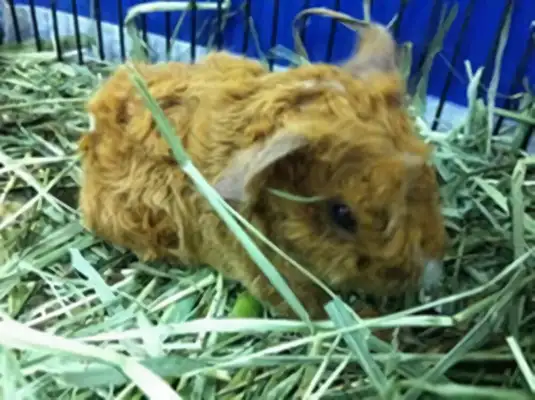
Long-rolled carcasses are a relatively rare type of carcasses, with their specific long hairs with curls, which may vary from care to care, but their habits remain the same as those of the average carcasses.
Long-twisted carcasses length 22-34 cm, weight 400-700 g, short, thick and round, large and bright, large and bright, round ears, split upper lips, small ears; short limbs, four toes to the front, three toes to the back, no tails.
1. Vitamin C cannot be synthesized in the body (hepatic and intestine) and the required vitamin C must come from feed. The lack of synthetic vitamin C enzymes in humans, primates and guinea pigs makes it necessary to add vitamin C or fresh vegetables to feed or feed in guinea pigs, and the presence of a sepsis when vitamin C is lacking, one of the symptoms of which is semi-paralysing of the back limbs, especially during winter, and resupply of vitamin C, disappears.
2. Earbone is sensitive to hearing experiments, and guinea pigs are the most sensitive to 700-2000 week/second pure sound, such as the use of 2000 week/sec audio to observe necin toxicity studies.
3. Low oxygen resistance, four times greater than in mice and two times more than in rats.
4. Sensitivity to the fungus of tuberculosis, Bacillus burlesque, hook-end helix, Maltese thermal brucellus (Brucella melitius), diphtheria bacterium, Q thermal virus, Lymphocytic Chorimingitis virus, etc.
Dinosaurs are prone to psychotic reactions, and the sero-diagnostic “remedial” is made of the sero-demons.
6. The entire breast of the guinea pigs is in the neck and lies in the middle of the horn of the lower cheek to the entrance of the chest, with two glands that are bright, light yellow, thinly shaped into a cylindrical, full-leaved lobe. The liver is divided into four main leaves and four small leaves. The lung is divided into seven leaves, and the right lung is four leaves and three leaves.
7. The sex cycle of guinea pigs is 16.5 (12-18 days), gestation 68 (62-72) days, breastfeeding 21 days and childbirth 3.5 (1-6 days) only, full-year, multi-temporal and post-natal. The animal cycle is divided into two main categories: multi-cycle (a year with multiple cycles) and single cycle (a year with one-time cycles). With the exception of primates, there are significant species-specific differences in the reproductive cycles of all mammals, with some animals such as dogs, cats, pigs, horses, cattle and so on only during the reproductive season, while the rest of the reproductive organs are in a shrinking state of rest, but animals such as mice, rats, guinea pigs and guinea pigs normally show a biocycle cycle throughout the year. Experimental animals in guinea pigs and mice, rats, rats and rabbits have a puerperal period, i.e., an animal is likely to become pregnant within 48 hours or at some time during the breastfeeding period, which is described as puerperal or abnormal.
8. Dinosaur normal body temperature 38.6 (37.8 ~39.5)°C, heart rate 280 (200 ~360) times/min, breathing frequency 90 (69 ~104) times/min, tide rate 1.8 (1.0 ~ 3.9) ml, air rate 16 ml (10 ~ 28)/min, oxygen consumption 816 mm3/g body weight, blood pressure 75 - 120 mm Hg, red cell total 5.6 (4.5 ~ 7.0) million/mm3), blood protein 14.4 (11 ~ 16.5) g/100 ml, white cell total 5000 ~ 6,000 mm3, small plate 116,000/mm3, plasma total protein 5.4 (5.0 ~5.6 %), blood capacity 6.4 per cent of body weight, chromosomal body 32, 5 ~ 7 years. The point of long-rolled carnival.
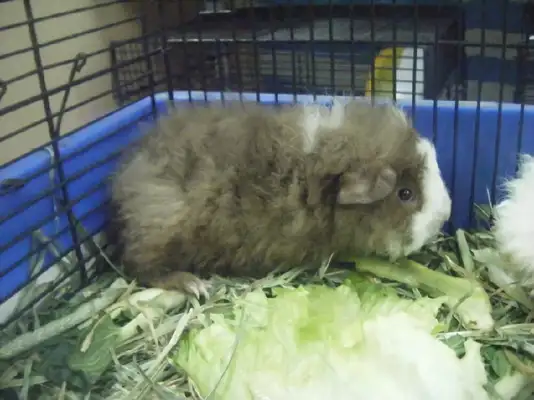
Long-rolled carcasses, although of a rat type, are also spirited animals, so they are often interacted with during their breeding. Attention should also be paid to the unique hair cover of long-twirl rats during breeding, often combing to prevent knots.
I. Home of a long-rolled caramel rat:
It doesn't matter if the cage is not tall, but it must be wide! The cage is above 20 centimeters and no ceiling. The material should preferably be synthetic material that is not eaten. The bottom of the cage should be changed to newspapers or pet carpets. Soft wood crumbs are bad for the respiratory organs of long-rolled gill rats, and better not use them. And also, it's important to keep warm, because long-rolled owls are afraid of the heat. Every day, a long-twirling owl gets out of a cage, or it'll get bored.
ii. Play with a long-rolled owl rat:
Long-rolled skyhogs like to play in spacious places, so once a day, every half hour, let them play. Keep an eye on things like wire plugs in the room, and don't let the long-twirl squirt bite, or it'll be a terrible thing! Long-rolled carcasses.
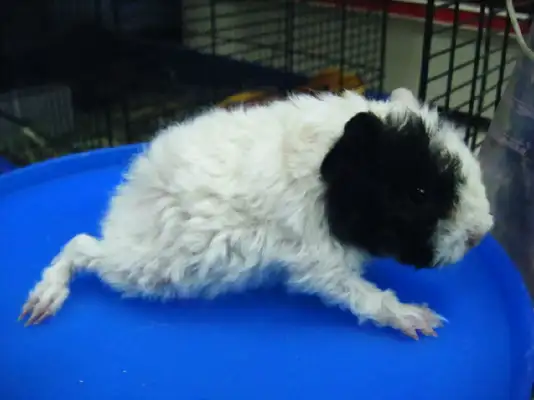
It was very important to raise long-rolled carcasses, so that they could stay warm in the summer and stay warm in the cold winter. The cages of long-rolled carcasses must be carefully cleaned on a regular basis, otherwise bacteria are easy to breed.
It doesn't matter if the cages are not tall, but they must be wide. The cage is above 20 centimeters and no ceiling. The material should preferably be synthetic material that is not eaten. The bottom of the cage should be changed to newspapers or pet carpets. Soft wood crumbs are bad for the respiratory organs of long-rolled gill rats, and better not use them. And also, it's important to keep warm, because long-rolled owls are afraid of the heat. Every day, a long-twirling owl gets out of a cage, or it'll get bored.
When the air conditioner is blown, the long curly skyhog is kept as far away as possible and without wind. Long-rolled carcasses are animals who are afraid of cold and heat and often blow air conditioning to the detriment of their health and normal metabolism. So maybe less air conditioning. Get enough water and food, and the summer can be a good one. A friend who grows or reverses a hair can also send a long-twirl squirt to a pet store to make it short or help the long-twirl squirt cool. I'll feed you something.
Due to the inability of long-rolled carcasses to synthesize their own vitamin c properties, the owner needs to pay very close attention to vitamin c supplementing them at the time of rearing to help the nutrition balance of long-rolled carcasses. For your information, the young editor has prepared the food points for you at all ages.
Infant rat (birth ~ 8 months)
When there's a small pet in the house, it's usually food that worries the most.
As a matter of fact, as a result of leaving the mother to feed herself (early pregnancy), the demand for breast milk is not as high as that of rabbits or hamsters, and a proper supply of food is usually able to keep the baby rats healthy.
In the case of fresh vegetables and vegetables, make sure that they are given in small quantities and that they are not given to a pile of things he cannot eat at once because of love or fear, so as to avoid the habit of picking food. In addition, stiffer roots can be cut into small blocks (and it is okay not to cut).
In the case of pastures, several separate meals can be given in small quantities (the carnival rat is a grass-eating animal without fear of non-acceptance).
In the case of feed, young rats need higher nutrients than adult rats in the long term, and provide feed for the growth of the aluminum component (a small mixture can be used if they feel they need it). When mixed feed is used, note that larger and harder particles, such as hard corn, are to be removed in order to prevent small squirts from choked; compressed hard feed (pellet) may not be too big to prevent young mice from refusing to eat because they eat.
Feeders can mix a small amount of rat feed in larvae, so that small pyramids try to bite the feed, i.e. the female, so that it is more likely to succeed in future changes.
Newly purchased little Tiny Tiny Rats do not eat, leaving their mothers too early and changing their environment with mental stress is the main factor, and food incompatibilities are the second most problematic.
II. rat conversion period in mice (eight months - one year)
Detonated larvae feed (or very little) mainly for larvae. At the same time, in order to consider the conversion of feed to rats, some rat feed may be put in the larvae at the discretion (preparation for conversion to rat feed began in the fifth year).
Increased supplies of fresh vegetables, vegetables and pastures are available. Harder roots can be given either directly or cut off.
iii. Rats (1-4 years)
There are plenty of herbs, a modest quantity of Timothy feed (or a drop in herbs) and fresh vegetables and vegetables.
Rats (four years)
Days of age do not have the strength to grow up, and the nutrients required are naturally less than those of adults.
For hogs with reduced chewing capacity and absorption of nutrients, many fresh vegetables and vegetables, a modest amount of pasture and a small amount of feed are the preferred options.
In addition, a small amount of vitamin C is added every day, which makes it healthier for God to live.