Designation: PET3596
English name: Black Tiger Snake
Origin: Australia
Vulnerability: enteric and parasitic diseases
Life: An overview of the Australian tiger snake species for about 20 years
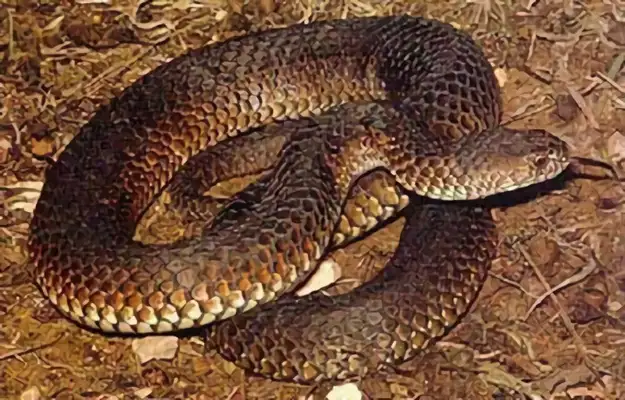
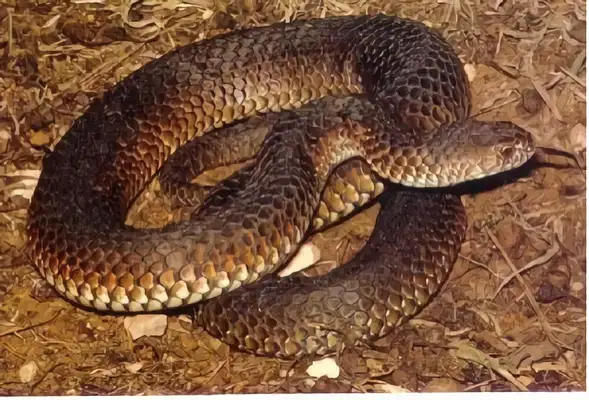
Australia ' s Tiger Snake is one of the top 10 snakes in Australia, and has a strong concentration of neurotoxins, condensants, solubles and muscular toxins specific to snakes, which are among the world ' s strongest snakes and the eighth most toxic. Elapidae, known as Notechis scutatus, from Australia. Its venom contains coagulant and neuroparalytic agents, often killing people. Before the attack, the head and neck swelled into flat form (cobra mode). Viper species are common, with a high number of marshlands in the South. It has many colours, usually brown and yellow stripes. Average length 1.2 m (4 m). In general, tiger snakes are not aggressive and, if they can do so, they will opt for escape instead of attack. If the threat is imminent, they will slow down their muscles, lift up their heads and be ready for bites at any time, and sometimes they will make hissings to intimidate their opponents.
Chinese literary name: Australia Viper
Chinese alias: Australian Tiger Snake
English name: Black Tiger Snake
Two words: Notechis.sp
Context: Animals
Gate: Phylum Chordata
Amen: Vertebrata
Synopsis: Reptilia
Objective: Squamata
Asia: Snakes
Section: Elapidae, also known as Elapidae
Aiko: Elapinae
Notechis
Australasia.
Distribution: Australian Tiger Snake Exterior Characteristics
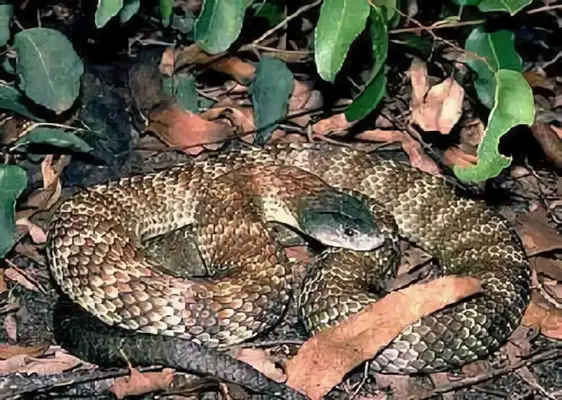
The Australian tiger snake is about 1.3 to 1.6 metres long. Snakes are thick, broad-headed, light orange or tea coloured and accompanied by yellow green. Grey or orange brown rings, born in semi-arid areas of Australia and Tasmania. Tiger snakes are aggressive and contain highly venom and are the main species of snakes that cause death. Tiger snakes are a large-sized viper in the subtropical region of Australia, and they are a very distinct group in the subtropical region of Australia, where the outer, colour and size of the same species can be quite large. The color of some snakes changes with seasonality. The body of the common viper is 1.45 metres long, with broad tattoos and a clear light difference. Viper colours are broadly olive colour, dark yellow, orange brown and black, and the abdomen are lighter. Viper kills prey with toxins, and it also bites the aggressor in an aggressive manner and has the capacity to kill humanity.
Australia ' s tiger snakes are able to withstand low temperatures, but for them, the best moments of activity are warmer nights, with female snakes having 12 to 40 young snakes at a time, with the exception of a record of 64 young snakes having been born at a time. In general, tiger snakes are not aggressive and, if they can do so, they will opt for escape instead of attack. Australasia Tiger Snake Feeding Point
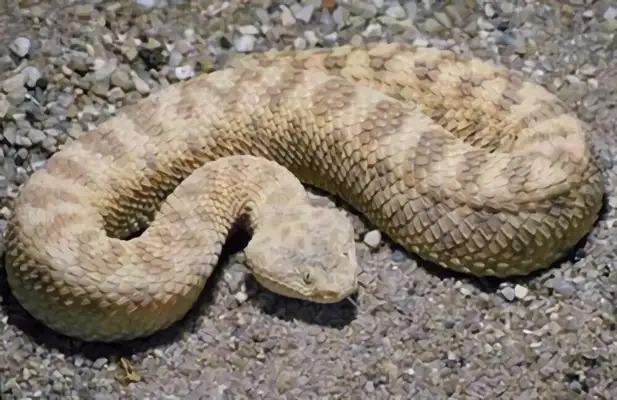
Australia ' s tiger snakes are broadly coloured in olive colours, dark yellow, orange brown and black, and are relatively light-coloured. Viper kills prey with toxins, and it also bites the aggressor in an aggressive manner and has the capacity to kill humanity. They are able to withstand low temperatures, but the best moments of activity are warmer nights for tigers, and female snakes can give birth to 12 to 40 young snakes at a time. Only one example is recorded of an Eastern snake that once gave birth to 64 young snakes. In general, tiger snakes are not aggressive and, if they can do so, they will opt for escape instead of attack. If the threat is imminent, they will slow down their muscles, lift up their heads and be ready for bites at any time, and sometimes they will make hissings to intimidate their opponents. Although home to southern Australia, Australian tiger snakes are in fact quite widely distributed.
Viper-occupying neurotoxins, condensants, solubles and muscular toxins specific to snakes are among the most toxic in the world. After being bitten by a snake, in addition to the severe pain in the wound, the toxins that are carried over from the vicinity of the wound cause pain to the feet and neck, and the body suffers from paralysis and sweat, and then begins to suffer from respiratory difficulties and partial paralysis. Even with effective antivenoms, the fatality rate is as high as 45% if not treated immediately.
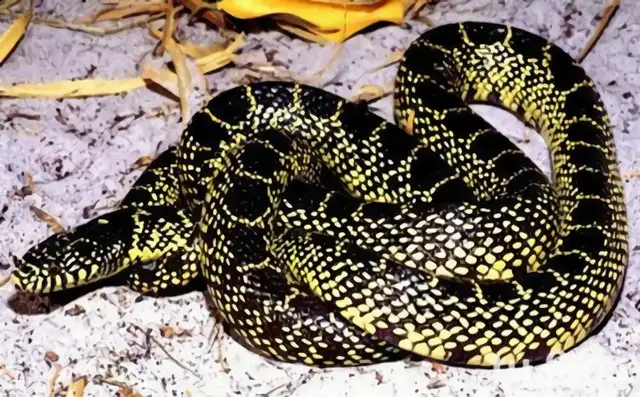
Australia ' s tiger snakes are born in semi-arid areas of Australia and Tasmania and live in sand dunes, beaches, grass, etc., and feed amphibians, birds and small mammals, and are born. Tiger snakes are aggressive and contain highly venom and are the main species of snakes that cause death. Tiger snakes are a large-sized viper in the subtropical region of Australia, and they are a very distinct group in the subtropical region of Australia, where the outer, colour and size of the same species can be quite large. The color of some snakes changes with seasonality. The treatments that were bitten by snakes in Australia are more or less the same. In general, “pressure stabilization” (Pressure Immobilization Method) is used initially for treatment to effectively curb the spread of snake poison in the lymphosystem.
The treatment was accompanied by broad bandages close to the bite wound, and the entire limb (hand or foot) was tightly wrapped and fixed with wooden plates. If there are traces near a snake bite wound, snake venom may be identified and can be treated in a targeted manner. The presence of anti-ventilants (or serum) has significantly reduced the fatality rate of bites by snakes, and the current number of deaths caused by snake bites has been exceeded by another viper brown snake. Australian Tiger Snake Food Requirements
Australia ' s tiger snakes feed amphibians, birds and small mammals and are born. They are born in Australia, and their venoms contain coagulants and neuroparalytics, often killing people. Before the attack, the head and neck swelled into flat form (cobra mode). Viper species are common, with a high number of marshlands in the South. It has many colours, usually brown and yellow stripes. Average length 1.2 m (4 m). For tiger snakes, the best moments of activity are warmer nights, and female snakes can give birth to 12 to 40 young snakes at a time, with the exception of a record of 64 young snakes once. In general, tiger snakes are not aggressive and, if they can do so, they will opt for escape instead of attack.
Viper-occupying neurotoxins, condensants, solubles and muscular toxins specific to snakes are among the most toxic in the world. After being bitten by a snake, in addition to the severe pain in the wound, the toxins that are carried over from the vicinity of the wound cause pain to the feet and neck, and the body suffers from paralysis and sweat, and then begins to suffer from respiratory difficulties and partial paralysis. Even with effective antivenoms, the fatality rate is as high as 45 per cent if it is not treated immediately.