In recent years, in addition to the challenges of climate change, the farmers have had to guard against “poachers”, who are not common thieves but monkeys.
Monkey Taiwan (academic name: Macaca cycropis): Adults are approximately 60 cm in length and weigh about 5-12 kg. There are two horny, thick skin mats, known as “tips” or “tips”, in the hips, which facilitate rest and activity on sharp coral reef rocks or rough rocks, trees and trunks.
Taiwan's monkeys have about three years of human intelligence, imitation and learning, sensitivity and speed. The groceries consist of 85 sections of 300 species, mainly fruit.
In fact, it started with firecrackers to drive away monkeys, but soon the smart monkeys became used to it, became less effective, used traps to deal with monkeys, was a bit cruel, and could easily be accidentally injured, as well as by animals like Taiwan’s Black Bear.
The most important thing is that monkeys are too smart to learn and that traps may not be effective, so the winner Hu Qi-chun does not try to use the strength of the Wang Star against Taiwan.
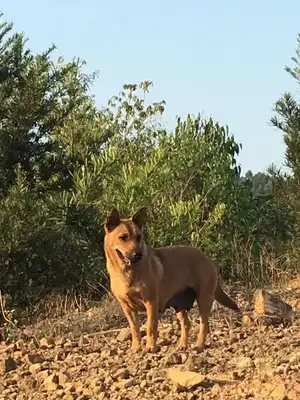
Everyone knows that one of the best dogs is a home home home, and in the big cities we may not need dogs to bark and chase some other animals, but in some cases we still need the Wangs to help us watch the home.
According to Hu, there are three monkeys in the area, some three or four days before the community arrives in the morning and at night to feed, all of which are the weakest periods of security for farmers and are very painful when there are no dogs to look after them.
According to Hu, nearly one hectare of orchards are open spaces, each dog is not able to run around and avoid the possibility of bites, and there is a fixed range of patrols to use interlocking pipes to tie wires to the dog ' s body, to keep the dog in a fixed area, to keep the length of the ropes, and to cross-protect and serve the purpose of warning eviction.
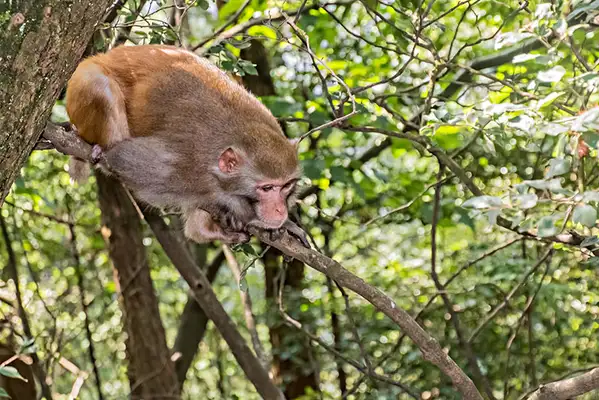
Hu Gui-chun told journalists that he had placed 20 dogs around an orchard of 1 hectare to guard it, more actuarially per patrol and cross-protective, and had reduced the losses caused by monkeys from 40 to 20 per cent, which had been very good.
The dog feed costs between $80 and $10,000 a month, sometimes sick and has to go to the vet, spends more than $100,000 a year, prepares the dog for shades of the sun and leaves it on a regular rotational basis, and takes care of it, but the dog care is very effective and the farmer is very grateful for the dog.