Designation: PET4637
English name: China host
Vulnerability: cartilage, parasites
Life Life: 6-7 years China ' s Water Dragon Varieties Profile
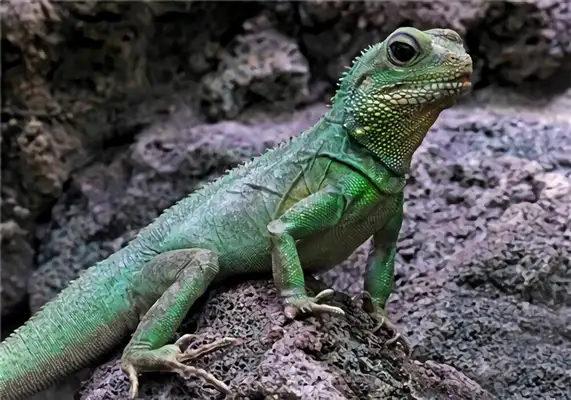
China host is a very gentle lizard. Mainly in eastern Thailand, Viet Nam, Cambodia, Indo-China and southern China. If you like raising a soft, swimming lizard, the Chinese water dragon is the ideal option.
Chinese literary name: China Water Dragon
English name: China host
Chinese alias Green Water Dragon, Indonesian Water Dragon
Area: Animal
Gate: Phylum Chordata
Amen: Vertebrata
A: Reptilla
Platform: Diapsida, Lepidosaria
Item: Lecertistromes (or Squamata)
Lacertilia
A Chinese water dragon.
Distribution: South-East Asia includes: East Thailand, Viet Nam, Cambodia, Indochina, and Southern China, China Water Dragon Characteristics
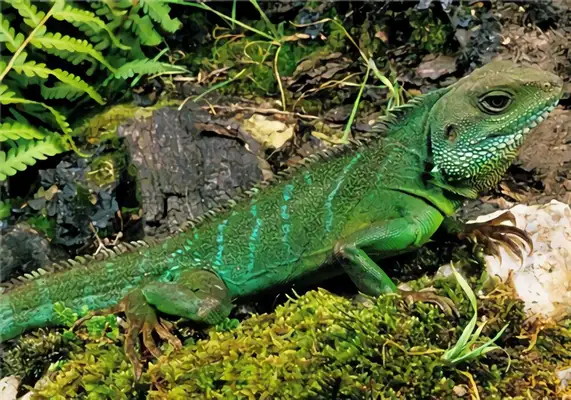
The adult Chinese water taps are bigger and older than their heads. The length is approximately 150 mm (excluding tail) and the tail length is about 300 mm or more. The back color of the Chinese water dragon will change with the environment.
Chinese water dragons, with their back olive brown or gray or light brown, can change colour with the environment and the strength of light, usually with grey or light yellow spots on the black side, and three intermittent stripes. The head is flat on the side; the back is small, the size of which is the same; it is elliptical in the larynx; the neck is connected to the back of the larynx and the front is born on the skin; the male is longer than the female and has a spear or a sickle shape; the back is separated from the tail; and the toe has a toy of a tooth. The tail is flattened, stubbed, and the bottom is bigger than the back. Water Dragon Living Environment in China
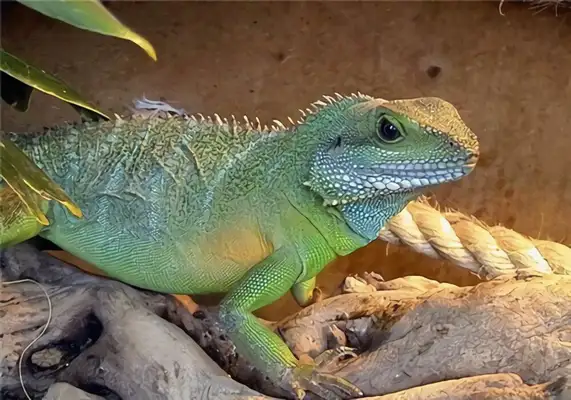
China ' s water dragons, which are heat-resistant reptiles, are sensitive to temperatures below 20 degrees, with high tolerances that can remain above 80 per cent wet; water can be sprayed on animals and in the environment, only 1-2 times a day.
In the tropical rainforest model, which is based on the principle of maintaining humidity, hydroponics are daily semi-aqueous reptiles whose base can be mixed with non-bacterial soil and which is also required by UVB. Temperature is maintained at 30 – 33 °C - point of light (e.g. solar lamps) 24 – 26 °C - day time (e.g. day blue) 20 – 24 °C - night (e.g. night red lights, infrared heaters, ceramic heaters).
And of course, it's a big water basin that can't or is missing, and the water dragons like to sit quietly in the water. As long as the rearing box is large enough, the hydroponic can be shared by many males. Chinese water dragons raise knowledge
The Chinese water dragons, which have always been mainly insect-oriented, are more edible and enjoyable, such as crickets, bread worms and small fish, and, of course, fruits and vegetables. It can also feed milk mice. Vitamin and calcium powder must be added regularly. The identification of females is not difficult in adult form, and male water dragons are well developed on their backs, are much larger in size than females, have more visible pores, and female stripes tend to be dim. Overview of the water dragon species in China
China host is a very gentle lizard. Mainly in eastern Thailand, Viet Nam, Cambodia, Indo-China and southern China. If you like raising a soft, swimming lizard, the Chinese water dragon is the ideal option.
Chinese literary name: China Water Dragon
English name: China host
Chinese alias Green Water Dragon, Indonesian Water Dragon
Area: Animal
Gate: Phylum Chordata
Amen: Vertebrata
A: Reptilla
Platform: Diapsida, Lepidosaria
Item: Lecertistromes (or Squamata)
Lacertilia
A Chinese water dragon.
Distribution: South-East Asia includes: East Thailand, Viet Nam, Cambodia, Indochina, and Southern China, China Water Dragon Characteristics
The adult Chinese water taps are bigger and older than their heads. The length is approximately 150 mm (excluding tail) and the tail length is about 300 mm or more. The back color of the Chinese water dragon will change with the environment.
Chinese water dragons, with their back olive brown or gray or light brown, can change colour with the environment and the strength of light, usually with grey or light yellow spots on the black side, and three intermittent stripes. The head is flat on the side; the back is small, the size of which is the same; it is elliptical in the larynx; the neck is connected to the back of the larynx and the front is born on the skin; the male is longer than the female and has a spear or a sickle shape; the back is separated from the tail; and the toe has a toy of a tooth. The tail is flattened, stubbed, and the bottom is bigger than the back. Water Dragon Living Environment in China
China ' s water dragons, which are heat-resistant reptiles, are sensitive to temperatures below 20 degrees, with high tolerances that can remain above 80 per cent wet; water can be sprayed on animals and in the environment, only 1-2 times a day.
In the tropical rainforest model, which is based on the principle of maintaining humidity, hydroponics are daily semi-aqueous reptiles whose base can be mixed with non-bacterial soil and which is also required by UVB. Temperature is maintained at 30 – 33 °C - point of light (e.g. solar lamps) 24 – 26 °C - day time (e.g. day blue) 20 – 24 °C - night (e.g. night red lights, infrared heaters, ceramic heaters).
And of course, it's a big water basin that can't or is missing, and the water dragons like to sit quietly in the water. As long as the rearing box is large enough, the hydroponic can be shared by many males. Chinese water dragons raise knowledge
The Chinese water dragons, which have always been mainly insect-oriented, are more edible and enjoyable, such as crickets, bread worms and small fish, and, of course, fruits and vegetables. It can also feed milk mice. Vitamin and calcium powder must be added regularly. The identification of females is not difficult in adult form, and male water dragons are well developed on their backs, are much larger in size than females, have more visible pores, and female stripes tend to be dim.