Designation: PET3012
English name: Atol butterfish
Vulnerability to diseases: fish plague, white cloud disease, skin disease, rotting tail disease, etc.
Life: 5-6 years for a brief description of the species of butterflies
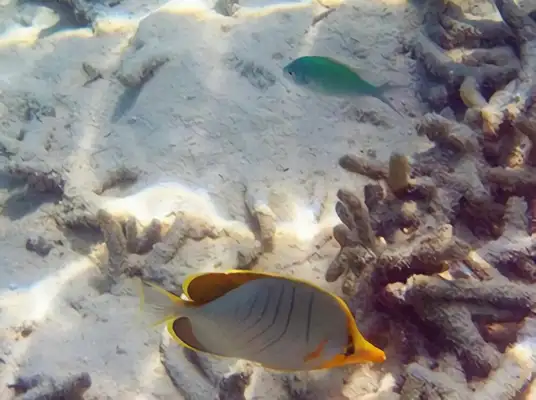
Moose butterflies are one of the species of butterflies, which are not food-supplied fish, as a visual fish. Moose butterflies prefer to live in coral reef areas at depths of 10 to 120 metres. No information is currently available on the co-cropping of the Moose butterflies.
Latin name: Chaetodon mertensi
Scrubber: Moose Butterfly Fish
English name: Atol butterfish
AMA: AGAIN
Aco: Butterfly Fish Aco
Context: Animals
Amen: vertebrate Amen.
Syndicate: Sculpture
For butterflies
I'm sorry.
Gate: Pipeline gate
Chinese literary name: Moose Butterfly.
C: Butterfly Fish Section
Apogee: the shape of the irradiated fin Apogee butterflies
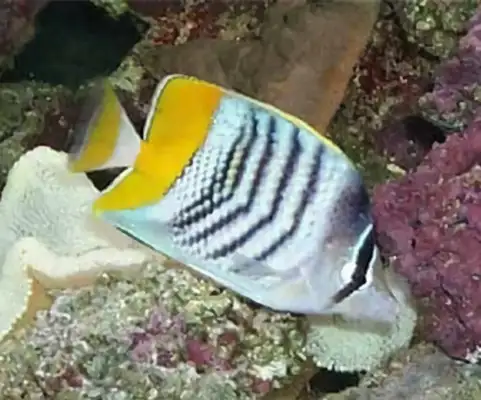
Moose butterflies are also relatively special in shape, similar in size to most butterflies, but different in color. It is important to note that the Moose butterflies are visiting fish, not food.
A black eyeband with a white edge narrow to the eye's head, which extends down to the gill lid and has a lighter colour, with a forehead - purple black spots, as shown in the picture of the fish molar butterflies. Moose butterflies are white, with 4 to 7 arrow-shaped black stripes on their sides (with arrows pointed to the head); tail-hand yellow, tail-fin white with yellow bands and white edges; chest fins are transparent and abdominal fins are white. Mose butterflies have a flat contours on their heads and a sharp kiss, but do not extend to a tube, with a front nostril with a nostril. Butterfly fish breeding environment
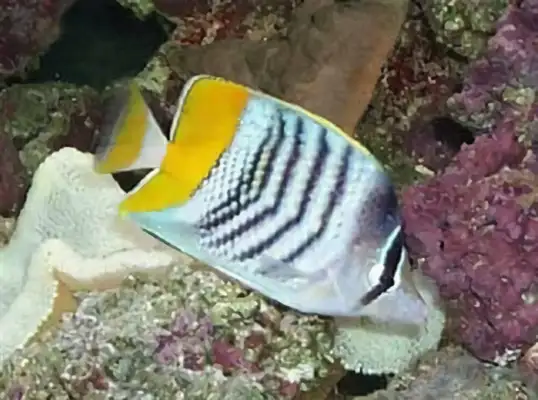
Aquatic lighting is very important for the feeding of Meryl butterflies, and it is generally recommended that it be appropriate to have 8 to 10 hours of lighting per day. In a wild environment, Moose butterflies prefer to live in water between 10 and 120 metres deep, so it is important that the environmental aspects of Moose butterflies be taken into account by artificial breeders.
The quality of water for the Meryl butterflies is important, and efforts should be made to keep the water clean and to maintain pH and water temperature stability, even minor changes should be avoided as much as possible. The pH is 8.3 and water temperature is around 25°C and the weight is 1.022. The presence of ammonia and nitrite should not be detected in the water, and nitrate levels are very low, so a good filter system is important and protein separators are needed. In order to compensate for evaporation, water should be replenished regularly. The Moose Butterfly.
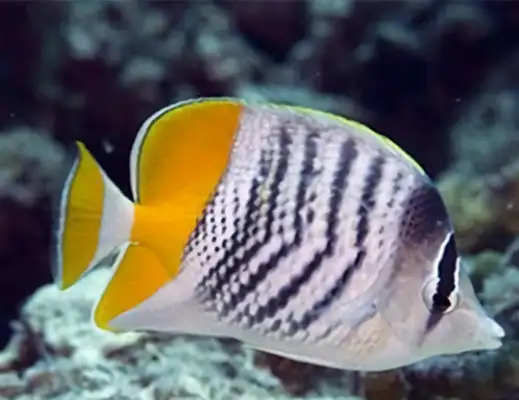
It is important not only to feed the environment but also the quality of water, but also to feed the fish. Since Moose butterflies often do not eat in the environment, feeding them is the most important step.
Moose butterflies are very picky eaters, and even strong varieties take some time to adapt to aquarium feeding. When you put it in the tail of a Moose butterfly fish, you turn off the lights and leave the fish undisturbed for at least 24 hours, and you start feeding them alive. When Moose butterflies start eating their food, the battle is already halfway through. In a few days' time, the Moose butterflies should have attacked the crawfish. Here are some lists of foods that can be tried: red blood worms, shredded shellfish, cut shrimp meat, cow hearts, small pieces of squid meat, and thin feed. Moose butterflies tend to weaken when feeding only one or two foods, so they must be given various baits to enable them to thrive.