Designation: PET4597
English name: Hermann
Character: lively
Origin: Southern Europe, Eastern European Balkans and Turkey
Vulnerability to disease: Decay
Life: Overview of Herman Tortoise species, 80 to 100 years old
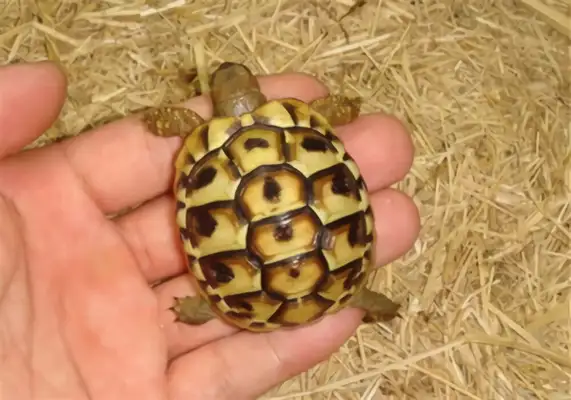
Herman ground turtles are a relatively affordable type of land turtle species, but they are more adaptable turtles and do not usually experience acidic events, so the incidence of stones is low, and the weakness of Herman ground turtles is their temperament.
Herman Tortoise is one of the representative varieties of European land turtles, with strong physical strength, a lively character, moderate sales prices and medium sizes, making it a very good entry species. Herman Tortoises have a long lifespan, with non-hypnotic periods of about 70 to 80 years in the case of rearing and 120 years in the case of timely hibernation. Tortoises up to 5 cm are not recommended for hibernation.
Chinese literary name: Herman Tortoise
English name: Hermann'stortoise
Latin name: Testudohermanni
Context: Animals
Gate: Pipeline gate
Amen: vertebrate Amen.
Programme: climb
Tortoises.
Subtitles: Curvature turtle
Section: Marine turtles
Cast: Herman Tortoise
Asian: Herman ground turtles are divided into two species, East Herman and West Herman.
Geographical distribution: Southern Europe, Eastern European Balkans and Turkey
Practising: living in grasslands and forest areas. Herman was a more aggressive land turtle, and it would be better not to keep many males together. And don't mix with other kinds of turtles. They will not reach adulthood for more than three to five years, so raising turtles is a long-term hobby. Male turtles have to be careful to avoid female tortoise injuries during their reproductive years by biting their back legs and head. Fits to temperature: 19-27 degrees Celsius.
Body size: 14cm-16cm
Reproduction: Eggs. Because of its small size, Herman in the west lays three eggs for each female, while Herman in the east gives 5-8 eggs each and hatchs about 56-65 days at about 30 degrees.
Eating: Herbivorous. The main ferocious plants are weed and cactus. Herman Luxury Characteristics
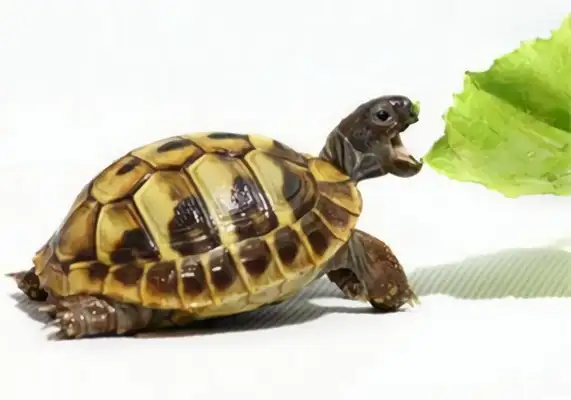
The face of the Herman turtle is relatively uncharted, with this grey coloured colour spread over the grey vest, which changes with age, with a small arc, a very bent half circle, and a very small size.
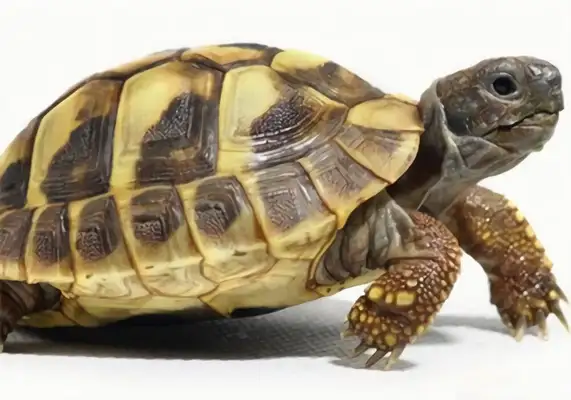
Herman ground turtles are small and medium-sized, from southern Europe. There are attractive black and yellow patterns on crust, whether juvenile or adult, and brightness may fade with age into less visible grey or straw yellow. They have a slightly bent upper cheekbones, like other turtles, with no teeth and only one powerful beak. Their limbs are grey-to-brown, they have scales and some yellow stripes, and their tails have an angled tip. The adult male tail is longer and thicker, and is clearly different from the female.
The eastern Herman ground turtle is much larger than the western one and can be 28 cm long and weigh 3-4 kg. The western Herman turtles are rarely larger than 18 centimetres, and some of them grow up only to 7 centimetres. Herman Rogue Care Knowledge
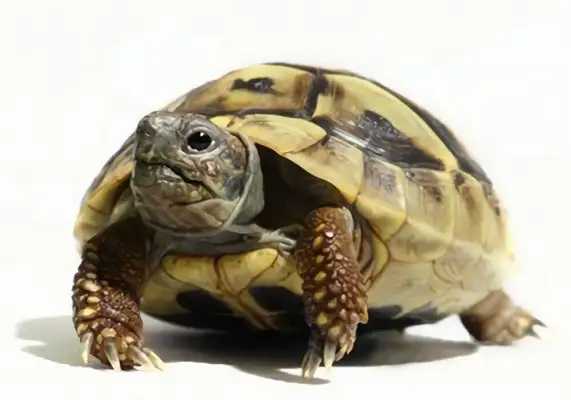
The most important point in the maintenance of the Herman turtle is temperature and humidity control, which is difficult for the turtle itself to control the water intake within the body, and therefore requires man-made regulation. As for temperature, the Herman turtle can easily cause discomfort in a bath, so the turtle has to choose whether to bath itself, so that it can be as reasonable as possible.
I. HURMAN LOWER WATER Ingestion
It's the water in the turtle, the water in the air, which is guaranteed by environmental humidity, and the water in the air, which is also taken by the turtle, and the water in the food, which is the vegetable mentioned above, and the water basin in the box, which allows the turtle to drink when it is thirsty. The need for moisture and vegetable support is even greater when the turtles do not love their own water.
II. The Herman Turtle Bathing Method
Herman Tortoise's bath is better than an artificial bath, which has two major problems: first, it's easy to choke, and second, it's very fast in the spring and fall, it's down to below 20 degrees in a minute, while your ambient temperature is 25 degrees, it's easy to catch cold and sneeze.
The right way to do this is to put out the water basin, turn on the sunlights, use cold water, let the turtles themselves choose whether or not to go in the bath, the turtles in the field crawl into the water when they want to bathe themselves, and there is never any so-called warm water in the field. If it is decided to take out the box, the outside temperature of the box is measured, and if the temperature is too different from the temperature in the box, it is better not to take out the box. Herman's Land Turtle Living Environment
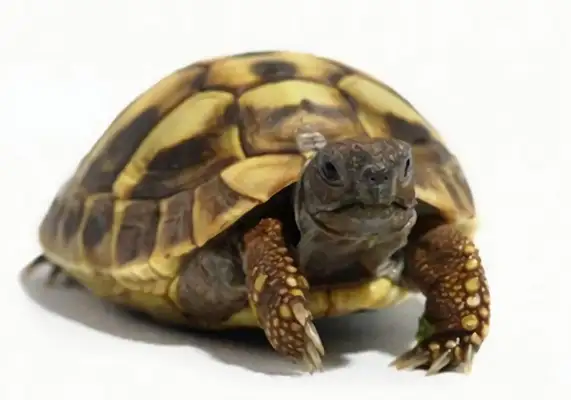
The most important thing in the breeding environment of the Herman turtle is sunback, which, as we all know, is likely to lead to the backs of the turtles, but also to the mental state of the turtles, so it is important to provide a reasonable environment for the Herman turtles.
I. The installation of ventilation
A prolonged lack of ventilation, which causes CO2 to be deposited at the bottom of the box, and the air to mix, is the solution to open the door to the box during the day-to-day sunlight of the turtle or when the sun comes out of the box, opening the fan for air.
II. Settings for light
The turtle is a son of the sun, and there is no spirit in a day without sun, so the sun is tanned, and the sun is tanned every day without sun, helping the turtle metabolize, digestion, and facilitating the transformation of D3 calcium into bone development in the body. A turtle that does not shine on the sun one day is not active and is highly prone to the sleep addiction caused by the lack of UVB, lack of activity, lack of food and indigestion of its food.
III. Selection of mats
Helman's ranking for mats:
1. Land (mixed soil, fertile soil, German peat soil), which is the natural environment of the land turtles and which can be reduced to the maximum extent possible.
2. Three sets of gaskets. Other mats are not recommended. Here's the point of the Herman turtle.
The metabolism of the Herman turtles is very slow, so whatever food is provided, attention is paid to the frequency of diets, as well as to the acidicity of the Herman turtles. Defecation and acids are the quickest to judge whether a turtle is healthy.
I. The choice of the Herman turtle food
The primary point is the diversification of food, with three main foods: vegetables, grass, grass and powder, and turtle grains, which are free of moisture, and long-term eating of turtles leads to insufficient moisture and easy dehydration.
Two additions are added to the by-products: vitamins of all kinds, sufficient once a week, calcium powder (skeletal bone), which helps to compensate for the synthetic bone development of calcium, in which the ink bones, in addition to calcium, can be used well to grind turtles.
II. Frequency of feeding to the Herman land turtle
The secondary point is that the frequency of feeding should not be too high, preferably once every two days, and that turtle metabolisms are much slower than humans. If one day, yesterday ' s food is not fully digested, food accumulates in the intestinal tract and is fed today, the intestinal burden will be greatly increased, leaving yesterday ' s food accumulated in the intestinal tract slowly decomposed, and acute or chronic intestine infections will persist.
In the wild, turtles usually have inadequate food, so they eat at very long intervals and enjoy plenty of sunlight, and the food they eat is well digested, so they are not compared to human beings, who eat three meals a day, which is fully digested that day, and the turtles eat for two days.
III. The acids of the Herman turtles
The defecation of land turtles is similar to human defecation, while the defecation of Herman is in fact human urine, which corresponds to two biological habits, and dehydration and rocking are considered if it is not defecated for a long time. If you insist on one meal a day, you have to insist that you get to the sun every day, and that the sun is very good for turtle digestion, calcium synthesis, and for turtle appetite. Feeding is based on the criterion that if the turtle is defecated on the day, then feeding is considered and if it is not defecated, then it will be fed after defecation.