No.: PET2078
English name: Kinisternon dunni
Nature: Nervous
National origin: Colombia
Vulnerability to disease: decomposition
Life: Overview of species of Colombian turtles aged 50 to 80
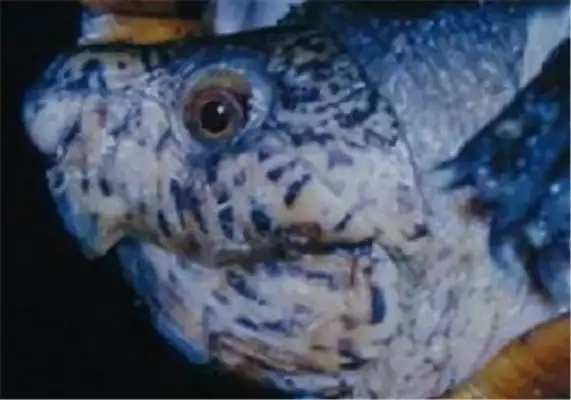
The Colombian turtle is one of the species of egg turtles, with a similar appearance to that of narrow bridge turtles, many of which are in fact similar in size and colour.
Colombian turtles are known only to come from Colombian ditches. The tortoise lives in smaller streams, and at times it builds caves in a layer covered with leaves. It is clear that Colombian turtles can reproduce throughout the year, usually with two eggs per nest, with fragile eggs in an elliptical shape of 45 x 25 mm. Medem (1961) found molluscs in the digestive oesophagus of the turtle.
Chinese name: Colombian turtle
Latin name: Kinisternon dunni
Characteristics: Named by Schmidt in 1947, elliptical vests are slightly flat, mostly brown and can reach 17.5 cm in size.
Habitat: The turtle lives in a smaller stream, and it sometimes builds caves in a layer covered with leaves.
Reproduction: Colombia ' s mud turtles can reproduce throughout the year, usually with two eggs per nest, and fragile eggs with an elliptical length of 45 x 25 mm. Medem (1961) found molluscs in the digestive oesophagus of the turtle.
Main distribution areas: Colombian turtles are known only to come from the ditches of del Chocó, and Colombia
Habitat: Semi-aquatic
Feeding: Colombian mud turtles are impregnable, mainly grass-fed. Occasionally, cattle dung, soil software animals or insects are fed.
Hibernation: Colombia's mud turtles naturally enter hibernation for four to five months; however, the hibernation period should not exceed 20 weeks, sometimes reduced to about 4 to 6 weeks due to weather change, and the feeder can give a short tortoise. Safe hibernation is good for turtle health. Characteristics of the Colombian mud turtle morphology
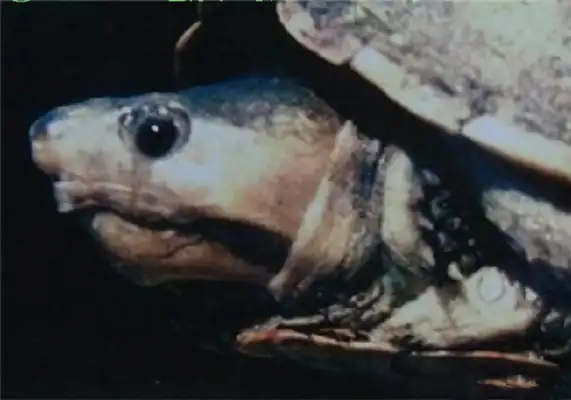
Colombia's turtles, which are commonly priced in egg turtle species, are somewhat similar to rare narrow bridge turtles, but the market is less common because of the difficulty of raising them, and it is also a turtle with a high fertility rate.
I. The physical features of Colombian turtles
An elliptical vest is slightly flat, mostly brown, and can be 17.5 cm long. There are no embroidered vertebrate bones in the centre of the adult vest, but, on the contrary, there are three vertical, more blurred vertebrate bones in the larvae.
The shield slightly overlaps and the shell shrinks at the bridge in the abdomen. Each of the narrow abdomen is covered with a chain cover and the end of the rear is a dent. The width of the front and back chains is less than 40 and 35 per cent, respectively, of the maximum length of the back. The length of the bridge, on the other hand, is 21 ~26 per cent of the maximum length of the back armour, which is in contact with the groin shield.
The abdominal and alpha bridges are usually yellow and have black seams. The head is wider, with a prominent nose and mouth, with a moderate hooking of the upper jaw and four tentacles of the chin. At the top of the head is coffee colour, with brighter colours on both sides and on the bottom (perhaps there are some colours or stripes). The neck, limbs and tails are shallow grey.
II. Gender Distinction of Colombia ' s Mud Turtles
The neck, limbs and tails of Colombia are shallow grey. Male thighs and lower limbs have horny ties and male and female tail ends have horny tail thorns. In addition to this, we can look at the presence of a stylized horn complex on the inside of the back leg to identify females, which are larger in size, with long and thick tails, which are usually about 15 centimetres in length, with shorter tails. Knowledge of conservation of Colombian turtles
It takes five to six years for a female to reach sexual maturity, with a length of about 17 to 18 centimetres, and a male to reach about 17.5 centimetres to produce mature semen. Most spawning occurs between April and June of each year, with ovaries built on sand or decomposed vegetation. Changes in the number of eggs per nest range from 1 to 5 and may produce a significant number of three eggs per season. Colombia's Mud Turtle Living Environment
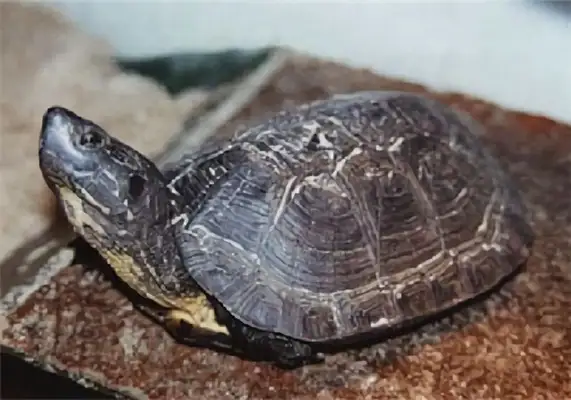
Colombia's turtles need hibernation, but they have relatively short hibernation times and are less likely to be dangerous. Even so, we need to look at some of the matters of hibernation before they die.
I. Preparation for hibernation
Close examination of the health of turtles, including the weight of turtles, begins early in the summer; if the health of turtles is not ideal, winter is to be prepared. It's easy to get through winter, so the turtles can eat normally. The timing of the fast is then determined, and some experts believe it would be preferable to have about four weeks, as there is a risk of corrosive complications in the food left in their mouths, oesophagus and stomachs.
Tortoises already drink enough water to avoid water shortages or dehydration during hibernation. If a small turtle is to be hibernate, the temperature is to be kept at about 12 to 15 degrees centigrade, the temperature is to be reduced slowly by artificial manufacturing time, and the humidity in the tank is to be reduced gradually, allowing the small turtle to adapt slowly to its physiology; and the environment for hibernation is to be well aired, the water is to be prepared to get the turtle up and drink at any time, to stay away from exhaust gas, and to ensure that animals, such as rats, are not attacked with as much peace as possible.
II. HUNDRED CARE
Colombian turtles naturally enter hibernation for four to five months; however, the hibernation period should not exceed 20 weeks, sometimes reduced to about 4 to 6 weeks due to weather changes, and the feeder can give the turtle a short one. Safe hibernation is good for turtle health.
A short and safe hibernation cycle of about four weeks is a good option, starting with a four- to five-week rundown of the agricultural calendar, i.e. three to four weeks prior to which the fasting begins. If a tortoise is excreted during hibernation, it should be woken up to drink water from dehydration. In cases where hibernation occurs because of sudden warming, the turtle wakes up and eats, do not enter hibernation once again, because soon after eating, it enters hibernation and has the opportunity to rot in the stomach because of unincorporated food. Some food for Colombian turtles.
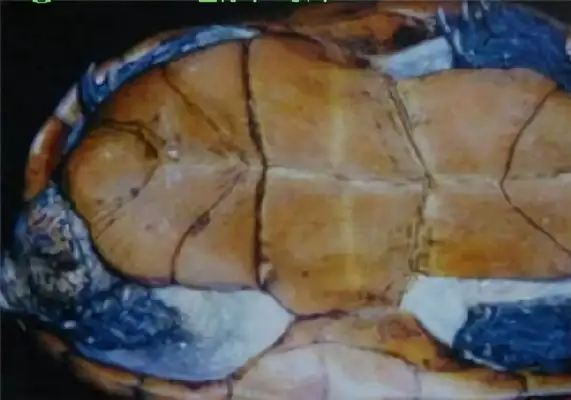
Colombia has a complex diet and some vegetables, guacamole and meat can be fed, but Colombian turtles prefer vegetarian food in relative terms, so we have to consider the nutritional balance in terms of food mouthworthiness.
Food choices
Colombian turtles are groceries, mainly grass. Occasionally, cattle dung, soil software animals or insects are fed. They shall be provided with fresh vegetables and vegetables, such as kale, sluice, guacamole, cabbage, four seasoned beans, cucumbers, papayas, corsets, cactus, herbs, and grass, with a moderate amount of animal bait, such as maggots, earthworms, etc. The larvae likes grapes, tomatoes, tea. When feeding, fruit foods are cut into small blocks (six millimeters of cubes) and mixed with different colours.
II. Catering advice
Cucumbers, tomatoes, green and yellow squeezing apples, all types of melons, peppers, carrots, peaches, pears, any kind of berries, sweet potatoes (to be soft with microwaves), Opundia cactus fruit, mushrooms, chrysanthemum, kale, pickles, any kind of pickles, different types of flowers. Make a mixed salad and provide it daily. These turtles were very active in the morning when I fed them the salad mixture. I often leave large leaves in the tub with kale and veggies.