Designation: PET2365
English name: Three-toed Box Turkle
Character: Smart, interactive.
Origin: Central America
Vulnerability to disease: decomposition
Life: Long life, many profiles of turtle species that can reach three-toes
Three-toe-box turtles, which are the subgenerous species of Carolina turtles, are more common in our Taiwan, and are home to many professional players in the United States who are now trying to reproduce successfully, and are smarter and more interactive with their owners, and are very interesting. Questy, food staples of earthworms, snails and insects, berries, larvae. The care of young turtles is also not difficult and can be provided by cricket and bread bugs as staple foods, supported by fruit and fruit mushrooms. Three-toe box turtle morphological characteristics
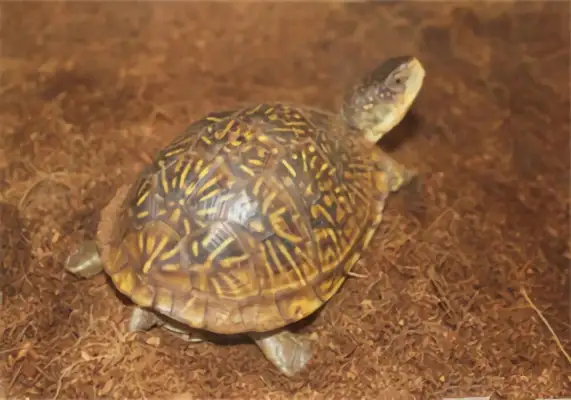
Three-toe-box turtles are the smaller ones in the Carolina turtles, but the color of the back nails is still more glamorous, and the three-toe turtles are typical of three toes, of course, but not all of them will be, and there will be some surprises.
I. Appearance characteristics of a toebox turtle
Tortoise shells are generally morphine or olive-colored, with yellow stripes or spots. The abdominal nails are tan; the skin is morphine or grey and the head and front limbs are red, orange, yellow or white. A typical tri-toe box turtle with only three toes on his feet, with exceptions. The toe-box turtle's backnails are colored with small yellow dots of thin radioactive form, the bottom of the vests are blue olives or khakis, and in some cases there is no small yellow class distribution on individual backs. Three-toe-box turtles are considered red or orange to be more colorful and pretty. In terms of body size, the three toes are the smaller of the typical tortoises, and sometimes the mother can lay eggs with her abdomen of 10 to 11 centimetres.
Two, three-toe box turtle female and male identification
The female has a light yellow membrane, a light yellow dot on the top of the head, a light yellow on the front leg, a flat abdomen, short tails, close to the back edge of the abdominal cavity; the male has a red membrane dotage on the top of the head, a dark orange red or a light orange red, a slightly dent in the back of the abdomen, a long tail and a distance from the back edge of the abdominal cavity. Three-toe tank tortoise care knowledge
It is not bad to be careful to dig eggs out of an egg box once the females have laid their eggs, the base of the eggs can be used with cylindrium and a small amount of water, either as reptile-specific or homemade incubators, and now there is a more economical and practical incubator. The incubation environment of three toes is not stringent, and in principle the temperature is set at 29-30 degrees Celsius and the humidity is set at 80 to 90 per cent acceptable. You'll see a lovely three-toe baby in about 47 to 53 days! Three-toe box turtle living environment
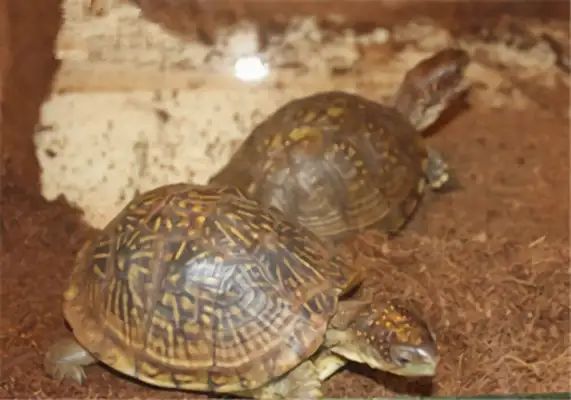
Three-toe-box turtles can be seen as land turtles, but he needs a lot of water, so many people do not need to feed the environment into half-water turtles, so they can put a clean water basin in the environment, saving space and ensuring sanitation.
I. Wild environment for tritoe turtles
In the warm summer, tortoise turtles appear on the edge of the marshland, probably because of summer cooling. When the body temperature is too high (approximately 32°C), saliva is sprayed in the body and head and cooled by evaporation. For unreachable limbs, they achieve the same end by urinating. In the northern region, three-toe-box turtles enter hibernation between October and November, usually at the bottom of sand, mud-floor streams and ponds.
II. A rearing environment for tritoe turtles
Larger space is required in an artificial environment and, although not half-water, water basins are absolutely indispensable. Three-toe-box turtles are smart enough to know the feeder for two to three months. In the southern climate, if all year-round outdoors or balconyes are free of warming, they will enter hibernation in December, and not again until March of the following year, with much simpler breeding and care than turtles. Three-toe box turtles.
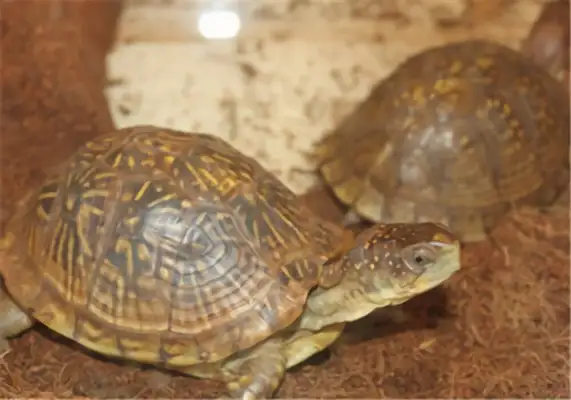
Three-toe tank turtles are the more common type in the Carolina turtles and are usually raised as primary species. Most of the tortoises in Carolina are groceries, and now many wild turtles are increasingly rare and need constant protection.
I. ELEMENTS FOR THREE-TOE THREE-TOE THOSE
Three-toe box turtles are greasy. The staple foods are berries, broccoli, earthworms, snails and insects. In general, 50 per cent of animal proteins, such as cricket, bread worms, small fish, 40 per cent of green vegetables and fruit, and 10 per cent of weeds, such as thorium or platinum, are fed by hand. There's a lot of food. Food is found near dead leaves, logs and the nests of some mammals, sometimes eating animal rotors.
II. PROTECTION OF CROLANA TORTURE
Although the Carolina turtles are widely distributed, their number is declining because of various human threats. Agriculturalization and urbanization have destroyed their habitat, often with Carolina turtles found run over on highways, and international pet trade has had some impact. At the same time, their habits (long life and low fertility) make them particularly vulnerable. Now Carolina turtles are endangered species on the IUCN Red List. It is also listed in appendix II of the Convention on International Trade in Endangered Species of Wild Fauna and Flora, which means that “transactions need to be regulated to avoid affecting species whose survival is affected”. In addition, a number of states in the United States have controlled or prohibited the entry of such turtles.