Designation: PET6189
English name: Blue-headed Macaw
Vulnerability: respiratory, digestive and parasitic diseases
Life: Overview of the species of blue-headed parrots 10-15
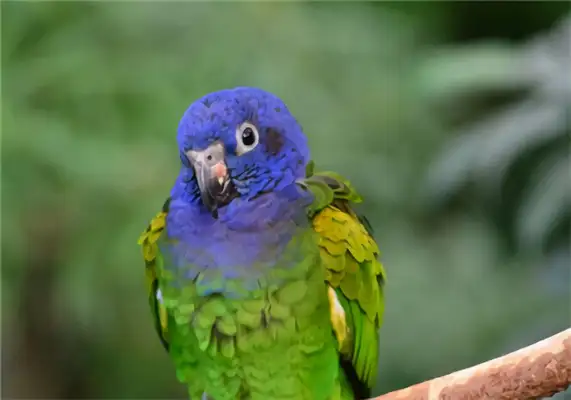
Blue-headed Macaw is the most expensive of the smaller parrots, mainly because of its small number, its least popular and its least visible mythical species, which are called rare. Blue-headed parrots are easy to tame and are strong and adaptable under artificial breeding, as they are generally gnawed and destructive, with proper bathing that preserves their feathers and health, and blue-headed parrots fit in larger flightable birdhouses.
Chinese literary name: Bluehead parrot
English name: Blue-headed Macaw
Two terms: Propyrhura couloni (P.L. Sclater, 1876)
Area: Animal
Gate: Spinal animal door
Aves
Psittaciformes
Section: Parrot Section Psittacidae
From: Propyrhura
P. couloni
Distribution: Characteristics of blue-headed parrots in eastern Peru, eastern Brazil and north-western Bolivia
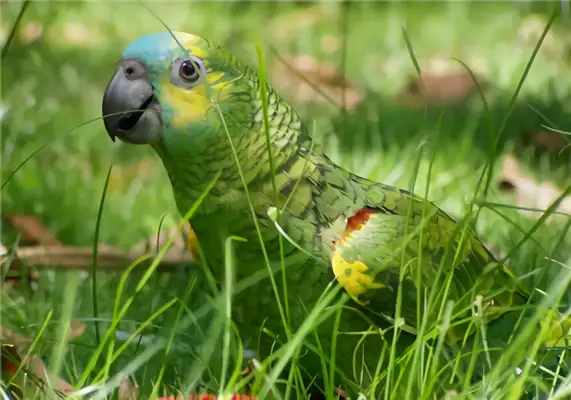
The difference between a blue-headed parrot and a parrot in general is that its cheeks are black and its cheeks are black, and the young bird is white, a feature that changes with age. It's a small parrot.
The blue-headed parrot is 41 cm long and weighs 205-295 g, with an average life expectancy of about 25 years. One of the most common types of parrots of the blue-headed parrot type is short-sized fat, short-shaped tails, and bright blues on the head. The head to the chest of a bird is a bright blue feather, with a black feather round its ears, a black beak with its bottom, and a red one on both sides. The body and wings are of varying depths yellow and green, and the tail feathers bear some blue light. Foot is gray. The neck of the young bird still retains more green feathers, which gradually become blue feathers as they age. There is no significant difference in the external appearance of the parent, and the male is more rounded than the female is more elliptical. Blue-headed parrot living in an environment.
The severe destruction of the habitat of the blue-headed parrot has led to a significant reduction in the current number, as well as to a growing price for the sale of the parrot in today ' s market, which is easily tamed and robust and adaptable. The blue-headed parrots are not too noisy birds, and the bites are less destructive, they are more alive, quiet, shy, nervous, tame, noble and not offensive, they do not like hugging but they love the master's touch. Bluehead parrots raise knowledge.
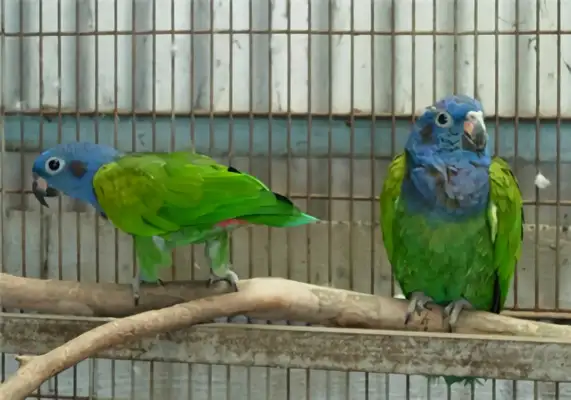
If you like quiet, spaceless, easy-to-breed pets, you're definitely a blue-headed parrot. They live longer than dogs and cats, with an average life of about 25 years. Life expectancy is closely related to the raising environment and diet.
Blue-headed parrots are not too noisy birds, and bites are less destructive, they are more alive, quiet, shy, nervous, tame, noble, not offensive, and do not like hugging but love the master's touch. Blue-headed parrots are beautiful, attractive and ideal pet parrots who have always been loved, and the mother's personality is a sweet relative.
In addition to the reproductive period, where groups usually live in groups, where large numbers of communities are concentrated on trees or in well-fed areas, and where small groups tend to rest at night on the top of trees, usually to feed between trees and occasionally to eat crops in cornfields, leading to agricultural losses, which, apart from parts of the country, are common birds.
Blueheads, like common parrots, require higher heat and diversified food types to maintain good health. Nuts, seeds, vegetables and vegetables are essential daily foods, with adequate high-quality bird biscuits and vitamins, which make them healthier, as they do common parrots, chew and destroy, and breeders provide wood for their chewing, and proper baths keep their feathers and health.