Designation: PET1711
English name: beaked Cape Tortoise
Origin: South Africa, Cape Cape Cape Cape Cape Cape Verde.
Illness: flu, rotting nails, white eye disease
Life: 30 to 40 years
Price: Overview of the species of eagles' mouths
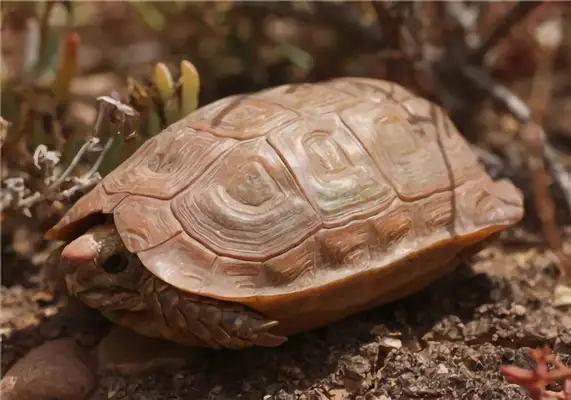
Sea turtles, also known as parrots, are the smaller of all land turtle species, as is the case with tortoises, which live in rock cracks, unlike those in which eagles hide in danger and do not attack themselves.
Chinese literary name: Eagle Beak Turtle
Don't call it a parrot, an angry turtle, acne turtle.
Latin name: beaked Cape Tortoise
Two words: Homopus areolatus
Context: Animals
Gate: Pipeline gate
Programme: reptiles
Tortoises.
Subtitles: Curvature turtle
KO: Panic Tortoise
It's a flat chest turtle.
Cast: Eagles, turtles.
Distribution: Southern South Africa, Southern Cape Cape Cape Cape Verde.
Reproduction: Eggs are spawned once a year by female turtles, each laying one egg and hatched for about 115 days between 28 and 30°C, much longer than the average turtle species.
Body size: 8cm-12cm.
Lifestyle: Mostly active in warm mornings, they gather for warmth in the sun, and when it warms up, parrots become active, actively explore the entire region and feed.
Food consists of herbs, flowers, cucumbers, pumpkins, grapes and figs, occasionally supplemented by oats, wheat, maize and calcium D3. It's a morphological feature.
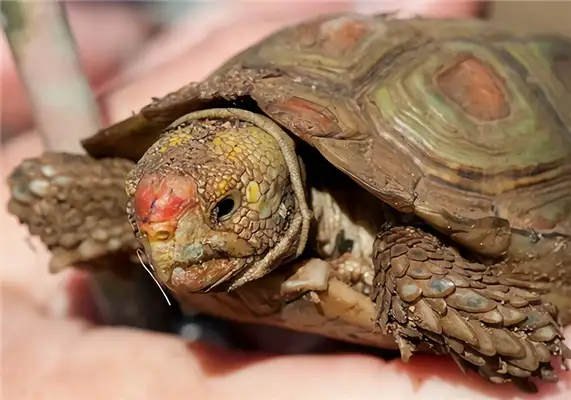
It's a small thing to feel like a turtle. For such a lovely turtle, many people are willing to buy it with heavy gold, but it's really difficult to raise it, because it's easy to get sick or die.
Sea turtles are the smallest of all land turtles, even a size smaller than a cookie turtle. There are five types of hawks, namely ordinary hawks, peckers, hawks, hawks, and hawks. Of these, only the scabs have a subsample. All five species are located in the corner of South Africa, and the habitat must be small. And it's a South African turtle. The number of hawks and turtles in the pet market is very small and is more common in ordinary hawks, followed by peckles and hawks. The two categories are also more adaptable to the artificial environment. None of the other three have ever existed and are barely able to feed themselves in an artificial environment.
It is not difficult to distinguish between males and females, with males having rough tails and females being short. In particular, the nostrils of ordinary eagles turn red during reproduction and the chin is red. Female turtles lay eggs once a year, one at a time, and hatched about 115 days between 28 and 30 degrees, much longer than the average turtle species. The first-born turtle is about three centimeters long. Essentially, it is very difficult to raise turtles, especially young ones, which are suitable for old-school farming, but mortality remains high. So to buy these high-priced turtle species, it's best to think twice. The knowledge of the eagles' mouths and turtles' care.
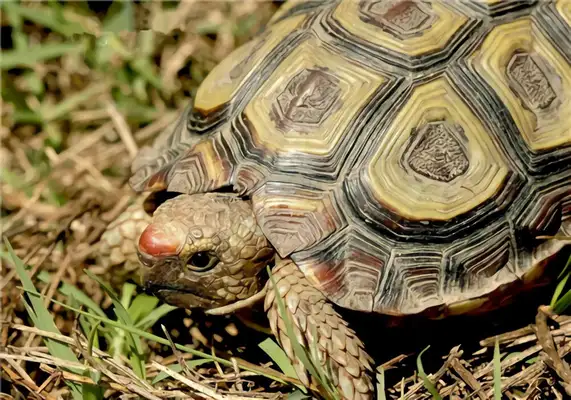
The sea turtle prefers warm areas in the wild, and during the day, the sea turtle likes to enjoy the warmth brought by the sun, and at night it becomes quiet, as the temperature changes it, and when winter temperatures are low, the sea turtle sleeps.
I. KEEPING KNOWLEDGE
The main area found was the wet coastal area in southern South Africa, from the coast of East London to the coast of the Atlantic, and the highland area of Lake Dwayne, north-west of Cape Town, to the north-west. Mostly active in warm mornings, they gather for warmth in the sun, and when warmth increases in the morning, the eagles become active, actively explore the entire region and feed. After eating, the sun slowly warms in the afternoon, the eagles slowly calm down, they don't dig for shelter or retreat to their nests, and they tend to hide under the short bushes.
II. HYDRATING OF THE HORN HOLDERS
During the hibernation of the turtles, we need to check them for occasional tests, touch their legs, and they should react. If they wake up from hibernation when the temperature is still low, we should take some measures to encourage them to continue hibernation, for example, by reinstating newspapers or sand. Most of the land turtles we see now are not able to reach temperatures below 5°C in hibernation, or die from excessive freezing. They can also be raised in warmer forms without hibernation, although their food intake and consumption in winter will be somewhat reduced. The living environment of the eagles.
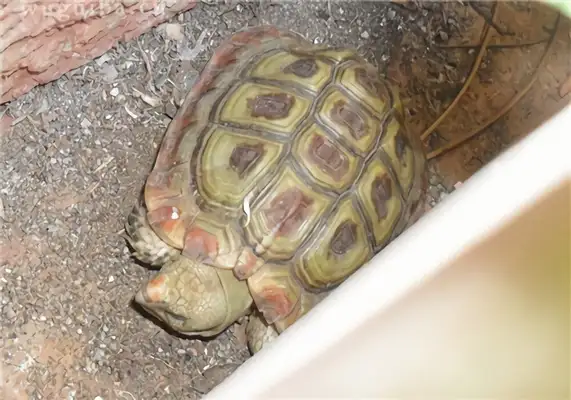
What kind of environment does the eagles adapt to because they are ill-equipped because they are not well-placed?
It would be preferable to combine natural factors in the parrot-sniffed sea turtle environment, where stones or wood can be placed to help them hide. The cycle of light generally provides about 14 hours of light during the summer, while the winter is about 10 hours, and the temperature varies between the winter and summer seasons, with the highest temperature (under hot spots) in the summer being around 32 degrees Celsius, and the winter hot spots about 25 degrees Celsius, which is necessary if the winter temperature of the small eagles is maintained at or below 30 degrees Celsius.
It is humid in areas inhabited by wild eagles, so the environment has to have regular water spills or water basins to maintain some humidity. The base is dominated by dry reptile sand or Tang Mountain soil. They must be provided with additional blocks. Water basins are also to be installed for drinking, and the casks are to be covered, and the eagles are tortoises are tortists who climb walls and are well-armed and able to escape. While ensuring that they do not climb out of the larders, they are not to be sealed, they are to be ventilated enough to ensure clean ambient air. I'd like some of that.
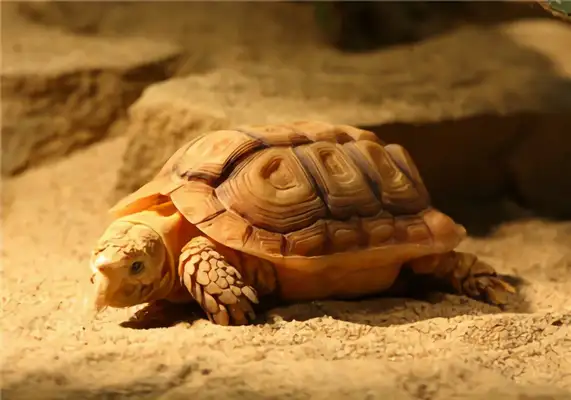
Eagle-tongue turtles are not very picky about food choices and the amount of food they consume is very limited, so it is for the master to think about how to get them huge and sufficient energy for small amounts of food. It is not a difficult task to meet the requirement that eagles be vegan turtles and be careful to fill calcium.
I. Food choices for eagles and turtles
The need for food is so special that it is difficult to adapt to normal fruit and vegetable foods in an artificial environment, except for the special drought-resistant plants in the field of origin, that the choice of food is difficult. It is best to have cactus-like food as its main food, with cucumbers as its substitute, other foods such as carrots, pumpkins, cabbage, etc. must be tried the same way, and it is difficult to find the food they prefer, otherwise it is difficult to keep the turtles well.
II. CORRECTIONS FOR THE GROUND HOLDING
The number of feeding times per week can be maintained at around 4 per week, with food types based essentially on deep green plants, including herbivorous, aryra, Sankoh, front lawn, and a small weekly supplement to tomatoes, apples and carrots. It is also desirable to place dry pastures or leaves in the environment so as to provide a source of food for periods that are not fed, and other items such as moisture and vitamin D3 must be supplemented in due course.