Designation: PET5899
English name: Beal
Nationality: Chinese-specific. They are located in Anhui, Fujian, Jiangxi, Guangdong, Hong Kong, Hainan, Guangxi and Guizhou.
Vulnerability to disease: Decay
Life Life: An overview of the species of eye-eyed water turtles for about 50 years
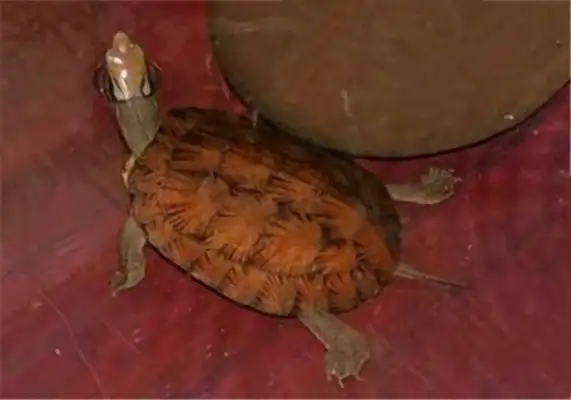
Eye-marked turtles are also called eye-eyed turtles, which are a small number of vegan turtles in their species, with small amounts and quantities of food in the wild, are more common only in Fujian, Anhui, etc., and require higher conditions for rearing and are sensitive to environmental and water quality.
Chinese: Sea turtle with eyes
Chinese alias: Tortoises, Four Eyes
English name: Beal's eyed turtle
Latin name: Sacalia bealei
Context: Animals
Gate: Pipeline gate
Programme: climb
Tortoises.
Section: Freshwater turtles
It's the eye of a turtle.
Seed turtles
Geographical distribution: China-specific. They are located in Anhui, Fujian, Jiangxi, Guangdong, Hong Kong, Hainan, Guangxi and Guizhou.
Lifestyle: Living in a mountain stream.
Body size: approximately 100 mm long back armour. The two eyes on the top of the head are clear, the backs are brown, the abdomen are yellow and the black spots are mixed. The others are slightly the same as eye-eyed water turtles.
Reproduction practices: In May-August, during the spawning period, the females crawled to the shore, dredged their backs to the soft side, laid their eggs in the well-drilled caves, laid them and then pelted their eggs and left. Eye-marked water turtle morphological characteristics
Eye-marked water turtles, medium size, adult turtles approximately 14 cm long. The back skin is smooth, grey brown, and the head and back are covered with brown, black or rusty worm stripes, with 1 to 2 pairs of eyebrow stripes on each side of the head, some of which also have wormbreads on the head, and the difference between the eyes is unclear. It's brown backs, it's flat, it's elastic. The abdominal armour is flat, slightly longer than the back armour, and the front edge is flattening, and the back edge is diaphragm. Four-legged ash brown ... with a number of scales on the outer side of the front limb. The whole of the toes, the first limbs, the first limbs, the back limbs, the fourth claw. Fine. Eye-marked water turtle care knowledge
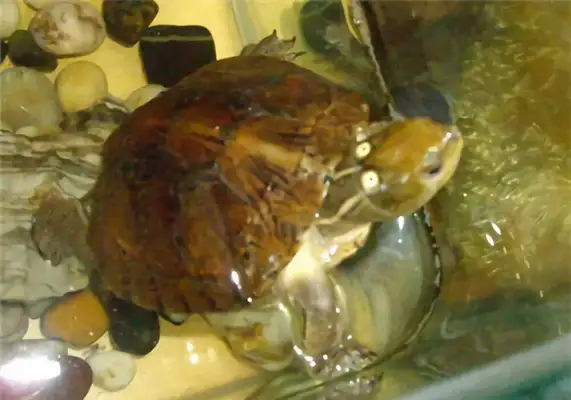
Eye-marked turtles are a turtle that is difficult to adapt to the environment and therefore undergo a longer process of domestication at an early stage of raising, with attention to water quality control and the care of the turtle itself, and a new eye-marked turtle approach to care is described below.
I. New turtle care
Newly introduced turtles are examined, disinfected and domesticated. First, look at whether the appearance is broken, ulcers, neck, abdominal hooks, and parasitics in peripheries and faeces, and separate healthy turtles from unhealthy turtles. Turtles are then sterilized and healthy turtles are placed in shallow water for temporary breeding and domestication, fed to fresh animal baits and carefully managed to adapt them to the new artificially raised environment in a short period of time. The turtles should be separated according to their condition and different preventive measures taken.
II. Day-to-day care of eye-eyed water turtles
Eye-marked water turtles are aquatic turtles whose health, feeding and growth are affected by good water quality rings. Water quality management should be done at all times in spring and autumn once every 5-7 days, and once every 2 days in summer, first by draining dirty water from the bottom of the pool containing bait and faeces, then adding fresh water, which is not too hot to be replaced by water at more than 3°C. A total of 15-20 days of raw lime slurry was spilled over the pool to regulate water quality and disinfection, which could also be used for other drugs. Sea turtles' environment.
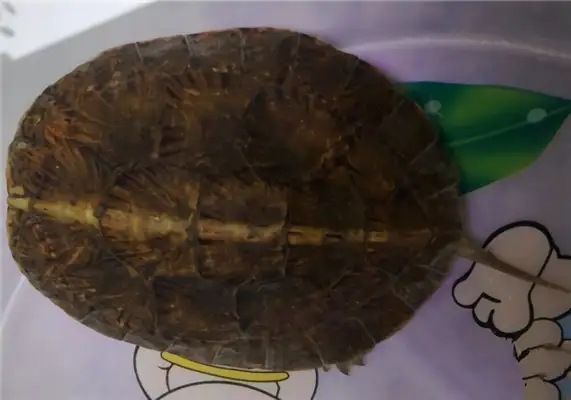
Eye-marked water turtles are more demanding to the environment, especially in terms of water quality, which can easily lead to decomposition of skins and nails, so be aware of the need to treat the symptoms of disease in a timely manner. Here is a description of the environment in which the eye-eyed water turtles live.
I. THE RESOURCES OF THE HOLDORS
The larger the tank, the better it is, the turtles will live in the water, and the depth of the turtle's back will normally be just a little deeper, not too deep, not more than twice the height of the turtle's back, and it would be better to provide a rock above the surface to get the turtles up and up to the back. In the summer, care must be taken to prevent algae from growing in a tank, to buy aqueous algae, which is sold in the usual aquariums. Eye-marked water turtles are very picky about water quality and skin is very sensitive to water quality, so good and bad water quality is important for good and bad eye-browing. It is recommended that filters be placed in the breeding environment, that filters be selected for wheat linching, biochemical filtration, activated carbon, volcanic rock, ceramics, etc. The rearing vessels are disinfected on time. Based on the above, water is usually exchanged once a month and disinfected once a month.
II. Water quality control for eye-eyed water turtles
For running water (for the removal of chlorine) that has been dry for more than two days, it would be preferable to prepare two plastic buckets for drying to meet the need for water exchange. The change of water is recommended for two to three days, each with a partial change without the need for a full tank, unless the water and its surroundings are dirty. Partly changing water by using a plastic tube to suck out the bottom dirty water and adding a new volume of water (i.e. running water for two days) to the tank using the iris principle. Point of eye-eyed water turtle breeding.
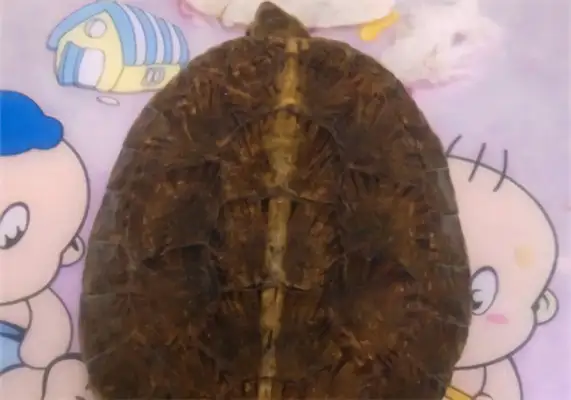
Eye-marked turtles are more food-specific, usually groceries or groceries tend to be meaty, while eye-marked turtles are vegetarian, and some eye-marked turtles that eat too much meat are likely to cause gastrointestinal inflammation and serious death.
I. Effort of eye-eyed water turtles
Eye-covered water turtles tend to be vegan, unsavory foods, sweets, especially bananas. Meat like pork, beef, lamb like fish. When fed: mainly animal meat and fruit. A small amount of activity is observed at 15°C at water temperature and can be seen in water at about 18°C at the beginning of April-May each year. During the months of June to September, as temperatures rose, turtles increased their range of activity, stretching their limbs to the shore at noon. After the October frost fell, it entered hibernation. By mid-April of the following year, the temperature had recovered to 18°C, and it was often crawling, with a few turtles eating slightly.
II. ELEMENTS FOR RESPONSIBILITY OF THE HOLDING OF THE EYES
The four-eyed turtles are thermogenic animals whose activities and diets vary according to the temperature of the environment. It is therefore important to record temperature and water temperature in daily breeding. It is an anomaly to keep abreast of turtle activity, food consumption, through temperature observations, with particular attention to the food intake of turtles, such as those who normally eat 25 grams of meat, but suddenly eat only a small amount of food for two to three days. The water was also found to contain egg sorbents or red blood mass faeces, which are symptoms of gastrointestinal disease in turtles. Some turtles, though abnormal in faeces, are able to eat and are less likely to attract attention, which requires careful observation, early detection of the condition and adequate time for treatment, otherwise they will not be able to do so in the later stages.