Designation: PET2786
English name: Tranvancore Tortoise
Origin: Mountain range west to southwest India
Vulnerability to disease: Decay
Life: A brief description of the Travankor turtle species for about 50 years
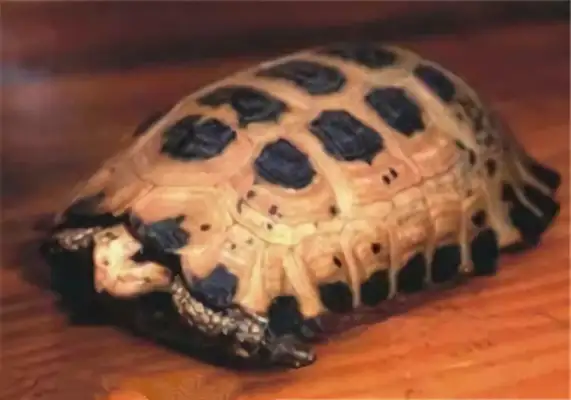
Travanco has a similar look to Myanmar's turtles, which some say are subgenerous but not clearly proven, but the Travanco turtles are very similar to Burma's and the Travanco turtles like dry living environments.
Chinese literary name: Travankor turtle
English name: Tranvancore Tortoise
Two words: Indotestudo Travancorica
Context: Animals
Gate: Pipeline gate
Amen: vertebrate Amen.
Programme: climb
Tortoises.
C: Turtles
Land turtles in Myanmar
Rare: Travankor turtle
Distribution: North and Southwest Indian provinces of Karnataka, Karnataka and Kerala.
Appearance characteristics: 25 cm in extremity, similar to those of Silibeth.
Lifestyle: Travanco turtles seem to enjoy high-temperature daytime activity, with average daily temperatures of about 30°C ~ 35°C sometimes as high as 40°C in the summer months of March-May, and rainy seasons of June-September and winters of November-February, which are warm and dry throughout the year, with the exception of mountains.
Reproduction: Eggs.
Eating: Travanco turtles consume the most food in the wild, followed by wild fruit, and occasionally also some mushrooms. Characteristics of Travankor.
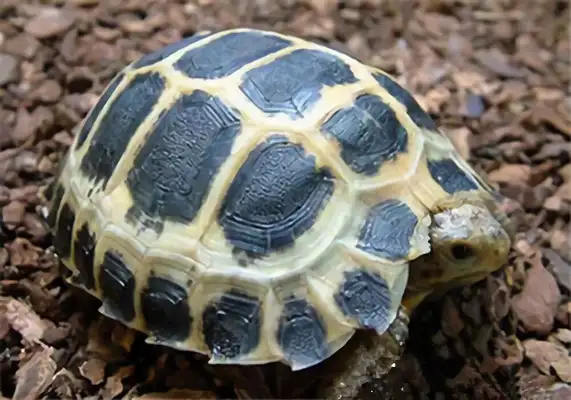
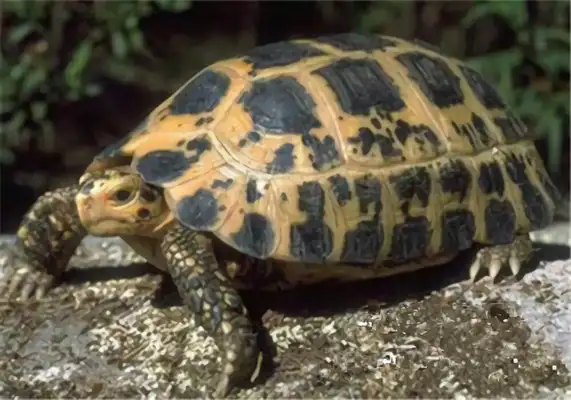
Travanko turtles have been identified as a species of Indian land turtles, and the appearance of both turtles is similar. The pattern on the back is similar to that of Myanmar land turtles, and the black strips on the back armour appear to be clearly defined.
The early description of the Travanko land turtle in the south-west of India and the scientific name of the Silibes land turtle in the Indonesian Sea Island is the same as the scientific name of Indotestudo forsteni, but was later identified as a different land turtle species and officially named Indotestudo Travancorica. The main distribution of the Travanco turtles is in the two provinces of the East and West Highlands in the south-west of India, namely the province of Karnataka and Kerala, where the habitat is dominated by coastal bushes at sea level up to 450 metres above sea level, and the mountain Evergreen forests, where the Travanko turtles are heavily found in the Teriso region of Kerala and the Telavanko region, the capital of Kerala, and are also named Delafanco.
The most important identification of the Travanco turtles can be distinguished by a neck shield, which basically does not exist in Silibes, while the Travanco turtles have a neck shield, and the rest of the identification must be based on land turtle-type measurement records in order to understand the differences between the two, which, in principle, are not very different from those of Silebes. Almost all the Travanco turtles have no neck shield, and all the others are like Burma, but there are no black spots in their abdomen, and they turn pink in their ears and eyes during the breeding season, and they are shy and insensitive. Travanco, knowledge of nursing.
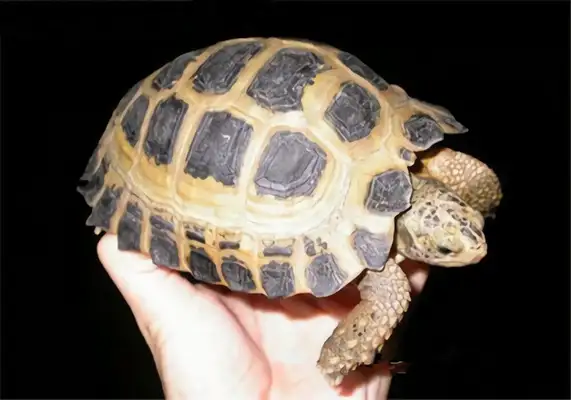
Travanco turtles are rare, a simple species of turtles living in a living environment and in a rearing method, and an entry-level turtle that would be easier to breed if it were to reproduce in large quantities, but they are not grown in large quantities and are therefore scarce.
The land turtle habitat of Travanco appears to be somewhat dryer than that of Silibers or Myanmar, with an average humidity of about 60 to 70 per cent, while the average annual temperature range of the habitat is 27°C ~ 33°C, while the land turtle of Travanco seems to enjoy a high-temperature daytime activity of about 3°C ~ 35°C per year in the summer, with average daily temperatures of about 30°C ~ 35°C sometimes reaching 40°C, and the rainy season in June and September, and winter in November to February, which is essentially warm and dry, with the exception of high mountains.
Despite the fact that the land turtle habitat in Travanco is dominated by dry forests, there is also a small distribution of the high-altitude areas as a result of biologist-specified location surveys, so it can be established that the land turtle in Travanco is well adapted to the high-altitude cold. It is good weather, so it is also possible for the habits to be raised in the same way as for yellow-headed land turtles, while the food is best based on coarse-fibrous grass, with a small number of fruit plants. Travanco, the living environment.
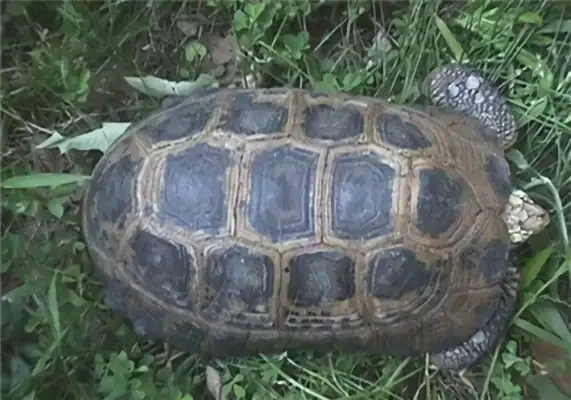
Like most land turtles, temperature and light are essential principles in the breeding of the Travanco turtles, which can ensure their health and be supplemented by calcium in the sun. So, what if the best temperature regulation? What is the principle of light?
I. Temperatures of the Travanco land turtle
Travanco, which is warm and cold, is particularly sensitive to temperature changes. Temperatures not only affect the metabolic speed of turtles, but also the frequency of feeding and feeding, so emphasis should be placed on temperature control in daily breeding. Temperature refers to the ambient temperature of the turtle, which is normally fed at a temperature of 19-30°C, and at seasonal exchange, which is based on the principle of preference. If the temperature is suddenly reduced after feeding during the day, it should be increased in a timely manner, otherwise it is prone to indigestion of turtles, leading to gastrointestinal disease.
ii. Travanko turtle sunback
The daily sunbath of the Travanco turtle is also essential, but it is important to note that the Travanko turtle is completely exposed to the sun for more than half an hour and is highly dehydrated, so that a canteen is prepared to replenish the water on a regular basis (not more than half an hour of sunbath).
III. hibernation of Travankor turtles
Before hibernation, tortoises are examined to observe faeces, food and physical condition, and unhealthy turtles cannot allow them to hibernate. Temperature with electric heaters keeps ambient temperatures around 22-25°C, normal feeding and medication. Healthy turtles are placed southwards, sand is added to the rearing box and cotton mats can be added, with ambient temperatures maintained at around 10°C to allow for natural hibernation. What do you mean?
The choice of food for the Travanco turtle is simple, and at the origin, the Travanco turtle eats a visible plant and does not seem to pick it up, a habit that makes it easier for people to feed, and it is easier for the non-picking turtle to eat.
Newly introduced turtles in Travanco generally do not eat voluntarily, and it takes some time to domesticate before they are able to find their own food. First, turtles are prepared with appropriate boxes or wooden boxes, which are placed in small places to adapt them to the new environment and to observe turtle excreta. Second, at ambient temperatures of 20-30°C, food is placed in front of the mouth of the turtle every day, preferably bananas, cucumbers, tomatoes, because bananas, cucumbers smell, tomatoes are red, they attract turtles to eat, and most Travanco turtles enjoy them. If ambient temperatures are below 20°C, they can be warmed or made to sleep (adapted to healthy turtles). For one week in a row, turtles who refuse to eat are fed. Set the turtle up, pull out the cucumbers and stuff it with their mouths, and then put down the cucumbers and let them swallow themselves. If they don't swallow themselves, they can push the food deep into the oesophagus, with less food to feed for the first time. Injection of muscles should be used in cases of gastrointestinal disease.
Travanco turtles have simple baits for plants such as guacamole, vegetables and small insects and skinny meat. The bait needs to be washed and disinfected before being fed to prevent residual pesticides and hazardous substances. Feeding is usually done once a day, and it is appropriate for turtles to finish feeding each time. At the time of the spring and late autumn festival, owing to unstable temperatures, feeding could be done once every two days, even if the turtle had appetite.