No.: PET3975
English name: Cockatiel
Vulnerability: parrot fever, vitamin deficiency
Life: an average of 20 years
Price: Overview of species of parrots 50-200
Cocktail parrots are also referred to differently in different regions, as is the case in Hong Kong and Taiwan, where parrots are among the most common in the world. The larvae are very lively and close to their owners.
Parrots have many variants, more commonly grey, white, pearls, etc.; the name of the parrot Cocatiel is said to have originated from what Dutch crew members call them “cacatitho” in Portuguese when they found them in Australia, meaning “small Badan”, and are therefore known to total more than 1 million people worldwide and continue to grow in numbers, and their communities are stable and secure.
Chinese literary name: Roast parrot
Chinese aliases:
English name: Cockatiel
Two words: Nymphicus hollandicus, Kerr, 1792
Area: Animal
Gate: Phylum Chordata
Amen: Vertebrata
Aves
♪ The world's most beautiful world ♪
Objective: Psittaciformes
Section: Psittacidae
Aco: Cacatuinae
Family: parrots
Nemphicus
AIAN: None
Speculator N. Hollandicus
Subspecies: No morphological characteristics of parrots
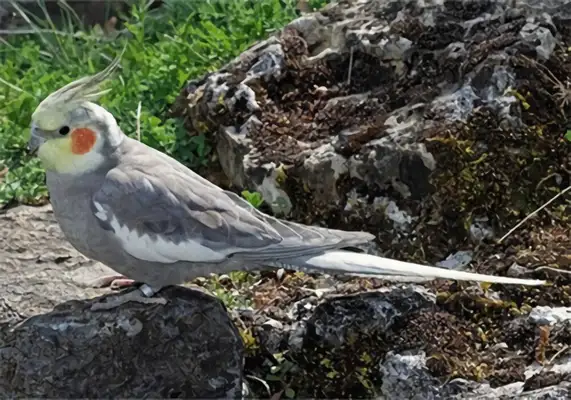
The size of the adult parrots can be about 33 cm or so, especially when the crown of the bird is very visible and long, especially if it is about 5 cm in the wild, with no subspecies, with 18 different variants differentiated by colour, and with a few exceptions. Foot claws are suitable for climbing, with two of the four foot claws growing forward and two backward.
Roasted parrots have crown hair of 4-11 cm. Weight is 80-100 g, with a life expectancy of 20 years, with the longest known to be 36 years. It's a little parrot in the parrot section. Similar features to those of other cockatoos, such as the raccoons, which also have a crown on their heads. In addition, the parrots have other similar or similar characteristics, such as the feathers of the face covering both sides of the mouth, which are rarely found in parrot species outside the parrot family. Unlike most of the macaws, the macaws have long tail feathers that are approximately half their size. The crowns, with their distinctive characteristics, stand up in a state of shock or excitement, while the tilting of the crowns indicates a more relaxed mental state.
The feathers of the cocktail parrots are generally moderately grey, with a lighter color on the lower body, orange cheeks and large white feathers on the wings. Female cocktail parrots have a small yellow line of wings on their wings, but the male cocktail parrots do not have this feature. There are some other types of mutations, such as yellow chicken parrots with light yellow feathers. Female chicken parrots also have tail feathers with spots. Both males and females have yellow face feathers: the mouth and eyes of female cocktail parrots are covered with yellow hair, while most of the head and the head of male cocktail parrots are yellow. A parrot's living environment.
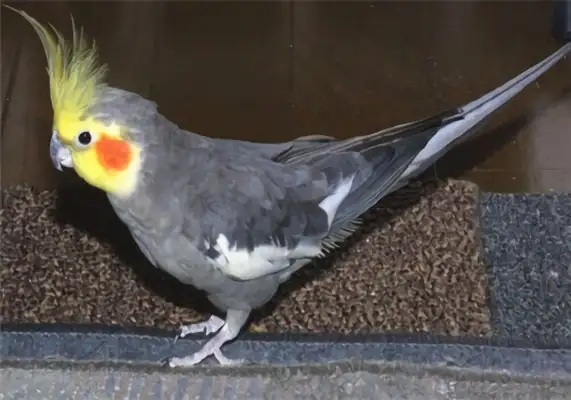
As parrots are typical of bird climbers, who can be raised by a common parrot, which likes to bite constantly, the cage should consider using metal cages or bite resistant cages.
The main habitat is the dry and semi-dry range of woodlands, shrubs, riverside forest areas, thorny bushes, orchards, farm gardens, plains and roadside areas.
The size of the breeding cages per pair of cocktail parrots is 60 cm, 45 cm wide, 40 cm high, with the choice of hardwood or hard branch for the stench, approximately 2 cm in diameter. Water-eating devices should be solid and secure to prevent being bitten or flipped. The nest box may be made of a closed nest box of 30 cm long, 20 cm wide and 16 cm high, preferably with a 5 cm high partition in the middle, with a 6 - 7 cm entry and exit hole on the side of the nest box, with a sawing pad. It's better to use a chalk tray. Water cans are cleaned daily or once in isolation to replace clean water. Vegetables are fed once a day or the following day. Sandpas are cleaned from one to two times a week and cans of food, water and appliances are disinfected once a month. The changes in temperature during the spring and autumn seasons are significant, and care is taken to regulate room temperature and prevent disease. Stay warm during winter, with indoor temperatures not less than 16°C. The summer temperature is high and ventilation should be enhanced at more than 30°C. The chicken-tail parrot.
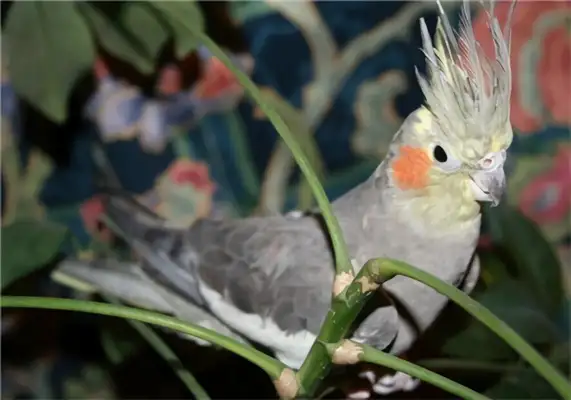
As they are not demanding food at all, they are physically healthy and resistant to disease. Easy-to-breeding is highly suitable for starters. Deaths are rare under general rearing conditions. But be careful not to cut food or water, and not to be too monolithic.
Wild chicken tail parrots prefer to eat on the ground, usually from seeds, grass, leaves and bark (from trees of all kinds, shrubs and other vegetation). In addition, wild parrots eat vermin and other different insects. Two times a day, soon after sunrise, approximately 2.72 grams of plant food is consumed. At night, about an hour and a half before dark, the intake was about 4.25 grams, and food was close to 700 grams a day.
Forage consists mainly of grains, quails, tarts, rice, seed seed, sunflower seeds, egg mills, oilseeds or other vegetables. The grain mix is 40 per cent of the grain, 20 per cent of the platinum, 10 per cent of the rice, 20 per cent of the seed, and 10 per cent of the sunflower, so that several feeds can be evenly mixed. Egg millet shall be supplied with 2 grams of salt and 4-6 grams of multivitamins, calcium powder and trace elements per kilogram of milligram of wheat.