Designation: PET4470
English name: Jenday, Jendaya Conure
Vulnerability: respiratory, digestive and parasitic diseases
Life: An overview of the Genda parrot species 10-15
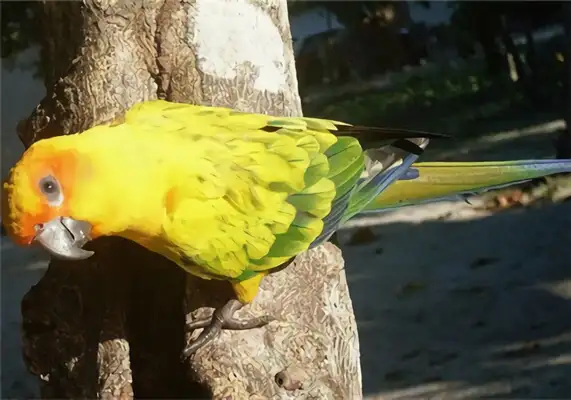
Jenday, Jendaya Conure, alias Gendas, is a typical climber. The character is not very inward. The bird is almost green. The bird is mainly distributed in Brazil.
Genda parrots usually prefer to be alone or paired and to form a small family group of 10 to 15, which is very difficult to detect when moving between the trees, because their color forms a rather good cover, and their noises are so noisy that they are not difficult to detect, especially when flying.
The Chinese literary name is Gendas.
Chinese aliases:
Other Organiser
Two words: Aratinga Jandaya
Area: Animal
Door: vertebrate door.
Platform: Birds
It's a parrot.
C: Parakeet Kojanda cone parrot morphological characteristics
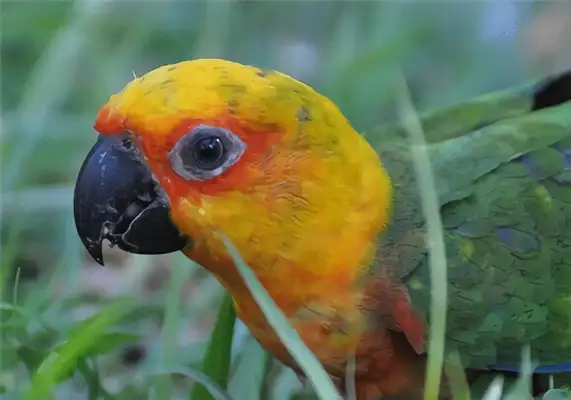
The feathers of Gendas are generally green, usually about 30 cm in length and about 133 g weight. The head of the young bird is not the same as the head of the adult bird, usually with light yellow and some green feathers.
The head and throat of the Genda cone parrot are partially yellow and gradually extend to orange colour in the front chest; red feathers on the head and around the forehead and eyes; orange red on the lower abdomen and on both sides and inside the wings; red on the edges of the feathers and on the back; blue on the main and secondary feathers and green on most of the feathers outside the wings; green on the tail and blue tip of the wings; white skin on the outside of the eyes; black on the beak and gray on the rainbow. Genda parrots live in an environment.
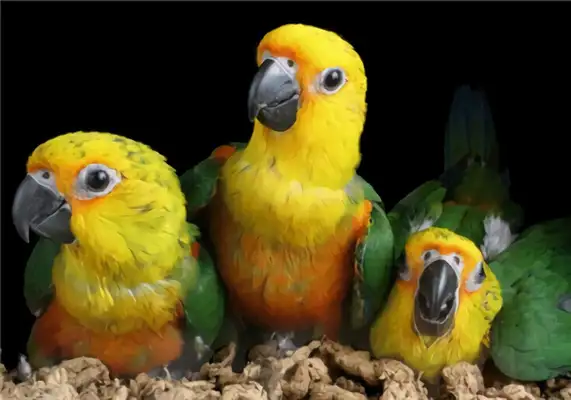
In recent years, the number of cone parrots has been decreasing as a result of habitat destruction. In many places, there is no sign of Gendas. In the wild, their habitat is destroyed, and the hope of their families is that they will be treated well.
The Genda parrots are mainly found in the local vegetation areas of Brazil, in the forests of the plains, in the open areas and on the edge of the rainforests, and occasionally visit farming areas, with special love for the local coconut plantations. Previously, the number of people on the ground had been widespread, and now, because of the exploitation and overexploitation of forest lands, their populations, while expanding the distribution of communities as a result of the exploitation of woodland, had declined considerably overall, and in many areas they had not been able to see the trail of the rare cone parrots. The Genda parrots are mainly found in the local vegetation areas of Brazil, in the forests of the plains, in the open areas and on the edge of the rainforests, and occasionally visit farming areas, with special love for the local coconut plantations. Genda parrot breeds knowledge.
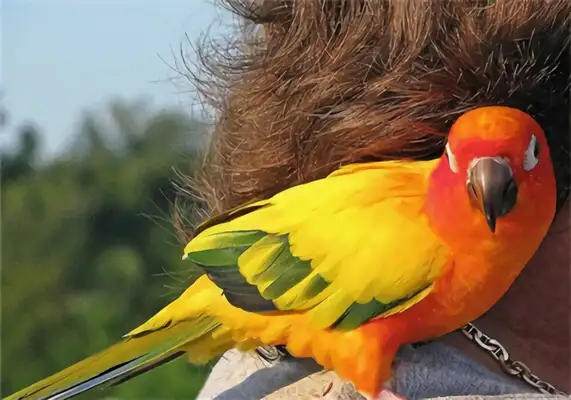
Genda parrots reproduce in the form of eggs, usually in October-January of each year, with about three eggs at a time. Jenna's parrot is a standard culinary bird, and if he's raised, you'll often see his mouth pecking, very cute.
In the wild, cone parrots eat natural foods such as seeds, fruits, berries, etc. In the birds' houses and cages, the Gendas parrots are very noisy, especially in the morning and evening, when they are scared or when people are around, and they are very resilient, quickly adapted to the new weather and environment, enjoy bathing, do not have difficulty in raising their children, provide for bites such as branches, toys, etc., and provide foods such as seeds, vegetables, fruits, nuts, pretzels, cooked eggs, whole wheat bread and, in appropriate quantities, vitamins in food or drinking water.
The cone parrots hatch for 23 to 26 days and grow in feathers for 50 days. Young birds may be fed for a while after leaving their nest, and then independently. The difference between it and the sun-cray parrot is mainly green in the back and in the wings, with the birds of the sun-cray parrot having only green feathers at the end of their wings, and the abdomen colours of the cone parrot being deeper than the sun-cray parrots, with deep orange red; they live mainly in open areas surrounded by rainforests, on the edges of forests, in falling forests, usually in groups of about 12, but sometimes in pairs or single motion.