Designation: PET4279
English name: Acanthurus japonicus
Origin: Sulawesi Island to the Philippines and along the Ryukyu Islands
Vulnerability to diseases: albino disease, rotting tail disease
Life Life: 4-5-year overview of the seven-gauge species
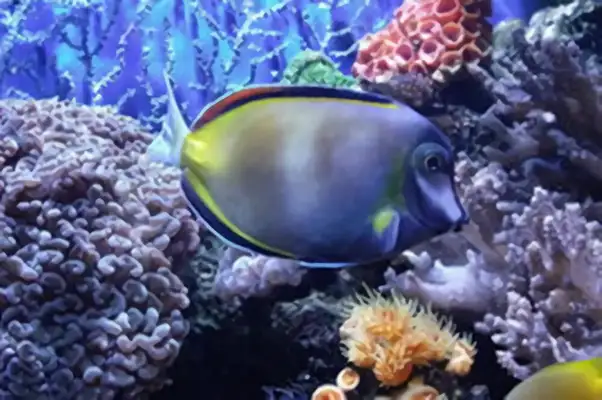
The colours of the seven colors are very beautiful, and they are very gentle, and they are very adaptable, and they fit well in naked and coral tanks. Artificial rearing of the seven-colored grafts requires the supply of more than 300 litres of aquariums to provide sufficient swimming space.
Chinese literary name: Seven Colors
Don't call it "Faces hang " (Taiwan)
Section: Crude Skin Prick
Latin name: Acanthurus japonicus
Context: Animals
Distribution: seven coloured external features of the sea off Sulawesi Island to the Philippines and the Ryukyu Islands
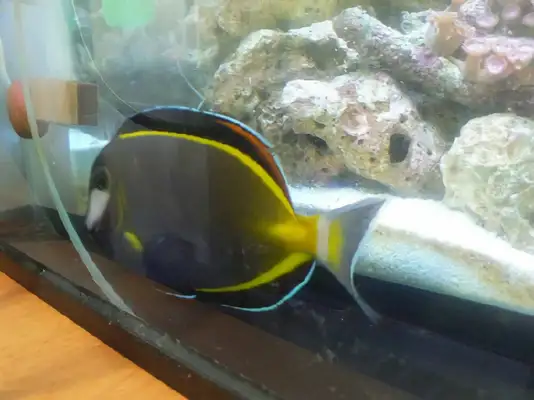
The seven-colored fish are elliptical and flat. We can tell from the name of the seven-colored hanging that it's a very beautiful hanging, that most of their bodies are in chocolate colour and their faces are white, as detailed in the seven-colored picture.
The head is small and the contours of the back of the head are not particularly high. The mouth is small, the end is flat, the upper and lower jaws are flat, the teeth are fixed, the teeth are etched. The fins of the back and hips are sharp and do not lengthen the fins; they are near triangles; and they are close transects or dents. The body is purple blue, rear or yellow; the lower edge of the eye is a white slant, and it is tilted downwards to the upper cheek; and the kiss has a half-monthly white spot. The blue edge of the back and hip fins is blue, the base is yellow, the back is thick, the back fin is orange, the tail is gray, the inside is yellow, the end is blue, the pink blue is blue, the chest fin is base yellow, the remaining black, and the tail is yellow. Acanthurus nigricans are more similar, the difference being that the head of the ceremonial locomotive does not have a white slant and the back fin end does not have orange stripes. Seven-colored breeding environment
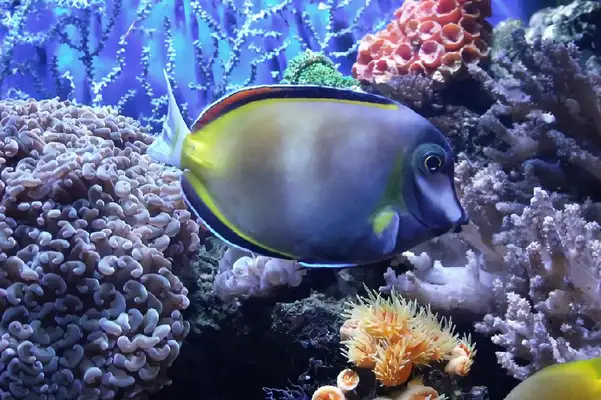
The difficulty of raising a seven-champion stock is moderate, so it is also necessary to take care of the seven-champion breeding environment during the breeding process. PH values of 8.1-8.4 and salinity of 1.020-1.025 are recommended for seven graft.
It is recommended that over 300 litres of aquariums should be used to raise the seven-gauges so that they can have sufficient swimming space. The seven-gauge is more adaptable, both in naked and in coral tanks. It is suggested, however, that one should be placed in a tank and that they are very greedy of algae. I'd like to eat some.
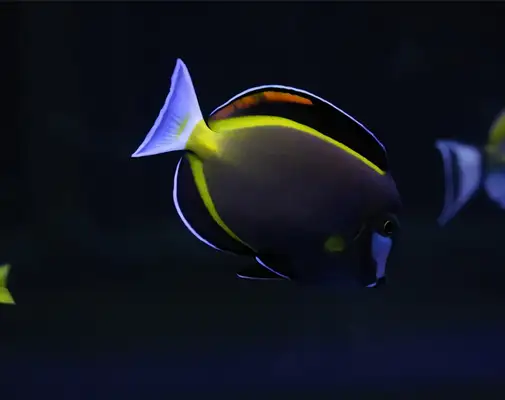
The seven-champion diet consists mainly of seaweed-based fish and, because of the difficulty of raising the seven-champion stock, attention is paid not only to the environment in which they are raised but also to the scientific nature of feeding.
While slingfish feed animal baits like other fish, care needs to be taken to provide sufficient plant baits such as seagrass and seaweed. This increases their physical immunity, reduces attacks and improves their overall health. Dry seagrass can also be attached to stones to feed and recommended three times a day. Or some artificial plant bait. It's easier.