No.: PET2605
English name: Red-cheeked Mud turtle
Character: Fragile
National origin: Honduras, Guatemala, Mexico
Vulnerability to disease: Decay
Life: Overview of species of red-faced mud turtles around 50 years of age
Red-faced mud turtles look like white-loved turtles, and red-faced mud turtles cause changes in head colours based on changes in the environment, with big reds as the top, and colour changes are related to red-faced foods, sex, etc. The resilience of the red face is strong in the egg turtle, used to walk under the water for food, so the water in the tank is not too deep, as long as it follows the water length of its back nails, and the red face does not need frequent sun suns, but occasional sun suns contribute to the growth of its calcium development, suggesting one to two suns a week. Red-faced mud turtle morphological characteristics
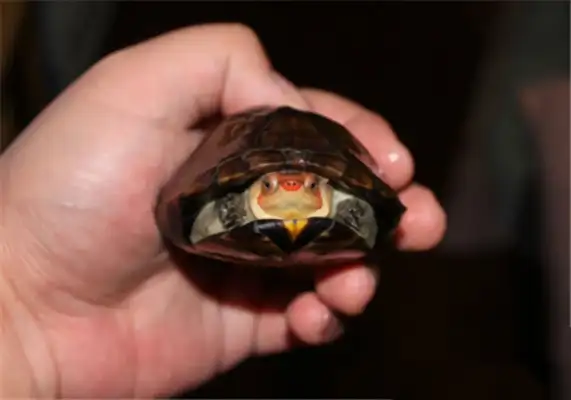
Red-faced mud turtles have similar backs to most of them, with the greatest difference being the colour change in the red-faced head. It has been argued that the red face of the country is not attractive abroad, but this is partly due to the factors of breeding and partly to the poor quality of the red face imported into the country itself.
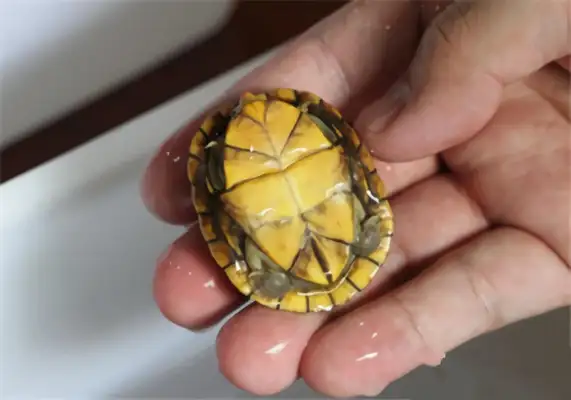
Red-faced mud turtle shells flat, grey or near black. Armours are usually milky. The tortoise has an angle in the center of its shell and has sawn teeth on its outer edge, but it disappears as it grows older. Their skin is close to the color of the turtle shells, with red marks on the neck and lower. The male has yellow marks on both sides of his head, but the female does not, and his tail is long and thick.
The mother's red-faced mud turtle erythrocyte will accumulate, of course, but the erythrobin will obviously be more than the erythrocyte. The male red-faced mud turtle erythrocyte will accumulate until the male reaches the age of strength, but after that, the red will slowly retreat and black will prevail. The reason for this may be: first, the males are older and have passed their prime age; second, the turtles in foreign countries are largely screened or eliminated, and the good ones are often kept by themselves, and the good ones are not very good.
To say that here is a reality, it is often better for a parent to be in the market today than for a public body, and, as a matter of common sense, for an average male tortoise to look better. Red-faced mud turtle care knowledge
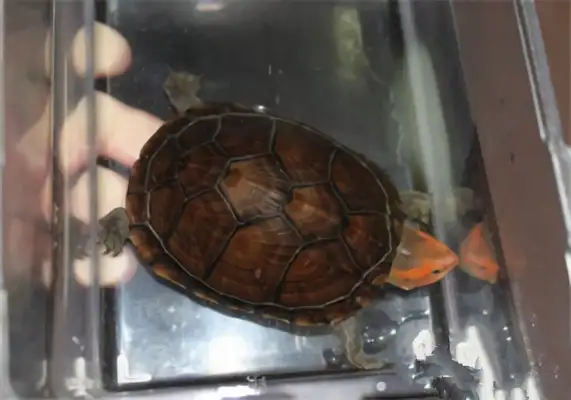
The most important part of red-faced mud turtle breeding is the accumulation of erythrin and the control of melanone, which is important for the skin of red-faced mud turtles.
I. Ingestion of constant reds
It's usually shrimp, with shrimp erythroac, which accumulates slowly in the turtle, and then shows it on the tortoise and skin, some of which slowly reverses as the turtle grows.
II. Control of melanone
Controlling this part of the melanone is mainly for the skin of the red head, not for its trajectories. And that's the key to making the red head look more red. In the case of the same red ingestion, black is well controlled (less sedimentation), that color is naturally red; and black is not well controlled (more sedimentation) and the head colour is naturally not red enough.
Of course, this type of red is not durable, it is ideal to have the essence of a flower line, which is big and top of the line, and it is also to be said that some flowers do not have colours when they are larvae, and they must be given up for a certain period of time.
Here again, the red face of the above-mentioned relationship between gender and head color, which, after its formation, is clearly free of melanone accumulation, and more importantly, many of its raisins are in the leg color, which can change from a bright red to a light colour. Red-faced mud turtle living environment
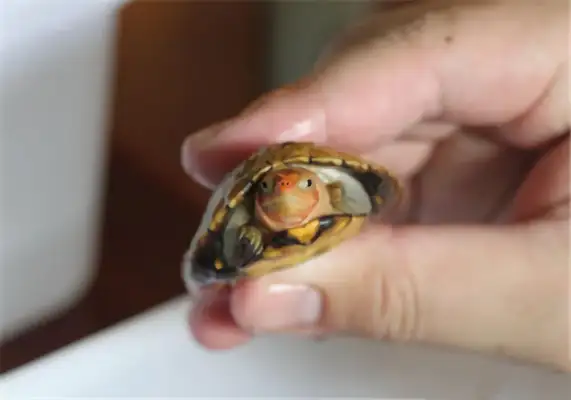
Environmental changes in red-faced mud turtles affect changes in their shapes, usually with red-faced mud turtles not taking much time to tan their backs, and with less stringent environmental requirements, which are non-sleeping turtles, which also require warmer breeding in winter.
I. Red-faced mud turtles in the wild
Although red-faced mud turtles can live in small streams and lakes in different circumstances, their habitat is more suitable for free-flowing streams and rivers and has about 2 inches of deep aquatic vegetation. Rocks on the surface of the river are rich in molluscs, shallow sludges and piles, medium nutrients and appropriate bacterial quantities, appropriate water temperature, low pollution, and a constant accumulation of sand without harm.
II. Man-made environment of red-faced mud turtles
Red-faced mud turtles can be raised with water-filled containers such as water tanks. The actual volume of red-faced mud turtles is larger than it looks, and the volume of motion is high, and other red-faced mud turtles do not irradiate ultraviolet light, nor do they use calcium. Precious turtles tend to become softer when calcium intake is inadequate; vitamin A intake is insufficient and their eyes may become white. When these phenomena occur, in addition to vitamin A and calcium deficiencies, they may also involve chronic feeding of low-nutrient foods, as well as UV deficiencies, and possibly errors in rearing methods. Food that is nutritionally balanced must be provided with the heart, and solar lamps must be used for solar bathing, etc., to radically change the breeding environment. Red-faced mud turtle breeding points
The best food for red mud turtles is red shrimp, because shrimp erythrus can be used as a source of red mud turtle erythrobins, but after all, the continuous intake of shrimp can also lead to incomplete nutrition, so care must be taken to be nutritionally comprehensive.
Although red-faced mud turtles eat all kinds of food, they continue to feed cheap and low nutritionally valuable foods, which can lead to nutritional disorders and must be especially careful. Red-faced mud turtles require large quantities of calcium and should be fed with large quantities of calcium. The recent introduction of nutritionally balanced red-faced mud turtle feed on the market is reassuring. In addition, carp feed and dog food are appropriate food. Once in a while, fresh food such as boneless fish, snake meat, rats, etc., will certainly enjoy red-faced mud turtles.
Feeding fish, meat chips alone leads to malnutrition and requires the addition of water soluble nutrients. What is described above is the food that is often provided to red mud turtles in water, such as land turtles, who do not go in water and love plant food, which is less suitable for feeding with artificial feed. Vegetables such as cabbage, cabbage and carrots are generally used to feed with nutrients. The feed of the nine birds can be fed.