It was reported that Ms. Wang ' s pet dog died while in hospital treatment, which was believed to have resulted in the death of the dog as a result of misdiagnosis at the pet hospital, which assumed some responsibility. However, the hospital indicated that they would be held fully responsible if the autopsy confirmed that the dog had died as a result of a medical error. What Ms. Wang didn't realize was that she had found a body to examine the dog.
Dog master:
The first day at the hospital said it was gastrointestinal disease and the next day it said it was diabetes.
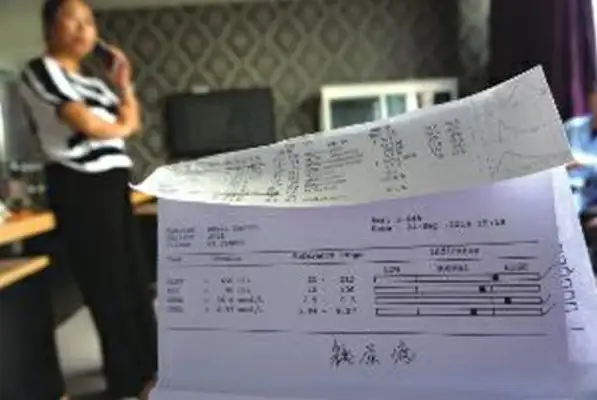
Ms. Wang raised a female Teddy, three years old, named QQQ, who had vomiting symptoms a few days earlier. Upon arrival at the pet hospital, it was the third day of vomiting, and Q threw up three or four times. “In those days, QQ was almost uneating and undrinked, dehydrated, and on the night of 23, it seemed worse. We were members of the Toibao Pet Hospital, so we called them and sent the dog to Phoenix Road, the Toibao Pet Hospital. During the night, the doctor only tested the dog for blood routines and diagnosed gastrointestinal inflammation with several injections. The pet hospital is a chain, and the next day we went to the hospital where they tested on Changqing Road, where the doctor diagnosed diabetes.”
Ms. Wang was saddened that, after a full examination at noon on 24 December, the doctor had given QQ a notice of danger and that QQ had left in the morning of 25 a.m. “It is clear that the hospital was responsible for the death of the dog, that on the night of 23rd, doctors misdiagnosed the dog and that the dog was dehydrated, but that they were also dehydrated with a painkiller that they should have supplied the dog at the time, but the doctor told us not to eat or drink the dog, without clarifying the seriousness of his condition.”
Pet Hospital:
It's recommended that dogs be sent for testing.
At midday, on 25 September, Ms. Wang and her family were debating the matter with the doctors at Phoenix’s eight-way shop. “A blood protocol alone could not be diagnosed as gastrointestinal inflammation, and would require tests of excreta, etc., which were not done on the night of 23rd.” Ms. Wang’s family said.
The doctor on duty at Phoenix Road 8 said that he did only give the dog a routine blood test, but that he did the diagnosis by, inter alia, hearing the dog's stomach, which was always barking and in pain. I told Ms. Wang that the dog was in serious condition and instructed her to bring her to the hospital in the morning to conduct a detailed examination in order to obtain a definitive diagnosis. The doctor on duty said that that night he had also suggested that Ms. Wang should hang a canister in addition to injections, but that she had not accepted his suggestion and that she did not send the dog to the hospital for a full examination until 2 p.m. the next day. In response, Ms. Wang indicated that it was more than 11:00 that night after the dog had been examined. "I didn't agree to hang the water because the doctor didn't tell me clearly that the dog was seriously ill."
“We leave the hospital at 9 p.m. because Ms. Wang was a member, and at more than 9 p.m. her mother called and said that the dog was sick, and I asked the doctor to wait for them. The dog was brought in with bones, and for days without eating, drinking or pulling, but that night the hospital had to perform a simple test, only a routine blood examination, which doctors judged on the results of blood routines and the state of the dog's vomiting, all of which were pills for pain, inflammation and vomiting, which did not accelerate the death of the dog.” One of the chief officers of the Beibao Petty Hospital said that if Ms. Wang found that she had misdiagnosed or used the wrong drugs to accelerate his death, the dog could be sent to a specialized institution for testing, and if it was determined that it had died as a result of the misdiagnosis, they would bear full responsibility.
Professional:
There is currently no dedicated testing facility for animal consultations.
Ms. Wang wondered: “It is clear that no tests are necessary to explain why the hospital was wrong”. However, after consulting with her family, she decided to take the dog to the autopsy first. What she did not realize, however, was that “the facility designated by the pet hospital can only detect the outbreak and does not accept requests from individuals for autopsies of animals for public and private purposes. Later, I contacted a number of units and government departments and said that I had not performed such tests, that I had brought the dog back from the hospital to freeze and that I was awaiting the results of the examination by the relevant function, and that I was considering taking the dog to Beijing for an autopsy”.

On 28 September, journalists from the Chinese Commercial Press contacted a number of departments and agencies and failed to find the body proposed for the post-mortem examination of animals against individuals.
“Our tests do not reach that level, like a simple infectious disease, we can test, but our results have no legal significance.” Sian Hospital staff at the Northwestern University of Agro-forest Technology said.
After learning about the journalist ' s intentions, the Agricultural and Livestock Department of the Uiyang District sent the journalist to the Uiyang District Animal Surveillance Centre. “We regulate only institutions and the qualifications of veterinary doctors, and we do not adjudicate such medical accidents, but we can help them resolve them in a negotiated manner and, if both parties are not satisfied, bring them to court.” According to his information, there was currently no specialized testing authority for such cases. According to the medical and political staff of the Xian City Agroforestry Commission, they had previously been involved in similar animal consultations, “very few, one or two cases a year, were handled in a coordinated manner, and none of them were examined by a testing agency. It is now decentralized and supervised by those who issue licences to institutions. If one of the parties is not satisfied with the results of the coordination of the territorial function, the specifics are written to us. We also have to try to coordinate as much as possible, and if there is no consensus between the two sides, there is only legal procedure.” The staff member indicated that there was still a gap in the current legislation and regulations in the case of animal consultations and that, at least at the level of government agencies, such specialized testing facilities were still vacant.
Subsequently, journalists contacted the Centre for the Prevention and Control of Animal Epidemics in the city of Sian, where staff stated that they were primarily responsible for preventing and controlling the outbreak, i.e. for the vaccination of animals. “When there is an epidemic, we can test, but it is not directed at society or individuals.”
With the development of society, dog-raising has become a trend, but the resulting pet disputes have become more serious, and the fact that there are no explicit provisions for pet disputes in the country has made it difficult for many pet parents to secure their rights and interests.