Title: PET6036
Name in English: Red-billed Blue Magpie Red-Blank Blue-Snack.
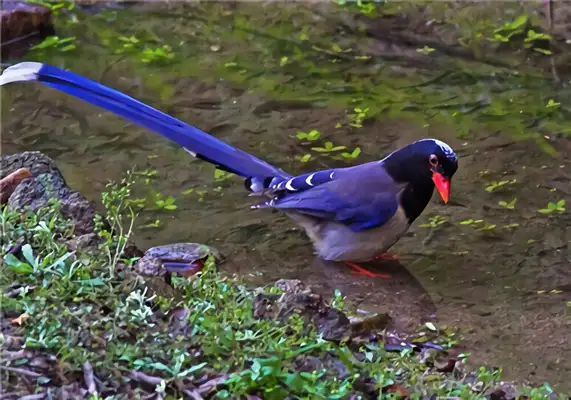
Red-billed Blue Magpie is a beautiful cage bird in size, with red mouths and feet, and a very beautiful tail curve. The yellow-blanche and red-blanche are essentially similar in shape, except for the mouth, where the yellow-blanche is yellow and the head is covered in white plaque. The distinction is still clear and is not difficult to identify in the field.
Chinese literary name: Red Mouth Blue Ribbon
Chinese aliases: Redtail, Longtail, Longtail, Long Mountain, Mountain.
English name: Red-billed Blue Magpie
Two words: Urocissa erythrohyncha
Area: Animal
Gate: Phylum Chordata
Amen: Vertebrata
Aves
♪ The world's most beautiful world ♪
(a) Passerformes
Corvidae
It's blue.
Specs: red-tongue blue-mouthed
Distribution: Beijing, Hebei, Inner Mongolia, Liaoning, Jiangsu, Henan, Henan, Guangdong, Guangxi, Sichuan, Guizhou, Xinxiang, Ningxia, Hong Kong's Red Mouth, Blue Ribbon.
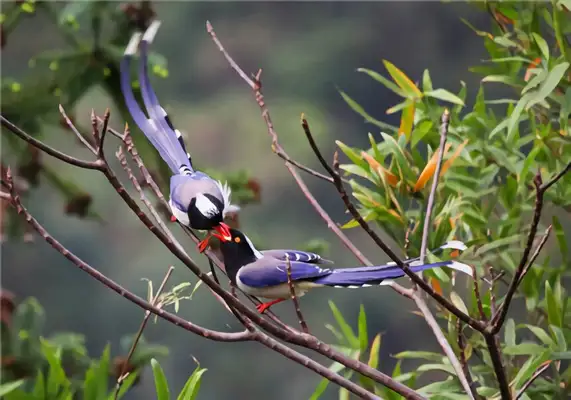
The size of the red beak is around 60 cm, the female and male body feathers are almost similar, and the red beak is a relatively noble cage. Their backs are blue and purple, their tail feathers are long, especially with two more prominent in the centre, white at the end, with red mouths and red feet, more visible and luxurious, and also known as long tails and blues.
Red-tongue blue beaks are a beautiful, body-shaped cage bird with similar male and female feathers. The front, head to neck, side, neck, larynx, and upper chest are all black, top to back, and the feathers are white, blue, white, or purple grey plume, and are growing from the top to the back, forming a large patch from the top to the back and sometimes even to the centre of the top back. On the back, shoulder, waist, blue blue or grey, brown, blue blue or blue blue, black and white at the end. It's long, it's bumpy. The central plume blues have a white endprint, the remaining tails are purple blue or blue gray, with a white endprint and a black sub end. Two wings, black and brown, primary flying plumb base purple blue, at the end white, secondary plumbs and inner plumes all bearing white end marks, and outer plumb blue. Lower throat, chest black, remaining lower white, sometimes blue or yellow. Iris orange red, mouth and foot red. The Blue Mouth living environment.
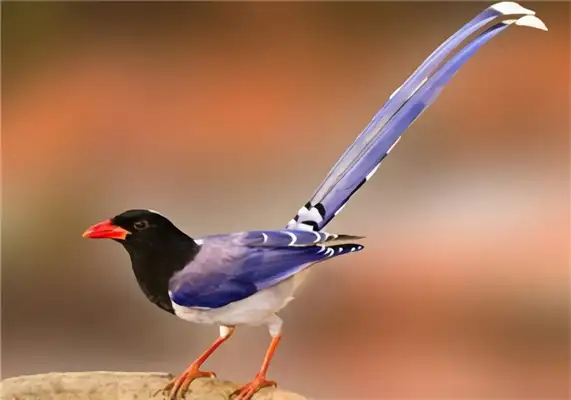
In view of the relatively long tail feathers of red-toned blue beaks, when raised in an artificial environment, it is recommended that larger bird cages should be used for exhibitions and not be suitable for small viewing cages. They are easier to breed and less demanding in their living environment.
Some people tie their necks with ropes and put them on shelves, which are more effective. Artificial feed is dominated by egg rice, while it is fed to a small amount of yellow platinum mixed powder and raw meat, as well as fruits and vegetables. A small number of insects are fed the following day or day.
Red-tongue blues are very cold and can survive the winter in a snowy environment. It is healthy to provide enough baths and baths on a daily basis during the uncold season. In the breeding environment, red-toned blue-snacks often have a habit of storing food, such as hiding insects or pieces of meat in the sutures of the cage so that they can be eaten more daily. In order to prevent deterioration of feed, it needs to be removed in a timely manner. In 1954-1956, the Beijing Zoo raised red beaks in chicken cages, nested on pine trees five to six metres high and hatched successfully, with three young birds each for two years. Red-snack blue-snack food.
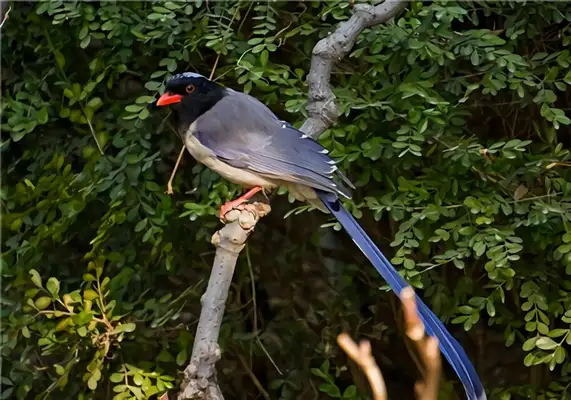
Red-mouth blue beaks, like other birds, love animal foods such as insects, and of course plant fruit is their favorite, typical groceries, easy to feed, and one of the most important watchbirds. There are many displays in zoos and many individual animals. It's good to eat a lot of pests.
The most common species of animal food are obituary worms, gold turtles, locusts, grasshoppers, flies, daisies, crickets, beetles, larvae and other insects, as well as spiders, snails, worms, fireflies, frogs, lizards, chicks, eggs and other small invertebrates.
Vegetable foods consist mainly of trees and shrubs and seeds, and occasionally eat crops such as wheat and maize.