The words “college students help walk dogs” and “college students walk dogs” continue to be hot on social platforms. This was accompanied by a wave of students helping to walk their dogs free of charge, many of them contacting their dog owners through social platforms, offering their student certificates, identification cards to gain trust, and helping their dog owners walk free of charge, which resulted in the transfer of “student's certificates for dogs”.
When the public sees this as a good thing for dogs, students and dogs, students and dogs are reminded that both should be risk-aware and cautious. On 17 June, polar journalists interviewed the owners of a number of dogs and university students walking dogs, saying that free help to walk the dogs was based on mutual trust, that they had taken risks into account before reaching an agreement “to hand over the dogs”. It was argued that the dog owner and university students needed to divide responsibilities, etc., and that violations, if committed, could serve as a basis for dealing with disputes.
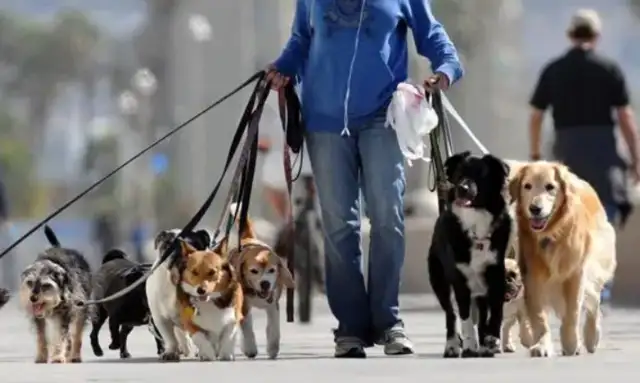
There's a dog master who's been asked by hundreds of college students to walk.
"Recently, college students are helping to walk dogs. On 14 June, Ms. Sun, from Heining Zhejiang, released a video on the social platform, and received a personal letter from hundreds of university students, all of whom said they wanted to walk their dogs free of charge, and many of them offered to show them their student certificates and offered to trade “student's certificates for dogs”. Ms. Sun explained that she raised an Alaskan dog over nine months old, weighing nearly 80 pounds, a typical big dog, but with a temperament, without biting anyone, and never barking, “I dare let college students walk my dog, also on the basis of my trust in dogs.”
Ms. Sun stated that she had felt the sincerity of hundreds of private letters sent to her by university students, many of whom had expressed their willingness to trade student IDs and ID cards for dog walkers, but she would also screen. “One is really fond of dogs, the other is to have dog-keeping or dog-walking experience and the other is near me.” Ms. Sun stated that she had also received private letters from university students from Shandong, Sichuan and Shanghai, but that she did not support this practice because of her distance and did not respond to them.
At present, four groups of university students have helped Ms. Sun to walk with her dogs, “they are basically two people who are afraid of risk”. Ms. Sun said that when giving a dog to a college student who came to walk a dog, she would repeatedly advise a college student not to feed the dog, often to drink water to the dog, to walk the dog in a place near her house, and to hold the dog in order to reach agreement “to hand him over”.

Nevertheless, Ms. Sun would be worried about the safety of the dog, she would keep sending messages to the students who walked the dog, and the students would volunteer to send her a video. “On the night of 16, when a college student didn't reply to me in time and called and answered, I almost called the police, and then they answered and apologized.” Ms. Sun said that, as the temperature was rising, and given that the dog was afraid of heat, she would then accept only university students to walk the dog in the evening.
Ms. Fong, from Liaoning Shenyang, the owner of a 7-year-old golden hairdog, also asked on short video platform on 15 June whether any university students wanted to walk her dog. In a short time, dozens of local university students sent her messages expressing their love for the dog and saying they wanted to walk her.
Ms. Fong said that two university students had walked her dog, and she had deliberately summarized the dog characteristics and the dog's attention so that it could be sent to each other before walking. Ultimate journalists saw that, in Ms. Fang ' s summed-up article, she had deliberately attached the dog registration certificate to it and mentioned that she was not responsible for medical expenses by not taking the dog out, leading to the fall of university students or leading to the fall of passers-by. Ms. Fong stated that the university students who came to walk the dog also agreed.
Ms. Fong would also ask university students to walk their dogs only near her home for an hour or so, although she would recently suspend them for a period of about one hour, given the heat of the summer and the possibility that the dog might experience such symptoms as heat.
In addition, both Ms. Sun and Ms. Fong indicated that they would ask university students to pick up their dung bags after a dog shit.
5 university students walk dogs in shifts for 13 hours.
On 12 June he saw the owner of a local Wilma hound on a social platform inviting university students to walk, a dog he had always wanted to raise, so he contacted the dog owner and was given a free walk.
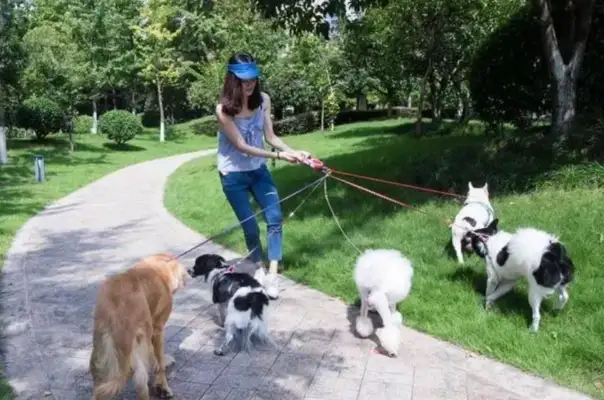
On 16 June, at around 9 a.m., Sun took his student ID and went to the dog's house to “change the dog”, where the dog's owner needed to check his ID and hold his student's card, as well as his dog's registration. "Wilma Hounds are strong and I can't do it alone, so I brought four roommates." Suen said, since the dog owner had to go out to work that day, he had been given all day walking time, and the dog owner had packed the dog's food, pots, etc. for him until 10 p.m., during which he and four roommates walked the dog in shifts, “When two people were tired, people changed classes, and when the fifth shift, the dog finally fell asleep on the ground.”
Before he went to pick up the dog, he said, "Well, we've thought about it, we're responsible for it, but we have to say, I'm addicted, roommates are happy, dogs are happy, dogs are happy."
Zhejiang Ka Xing's Yao student, who had just completed her high school exam, was moved by the fact that she had taken a social platform to draw a video from the above-mentioned Ms. Sun, but had only taken the initiative to write a private letter to Ms. Sun, at the advice of her best friend, and to confess to her that she had graduated from high school without a student certificate, but could trade her best friend's student card for a dog. "When I went to change dogs, my best friend was with me, and she brought her student card." Yao said she was also concerned about dogs running or biting while walking, but she had not considered other possible risks.
"I want to have dogs, but because of my studies, I don't have time to raise them, this way I'm cured." Yao said.
Du and Yao indicated that they would pay special attention to avoiding children, cleaning up dog excrement in a timely manner and keeping dogs safe.
Counsel claims that there is a division of responsibilities.
The director of the law firm Henan Zedheh believed that university students accepted the dog owner ' s dog walk, that the relationship of entrustment had essentially been formed between the two parties and that, since there were no property interests involved, there was a need for the division of responsibilities, etc., which could be used as a basis for dealing with disputes in the event of violations.
It is claimed that if a university student has an accident during a free walk, such as a dog bite, the responsibility is borne by the university student himself, and the dog owner can pay appropriate compensation; if the dog itself caused the injury, neither the dog owner nor the university student is guilty; the dog owner should compensate the university student in accordance with the principle of fair liability in the Civil Code; and if the dog hurts others during a walk, the student is not liable as a trustee, and in the absence of a special agreement, the dog owner is liable within the bounds of the trust, i.e. the dog walk, but the dog owner is not really exempt from liability if the parties have previously agreed. Because dog walking is unpaid, the owner of the dog is still properly liable if it is unfair that all incidents during dog walking are borne by university students.
It was also stated that pet dogs were private property, and that if others had other intentions to take them away, the owner of the dog could request the university students to return the dog, in accordance with the Civil Code provisions on undue profit. In the event of injury to the dog or of an unexpected situation such as the wrongful consumption of toxic substances, the owner of the dog may claim the performance of defects in the contract of entrustment, demand restitution, compensation for damages, or require the intervention of the school on the basis of documents such as the student's certificate.