Designation: PET2119
Character: Nice and interactive.
Origin: Different varieties come from different places
Vulnerability to disease: water choke
Life: Life by species
Prices: Overview of egg turtle species with large price differences according to variety
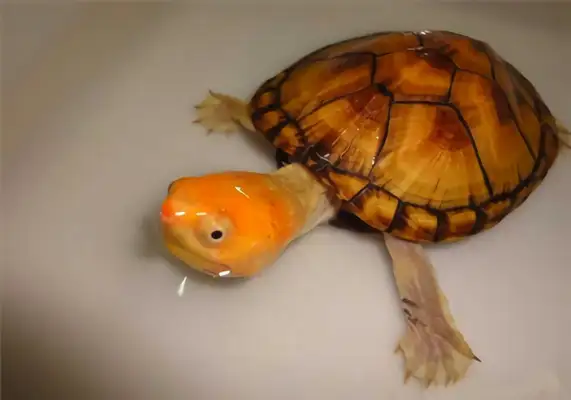
Egg turtles are an increasingly popular species of pet turtles, but they are not exactly a species, but the sum of many species. In biological classification, there are four species of egg turtles, each of which contains many species of turtles, each of which is different and more difficult to judge.
The name “egg turtle” is derived from its appearance as an egg. A common term for this type of science is called “Violent Tortology”, which is well known for its active and closed abdominal abdominal abdomen, and which is subordinated to two Asiacos and four sub-species, including some sub-species. Among them are musk turtles and turtles, which are named after scholars who are found because of the musk smell that they can spread when threatened. As a result of its unique habit of hiding in the mud for hibernation or hibernation, the term “truck” has been used since.
Chinese literary name: egg turtle
Context: Animals
Gate: Pipeline gate
Programme: climb
Tortoises.
C: Turtles
Cast: Egg turtle
Two Jacobs:
Staurotypinae: contains a box of turtles and musk
Kinesternine: contains musk turtles and turbo turtles
Four belong to:
Box turtles: narrow bridge musk turtles
Big musk: Mesoamerican giant egg turtle, Mexican giant egg turtle
3. Muscle turtles: common musk turtles, slashback musk turtles, flatback musk turtles, giant musk turtles, muskback turtles
4. Tortoises are: fruit-shell turtles, Harera turtles, laced turtles, Mexican turtles, Oaxaca turtles, Alamo turtles, narrow bridge turtles, wrinkled turtles, Jalisco turtles, Colombian turtles, Eastern mud turtles, Mississippi turtles, Florida turtles, yellow turtles, Arizona mackerel turtles, Tuzhou yellow turtles, northern white lip turtles, southern white lip turtles, Soola turtles, Amazon turtles, Cha, central Slutle turtles, diphtheria turtles, red-faced mud turtles, Mexico fury turtles. Egg turtle morphological characteristics
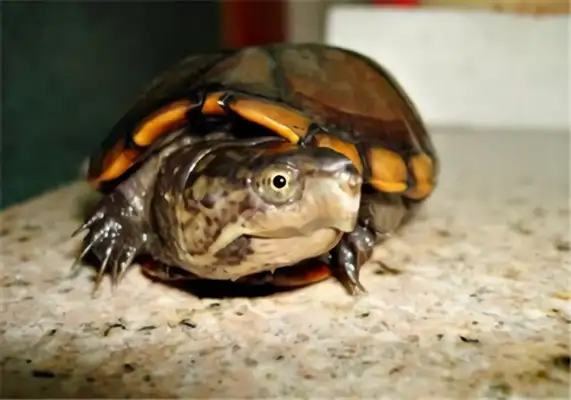
The morphological characteristics of the egg turtle cannot be generalized, because the egg turtle is the sum of a turtle, not a turtle's finger, but we can move on to describe its approximate shape according to the same characteristics.
In general, turtles are small in size, usually 10-16 CM in length, mostly with a hemispheric shape and a spine. The turtles of the musk turtles, however, have a larger body size of 25-40CM and are often more female than male, as well as three visible and more fully developed vertebrate bones in their backs. It's a cross-cruising abdomen, very visible. The smallest non-mixed turtles are non-mixed, usually not more than 6 inches in length, with yellow and orange in the back armour and orange or red in the abdomen. They are usually located in North America, and it is clear that the United States remains their primary source and habitat.
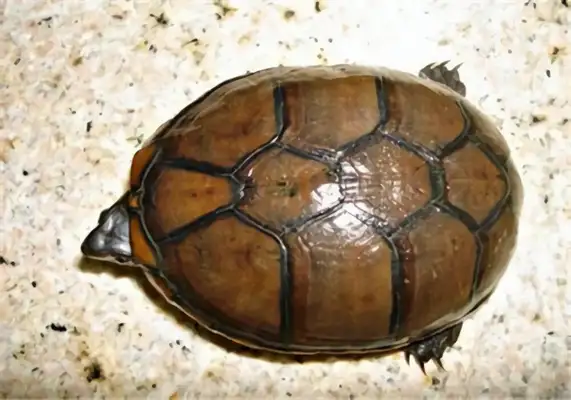
What's an egg turtle and which one's a turtle? In fact, the turtles are not a turtle's name, but rather involve a few species of turtles, all of which share a common characteristic, namely, the elliptical shape of the backs, and smooth, looking up and down like a big egg, long and long, their loved ones give them a friendly name: the egg turtle, and add an egg to the back of the names of the different species, such as the Salvin giant egg, the Mexican giant egg, the red egg, the white lip. The understanding of egg turtles begins with their scientific and academic names, and the turtles are basically involved in: the box turtles, the musk turtles, the musk turtles, and the pecan turtles. egg turtle conservation knowledge
The way in which egg turtles are raised is similar, from the setting of tanners to temperature control, from the frequency of water exchange to the point of feeding, the sweet little creature, the egg turtle, has been slowly understood, accumulated experience and slowly developed and studied, and the following is a description of the conservation elements of the egg turtle.
1. Sunback: All turtles need land (especially fruit cores and helmets) and must be prepared for sunbacks in order to prevent skins and rotting armour. Muscles can sometimes be used, especially razors. Although not demanding for light, proper sunlight is also necessary and it is not expected that your imported equipment will replace the sun.
2. Control the temperature differential: individuals feel that the temperature difference between water temperature and temperature is within 3 degrees, and that your turtles are virtually free from the risk of cold or even pneumonia.
3. Minimize the need for water exchange: Water exchange is necessary, but it is also undesirable to exchange water in excessive numbers or quantities. In fact, if you have a filter, you can get at least one third of the water in a week. Water exchange can also lead to cold and skin. So you have to control water temperature, especially winter.
4. Eat less: eggs are fed almost twice to three days enough, even if they are given daily. If you feed too much, it will only increase its stomach burden.
5. It would be preferable not to mix: eggs are a very bad breed, so try not to have one, if it is really to have one, and control density. It's highly recommended that the feed fish should not be in there, because if your tortoise bites each other, the tortoise fish will attack the wound, which is very bad for the turtle and causes bacterial infections.
Last but not least, these five species of turtles are listed on their lists:
Water habitat ranges from high to low: razors, musk, red face, white lips, yellow hair, helmets, nuts.
The size of the diet varies from yellowzawa, red face, white lips, helmets, nuts, musk, razors.
Easily perfluorinated and rotting armour can be easily ejected: kernels, helmets, white lips, red face, yellowzawa, musk, razors.
Tortoise sizes range from large to small: razors, white lips, red face, yellow velvet, helmets, musk, nuts.
It is difficult to raise turtles easily: nuts, helmets, red faces, white lips, yellowzawa, musk, razors. Egg turtle living environment
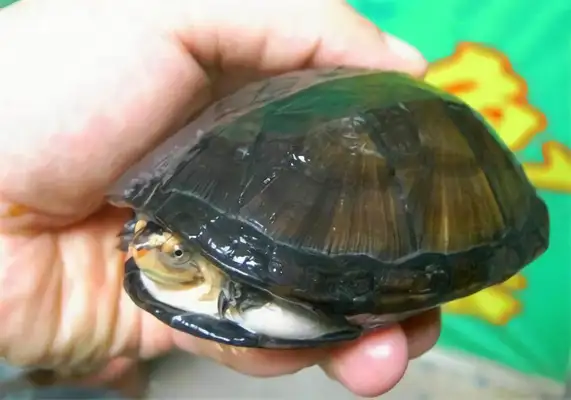
The conditions in which egg turtles live are more complex, but most of them like deep water, where they are good swimmers and are not afraid of humans, so deep water feeds them, so we can see the cute side of egg turtle swimming. So, what are the requirements in the field of egg turtle survival?
The living conditions of egg turtles vary according to type, but generally they prefer slow or static water. These areas usually have soft river beds with sand and sludge, with large quantities of aquatic plants.
Special living conditions can lead to complex interactions, even between special species and sub-species. The essence of this includes the type of subsoil, the existence of vegetation and the flow of water bodies, which interact with factors such as the size of predators, changes in the living environment (natural or man-made) and changes in local climatic conditions (e.g. Webster, 1986, Christiansen et al., 1989, Stone et al., 1993). The site of sun tan is not an essential element, but when they are needed, some types make full use of the terrain.
It is reported that ordinary musk turtles (Sternotherus odoratus, or Mississippi musk turtles) climb trees and slowly climb onto branches a few metres above the surface, and if disturbed, fall into the water. S.m. minor has a similar tendency. (Pritchard, 1979) and some types, especially in arid areas, live in some temporary waters. During the dry season, they hide in the mud and sleep in order to wait for water recharge when it rains. Egg turtle feed.
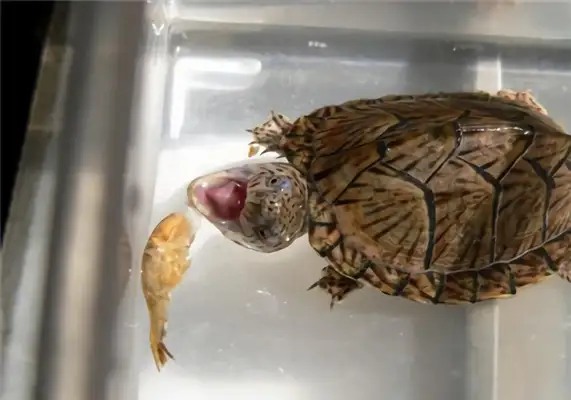
Among egg turtles, we need to focus first on water quality control, which is a highly water-dwelling turtle, so water quality control is important; and secondly, the effects of light, which requires similar requirements for other turtles. And finally, the choice of food, the health of the egg turtle.
I. Water quality control
The tank of the egg turtle recommends filtering, especially if the filtering effect is best to keep the water quality stable over the long term, but it is still the habit that if large amounts of faeces and feed residues are seen in the tank, they must be removed immediately to prevent the water from spoiling and thus affecting the health of the turtle. I have to add almost a third of the water per week to make up for the evaporation and keep the water fresh and clean, because it's always warm.
Tortoises breathe with their lungs, and as long as the filtration system is in place, it's okay not to replace the whole tank of water for years.
Food choices
Let's talk about egg turtle food. It can always be preferred to feed turtles and occasionally to feed prawns and so forth, or to feed fish and mysid shrimp in the diet. After this period of experience, it can be found that this will indeed make the egg turtle strong, so it is perfectly feasible. It is also a viable way of refilling calcium when calcium in small pieces can be fed to the egg turtles.
Requirements for light
The need for sunlight is still needed, and if sunlight conditions are not good, UVB can be used for exposure, which can also work for an hour each morning and night. And remember to try not to dehydrate the egg turtle. To avoid forgetting that time causes unnecessary tragedy.