Title: PET3043
English name: Phrynops williamsi
Origin: South America; Argentina, Paraguay, Uruguay and Brazil
Vulnerability to disease: decomposition
Life, life and 40 years of masked neck turtle species.
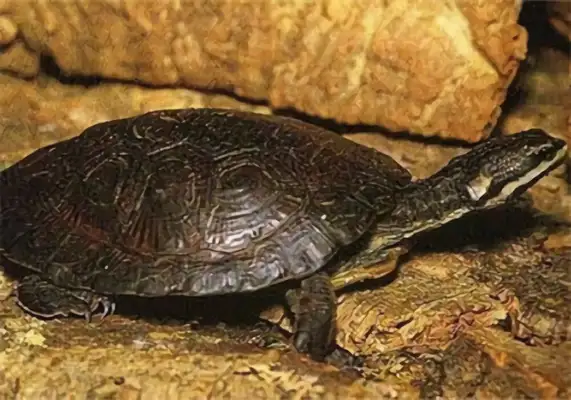
The masked tortoise, also known as the masked tortoise, is one of the many branches of the turtle, which prefers the sun to the back, half-aqueous turtles in the wild, with small numbers of artificially grown individuals, mainly in South America.
Chinese name: Mask-side neck turtle
Chinese alias: masked turtle
English name: Phrynops williamsi
Context: Animals
Gate: Pipeline gate
Amen: vertebrate Amen.
Programme: climb
I'm looking for a turtle.
C: Snakes and turtles
Yes: Tortoise
Cast: Mask tortoise
Geographical distribution: South America; Argentina, Paraguay, Uruguay and Brazil.
Living environment: semi-water habitat in the wild; stream.
Feeding points: medium-to-large aquariums with suitable sun tans and hideouts; mats of dirt, natural mud, gravel, rough sand.
Reproduction: Eggs.
Food: meat. Mask-side neck turtle morphology
The masked tortoise has beautiful stripes and colours. Black turtle shells have grey and green spots; pink bottom ministers have irregular black spots. The head is flatter and the surface has a small, irregular white dot. Mask-side neck turtles are very lively and should choose to be raised in deeper casks so that they can swim freely and enjoy high value. The full vest can be up to 35.5 cm. Mask-side care knowledge.
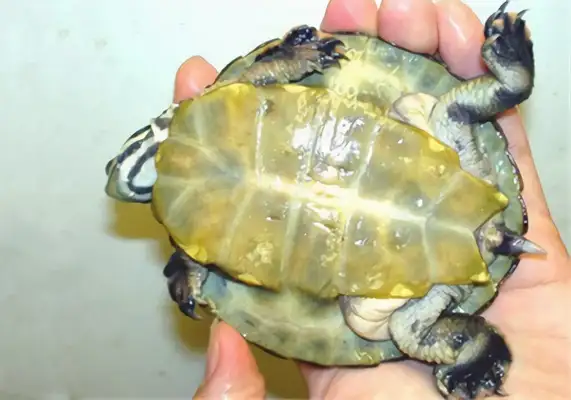
There are many species of tortoises, and there are similarities and differences between different species of turtles, and masked neck turtles are a relatively easy breed, either in the environment or feed, to draw on the general knowledge of care of semi-aquatic turtles.
I. The point of care for masked neck turtles
Mask-side neck turtles grow faster, starting with larvae, and one year later they can exceed 10 cm. This turtle has an extra-genre and low water quality and temperature requirements and may be one of the most easily fed aquatic turtles of all sizes. The character is very lively and the food is better. In addition, masked neck turtles prefer sunlight baths and should be provided with a better land environment. It is largely based on artificial feed, but it can also occasionally feed some live fish and so on, where it can see its head swaying after the small fish, raising it at 20 to 32°C.
II. Reproduction properties of masked neck turtles
Mask-side neck turtles are aquatic animals with multiple spawnings. As a rule, the first spawning takes place at the earliest in mid-May and at the latest in early June, with the spawning period ending a few days before and after the fall, while the productive period ranges from man to summer. The spawning usually takes place after 10 p.m. The female climbs out of the water and chooses a shade or grass with a higher surface, a backwind to the sun, and no water to accumulate, with a particular preference for laying eggs on loose and wet sand. When mature eggs are laid at once, they are stopped immediately if they are shocked. When the eggs are laid, the sand is removed from the cave with the back claws, then the sand is flatted with the abdomen and crushed without visible traces. The masked neck turtle living environment.
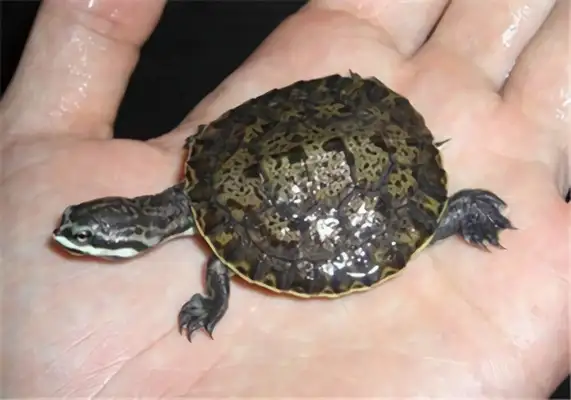
Mask-side neck turtles are more timid, semi-water-dwelling turtles who prefer to live on wet land in a wild environment, but are also adapted to life in water, with the option of raising them in water and providing a tan, as well as the choice of the terrestrial environment and securing moisture.
I. Environmental temperature requirements for masked neck turtles
The masked tortoises live in wet, dark, plant-rich environments. When the surrounding environment is quiet, they carefully climb out of the dark sun and catch. Due to the abundance of fungi, bacteria, including harmful bacteria, in the damp environment, adequate light must be provided under artificial breeding conditions to prevent infestation by turtles, as well as to prevent epidemiology. Indoor rearing of mask-side neck turtles is more appropriate with UVB lamps for 4-7 hours per day and UV rays for 1-2 times per week. Ensure ambient temperatures within 25 ~ 32 °C.
ii. Mask-side neck turtles like wet environments
The desired relative humidity of the masked neck turtle is 50-70%. The suitability of humidity not only directly affects the health of the turtle, but also affects the success of the masked neck turtle. The crust of a turtle, which lives in a more wet environment, is smooth, while the masked neck turtle, which lives in a dry environment, cannot be completely accelerated. As a result, the shell looks rough and condensed. Humidity is usually controlled by water spray. The frequency of water spraying varies according to climate and season. Water is usually sprayed 1-2 times a week in spring and autumn, and once every 1-2 days in summer. The key to the masked neck turtle.
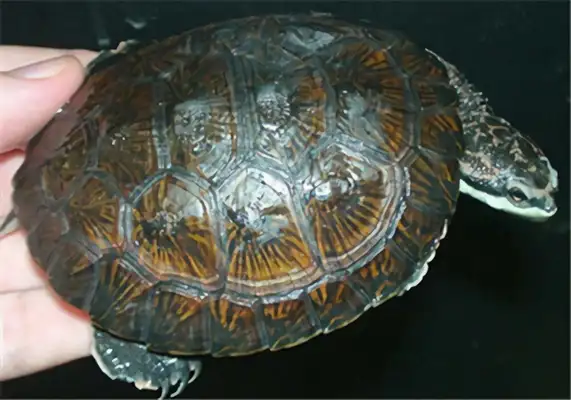
Mask-side neck turtles do not have a clear choice of food and are groceries turtles, which make it easier to raise, and much food is available to them. However, care should be taken in raising the food in a balanced manner and in the way food is fed and learning to judge the health of the masked neck turtle.
i. Food selection and feeding points for masked neck turtles
Mask-side neck turtles are groceries, gills. Animal foods include insects, small aquatic animals, invertebrates, such as snails, snails, earthworms, worms, crickets, yellow powders, etc.; and cat foods with low fat, dog foods. Vegetable foods include vegetables, guacamole, etc. such as tomatoes, bananas, hollow cabbage, grass and grapes.
Daily feeding is appropriate once or twice a day. In spring and summer, higher feeding rates are given, and in autumn and late autumn, especially when temperatures are unstable, it is preferred to be less fed or less fed, or else to suffer from diseases such as indigestion as a result of high temperatures and food intake by turtles. Food types are more appropriately mixed with entropy, and animal food is used to feed between 1-2 times a week.
II. Health monitoring of masked neck turtles
A healthy masked tortoise is pink or peach red. The presence of white or white ulcer indicates that the turtle is ill. Healthy turtles, bright eyes, full of God, no slime and no secretions. The sick turtle has white bean slag in his eyes, and he is swollen. Nostrils around dry, no slime. There is slime in the nostrils of sick turtles and there is blood in serious cases. Healthy turtles have cylindrical, brown or dark green faeces, which are abnormal when presented with liver, khaki and light green.