Designation: PET5511
English name: Chinchilla Rabbit
Nationality: French
Epidemic: ballworm disease
Life: An overview of blue rabbit species 5-6 years old
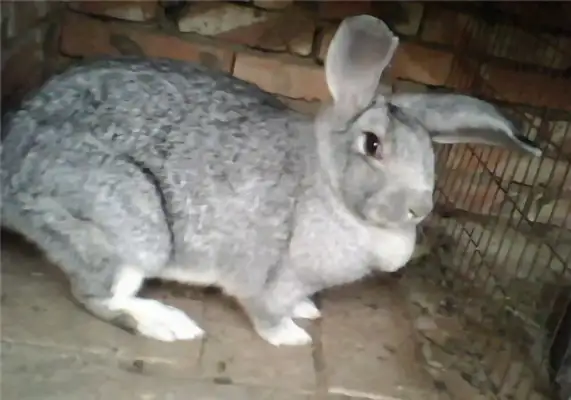
Our country has a long history of farming with the introduction of better skin and economic rabbits by blue blue rabbits, who have adapted over time to live in China, raising more of them.
Chinese literary name: Blue blue rabbit
English name: Chinchilla Rabbit
Context: Animals
Gate: Pipeline gate
Programme: Lactation Programme
FIND: RABBITS
Section: Rabbit Section
Yes: Rabbit
Cyan blue rabbits
Distribution: Born in France and bred by a mix of blue Bevelen, Garen and Himalayan rabbits. The blue blue rabbit, which has been introduced into our country for more than half a century, is well received and widely distributed, particularly in Beijing and Shandong.
Reproduction properties: Blue blue rabbits are good skin and rabbits, and the most common experimental rabbits. The blue blue rabbits, which are grain-tolerant, adaptable, thick-skinned and hairy, have historically generated several world-wide breeding heats. It has good fertility and genre, with an average of 45 grams of fresh life, 55 grams of high height, 0.9 to l kg of weaning for 40 days and 2.2 to 2.3 kg of March age. Blue blue rabbit morphology
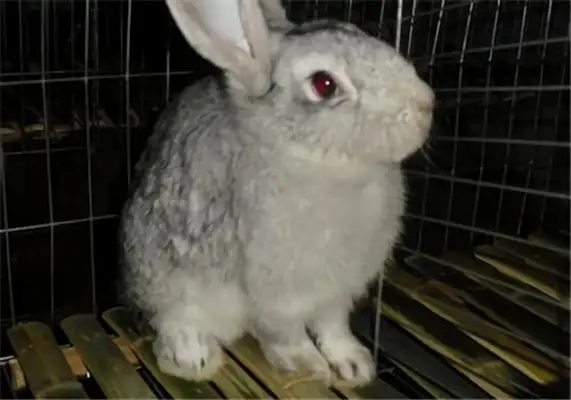
The blue blue rabbit's hair colour is the biggest bright spot, a colour close to the blue gray, and the natural colour is distributed to people in a sense of beauty at a level, with a superior quality of hair, so it is usually sold as a fur rabbit.
The blue blue rabbits, which are covered by blue hair, are divided upwards from the base in five segments, i.e., deep gray - milk white - bead gray - snow white - black, which, when blown by the breeze, are vortexed with hair, wheeled around and very beautiful. The ears and tails are black, the eyes, the bottom and the abdomen are white, and the abdominal base is gray. Because of its special hair color, which resembles a South American mammoth rat, the pronunciation is called the blue blue rabbit. The blue rabbits are symmetrical, moderate, long-faced, blunt, medium, straight and slightly tilted towards both sides of the ear, wide-eyed, brown or blue, robust and large.
Blue rabbits can be divided into three types:
Standard type: Small, compact, short-eared, face circle, adult female rabbits weighing 2.7 ~ 3.6 kg and male rabbits 2.5 ~ 3.4 kg.
2. American: In 1919, the United Kingdom was created by the introduction of a standard form. Medium length, full hip, 4.5 ~ 5.4 kg for adult female rabbits and 4.l ~ 5 kg for male rabbits.
Magnificent: mixed with the Frand rabbit. Large, muscular, flesh-skinned, long ears, some ear-strangling, one ear-liding, all with meat. Adult rabbits weigh 5.9 ~ 7.3 kg and rabbits 5.4 ~ 6.8 kg. Growing fast, 3-4 months were about 2 kg. The slaughter rate was 48 per cent. 4-5 nests per year, with an average of 7-8 children per nest. Cyan blue rabbit care knowledge
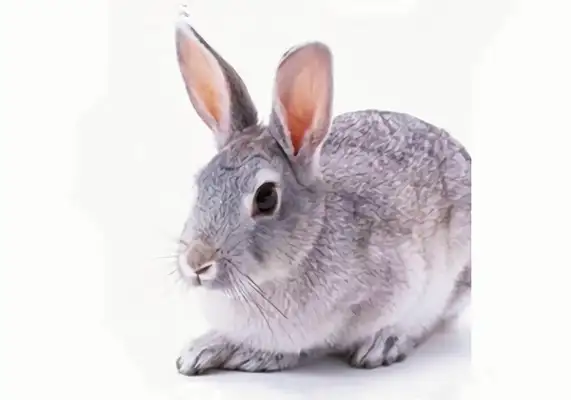
The most important part of blue rabbit breeding is the nutrition of hair, the quality of which is related to the ultimate economic gain, so in raising it, focus on the preservation of hair. The following approaches can help the hair of blue rabbits to be healthier and the owners can try to use it.
I. NUCLEAR DRUGS
1. Catalyst with fish liver oil: with vitamin A1,500 international and vitamin D150 international, the growth rate of rabbit hair can be significantly accelerated by feeding 0.6 ~1.2 ml per day.
2. Pumping of raw eggs: The eggs contain rich suluramid acids, such as scythaine, which are necessary ingredients for synthetic rabbit hair and therefore have a significant catalytic effect. One egg per day for every 5-10 rabbits, mixed. In addition, the addition of trace elements and multi-dimensional additives to feed can have a good catalytic effect.
II. DRUG DRUGS
1. Feeding cyclophosphate acetamine: The use of cyclophosphate is not only growing fast, but also extracting well. 80 - 100 milligrams per kilogram of body weight and 20 - 30 minutes of hair extraction.
2. The use of alcohol and ginger accelerants: before cutting, the brushing of rabbits with a spoonful of soju and a small amount of ginger ablution (with care not to graft into the eye) can make the hair of the rabbits thick and full, with a cut of about five days in advance and an increase of 15-20 per cent in the volume of gross production. Blue blue rabbit living environment
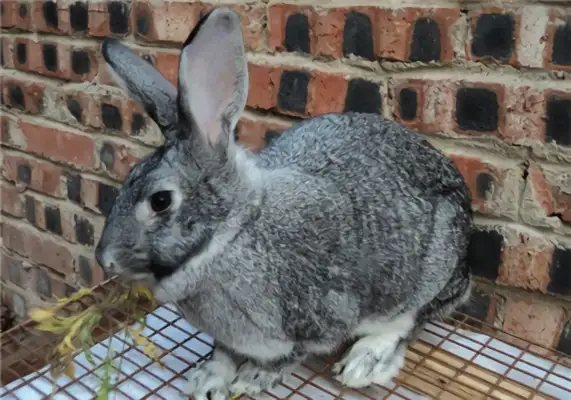
When raising blue rabbits, care must be taken of the setting of the environment and the placement of rabbit cages, and some of the owners would place rabbit cages on the balcony, which is unreasonable, especially in the north, where the balcony is cold in the winter and rabbits can easily catch cold.
I. Sunshine and ventilation requirements
Don't leave rabbit cages where the sun can be tanned. It's good to have sun in the middle of autumn, winter, early spring, but other seasons are not suitable and heat is due. It should be placed where it can be ventilated, but not in the wind, where it is not suitable to blow straight.
II. Temperature and humidity requirements
Consideration should be given to the location of rabbit cages in a relatively warm winter and relatively cool summer. It must be dry, wet, like a toilet, which is particularly inappropriate for rain and disease.
Cleaning requirements
It is important that the environment be clean, that there be no dust, and that the corners that cannot be cleaned, such as the bed floor, which is packed with miscellaneous items, be closed to rabbits, not only to keep their bodies clean, but also to prevent disease.
IV. Distance from air conditioning
Rabbit cages are located far from air-conditioning vents, and sudden temperature differentials caused by air-conditioning switches cause rabbits to suffer from disease, especially cold.
V. The balcony is not suitable for rabbits.
Even when windows are sealed, the temperature on the balcony remains cold in the winter and much hotter than in the summer. There are no problems unless the windows can be sealed well. The point of blue blue rabbit breeding.
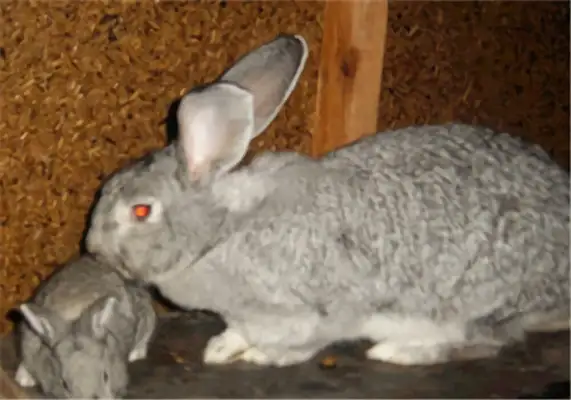
Do you think it is really reasonable for some parents to feed a variety of rabbits in combination when raising blue rabbits in order to ensure their nutritional balance?
I. Is it really good for rabbit food?
Parents mix a variety of rabbit foods, which in fact destroys the balance of each rabbit food itself. There are branded rabbit foods, which are not evenly balanced, but which are not suitable, and which may not be suitable for your rabbits or rabbits in a particular area. And if the nutritional ratio is really uneven, it's not even if we mix it.
II. POSSIBLE PROBLEMS OF MIXTURE CONTRIBUTIONS
The first is to make rabbits pick. Blue blue rabbits have multiple choices every day and are likely to develop the bad food selection. It's true that a lot of rabbits have reacted. The second is likely to increase the burden of the cyanide blue rabbit digestive tract, which adapts to a variety of foods. The blue blue rabbits, whose digestive tracts are not so strong, are particularly unsuited for blended food!
If you find out that some rabbit ate your blue rabbit doesn't look good, or you hear that there's something wrong with some rabbit food that you can't forgive, then change it for another brand. It would be enough to mix two rabbit foods for the blue blue rabbit, and there was no need for one plus one and then one. If you're trying to fix the taste of a blue blue rabbit, then reduce one of them as a snack. Blue blue rabbits with less good health, blue blue rabbits with more digestive tract problems, and young rabbits, do not eat mixed foods.