No.: PET1843
English
Nature: timidity
National origin: Thailand, Cambodia, Malaysia
Vulnerability to disease: Decay
Life: An overview of the species of yellow-headed temple turtles over 100 years of age
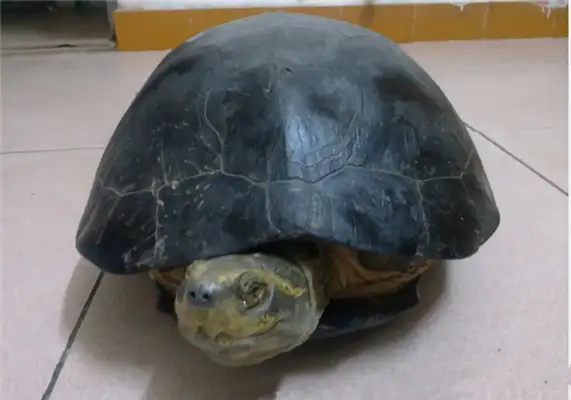
The size of the yellow-headed temple turtles is relatively large, and it is often found that wild turtles weigh more than 20 kg, that the price of the turtles is not very high, that many of the working individuals are now on the market and that they are convenient for the temple turtle lovers, and that wild turtles are now protecting animals.
Temple turtles and watermelon turtles and Zawa giant turtles are also known as the largest “three water turtles” in Asia. It is difficult to raise wild yellow heads of temple turtles and no new breeders are recommended. A generation of artificial seedlings is currently available on the market, which is less difficult to raise and can be tried.
Chinese literary name: Yellow Head Temple Turtle
Latin name: Hiremysanandalei
English
Don't call it a temple turtle, yellowhead turtle.
Context: Animals
Gate: Pipeline gate
Programme: climb
Tortoises.
C: Turtles
For Eastern Turtles
Feeding: vegetable feed
Geographical distribution: in Thailand, Cambodia, Malaysia.
Practice: Living in rivers and streams. I can live in the sea for a short time.
Reproduction: Eggs
Female and male identification: male abdominal aperture, thick and long, female abdominal arctic flatness, close to the edge and short tail.
Lifestyle: living in rivers and streams. You can live in seawater for a short time and eat vegetable feed.
(b) Feeding equipment: Temple turtles are less demanding for rearing equipment and can be used in various pools, but must be placed in a “water” piping form, i.e., a water section in a pool and a land rest section.
Livestock management: newly arrived temple turtles are rarely crawling, their heads are condensed in their shells most of the time, they crawl more in the evening or at night, and when they are shocked, they make “shocks”. Yellow Head Temple Turtle Form Characteristics
The size of the yellow-headed temple turtle can be up to 50 cm long, with a maximum body mass of more than 20 kg, a small yellow spot spread over the head, a yellow spot with a black eye, a “W” type at the centre of the upper cavity, and a small sawn tooth. There are no visible vertical stripes on the head. The back of the mantle rises higher in black, with the abdominal to yellow and black mixed, individually light yellow, brunette with four limbs, acne between toes, and moderate tail. The knowledge of yellow head temple turtle care
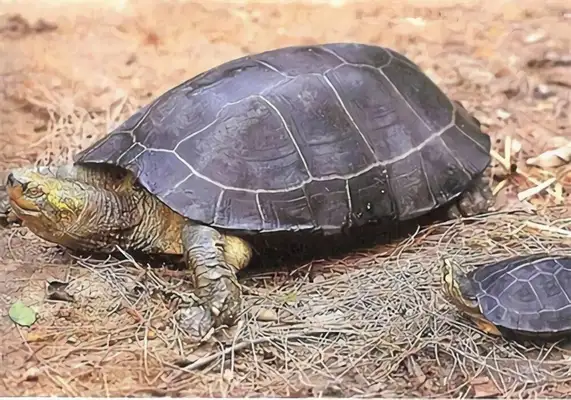
The artificial raising of yellow-headed temple turtles is simple, and some wild individuals are more complex, but the adaptive capacity of artificially grown individuals who are now sold on the market is strong and can be tried as beginners. Yellowheads are large turtles, and if there is not enough space, do not try to raise them.
I. Purchase of yellow head temple turtles
The selection process is based on the status of the yellow head tortoise, usually the selection of larger and heavier individuals, newly arrived tortoises, with little movement to climb, most of the time condensing the head into the shell, more creeping in the evening or at night, and the sound of “scream” when shocked.
II. Food choices for yellow head temple turtles
The yellowheads are more exclusive in their diet, and the masters feed the fruit or vegetables. It is normal for newly purchased turtles to refuse to eat, and for those who are familiar with the environment and who eat, they should be raised individually and then blended with other turtles after they have gradually been tamed to protect them from fear.
III. rearing management of yellowhead temple turtles
In rearing management, temperature is key to raising turtles. In the spring, summer and autumn seasons, the temperature is high and stable, with normal feeding, digestion and defecation at above 23°C. In the early spring and late autumn season, owing to unstable temperatures, poor rearing and high risk of disease, generally below 18°C, without feeding, the ambient temperature must remain above 23°C and not below 20°C for long periods, and can be stopped if the temperature increases unconditionally. Yellow Head Temple Turtle Living Environment
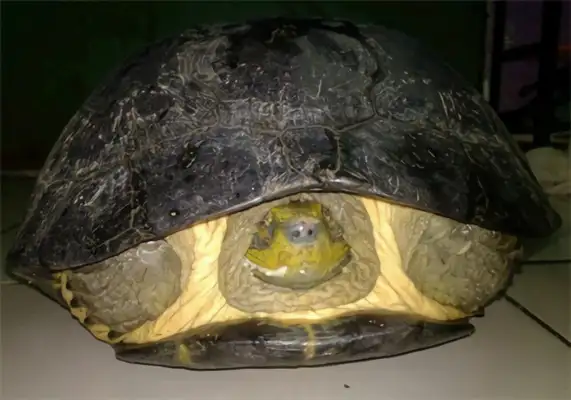
Yellowheads belong to semi-water turtles, but, relatively, yellowhead turtles prefer to be in water, and even so, we have to lay them out for land and water. The yellowheads are a relatively large species with special requirements, so if there is not enough space, try not to raise them.
I. THE FIELD CONTEXT OF THE HUNDRED PURPOSE TORTURE
Living in rivers and streams, they can live in the sea for a short period of time, but they also have some terrestrial habitivity. The native environment of the temple turtles is close to the tropical climate, with high temperatures and short hibernation periods, which are not adapted to the cold climate in the northern part of the country, and friends outside the two broads, Hainan, Yunnan and Fujian-South suggested warmer breeding. There are a few examples in Jiang Zhe, Hunan, Guizhou, Sichuan and Jiangxi, where temple turtles can survive in the local climate, but the growth rate has a greater impact.
II. rearing of yellowhead temple turtles
Newly arrived temple turtles rarely crawl, with their heads condensed into their shells for most of the time, with more creeping in the evening or at night, and the sound of “shout” when shocked. The vast majority of low-lying mountain turtles carry parasitic leeches, which need to be erased with drugs such as cool oil or iodine volts, can also be immersed with potassium permanganate solutions or salt-rich water, and a few with washing powder water, which has also had a significant effect, but due to their strong erosion, is recommended for careful use. The predatory nature of the turtles is more homogeneous, with only a small number of them being slightly carnivore, with the main fruit or vegetables being raised artificially. The point of yellow head tortoise breeding.
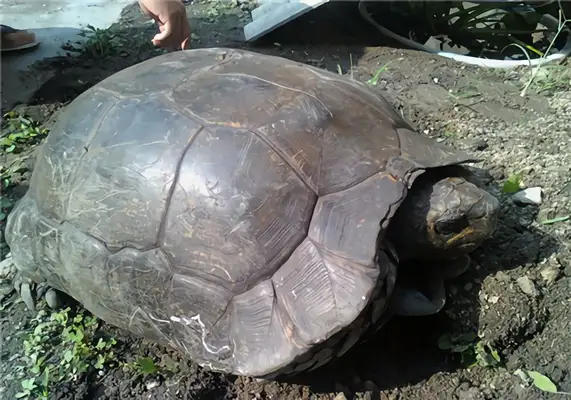
The newly purchased yellowhead turtles suffer from food problems, that is to say, there will be a time when they don't eat, and don't worry about it, and they will eat naturally as long as they become familiar with the environment.
I. What do you eat?
Pyramid turtles, like most water turtles, are impregnable, unlike other water turtles, prefer plant food, so they are normally fed on green vegetables as staple foods, with complementary foods for fruit. During rapid growth, juvenile turtles can be fed to fish shrimp food and complementary feed to supplement nutrition.
ii. Attention of Yellowhead Torrent Feeding
In the early spring and late autumn season, owing to unstable temperatures, poor rearing and high risk of disease, generally below 18°C, without feeding, the ambient temperature must remain above 23°C and not below 20°C for long periods, and can be stopped if the temperature increases unconditionally.
You don't have to worry about the turtle dying of hunger, you just have to keep some damp. The winter temperature is above 10°C and cannot be less than five degrees long. It is sufficient for the adult temple turtles to survive the winter water until below the neck shield and the juvenile body can be raised to the back armour. In winter, the turtles should be kept as low as possible, and the temperature should not rise to above 17°C, otherwise the turtles will awaken and crawl, thus depleting their physical strength and harmful to them. The following year, when the temperature rises to above 20°C, the bait should begin.