No.: PET2240
English
Nature: Moderate, timid
Origin: Australia
Vulnerability to disease: Decay
Life: Some profiles of species that can reach 100 years of age with snake neck turtles
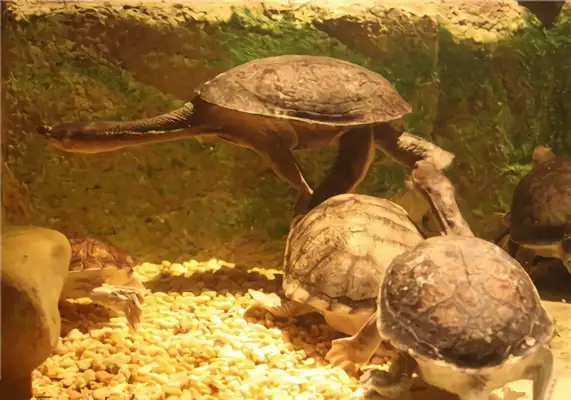
Snake-neck turtles are the largest snake-neck turtles, with the largest nails of up to 50 cm, just as other turtles belong to them, with a long neck, beige or brown, unfrozen backs, and small numbers of animals.
Chinese name: Snake neck turtle
English
Context: Animals
Gate: Pipeline gate
Amen: vertebrate Amen.
Programme: climb
APA: An impenetrable APA, or short bow Outline
Tortoises.
C: Snakes and turtles
It's a snake's neck.
Castes: Snake neck turtles
Geographical distribution: Australia.
Reproduction: Eggs.
Practice: Living in freshwater lakes and marshes.
Appearance characteristics: Light green or brown for backs and rice for abdomen. Cobra neck turtle morphology
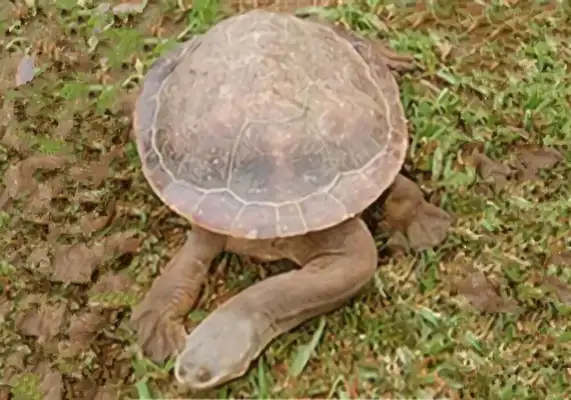
The back of a giant snake's neck turtle is round, there are no stripes on its back, the colour is brown, which is more characteristic in the colour of its back. Cobra neck turtles have huge backs and require more space to raise them.
The backs of the giant snake neck turtles have strong dragon bones and black or yellow spots near their heads. The female is bigger than the male. The male abdomen are dented in the centre of their abdomen, the anal shield is less engraved, the tail is longer, the excretion cavity is farther away from the back of the manure; the female abdomen is flat. The eggs are long ellipses, usually 34 mm long and 20 mm short. The neck shield is extremely small, between the first and the second, but the nail turtle is different. It is larger, in the back of the first and the second, in the front of the first vertebrae. The bright colours of the neck and the varied stripes.
Snake neck turtles are Australia ' s largest species of snake neck turtles, with a maximum of 50 centimetres of back nails and 85 centimetres from the end to the end of the kiss if the females extend their necks completely; they are scattered in the south-eastern part of Australia, inhabiting freshwater lakes and swamps, with light green or brown vests and mire abdomen. The knowledge of snake neck care
Viper neck turtles are known for their long necks, are completely meaty and love live baits, a turtle that can easily be domesticated, but are strong and disease-resistant for a period of between one and two months, and are well suited to beginners, only because the vast majority of snake neck turtles imported by Taiwan are wild individuals from New Guinea, Indonesia, so most of them are adult, large, and need to be raised with water tanks of more than three feet. The living environment of the snake-neck turtles.
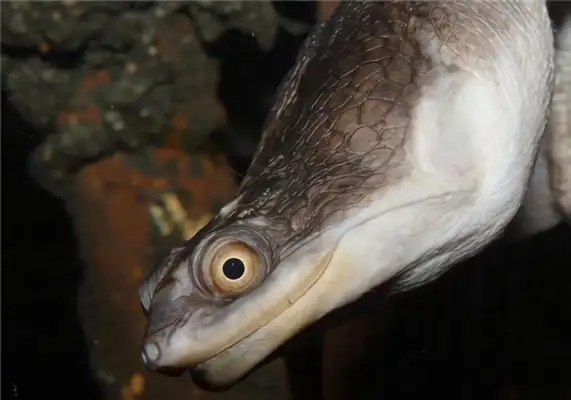
Viper neck turtles are not very picky about setting the environment, but wild snake neck turtles live in the right place and do not like too hot weather. We all know that warming is simple, but cooling is a very difficult thing, so in the summer, controlling the temperature of the environment is a big problem.
I. Environmental set-up of giant snakes
The rearing box of a giant snake-back turtle can be set at 70-80 per cent of the total water and 20-30 per cent of the total land area. This is somewhat different from the rearing of flat-headed and tattooed snake-back turtles, which are species that prefer to go up to shore and take a sunbath, so there is a need to provide land. The land side may choose to use a number of heavy stones, sunken logs or bricks as completely water-free land, adding an urchin above the land, irrigating the urchin light on the land, and complementing the use of the reptile UV light tube. The water level can be increased to a depth of 1 to 3 times the length of its crust.
II. Temperature control of giant snake neck turtles
The temperature of the snake-neck turtles is the most painful place, because the appropriate temperature for raising them should be 18°-25°, but in the summer, water temperatures tend to rise to 30° or more. If the water is too hot, their crust is prone to crust decay, because the crust of the snake-neck turtles is less resistant to fungi, and while the water temperature is warm, the fungus in the water are rapidly growing, and this is detrimental to the crust of the snake-neck turtles, so there is a need to reduce water temperature in the rearing box. What's the point?
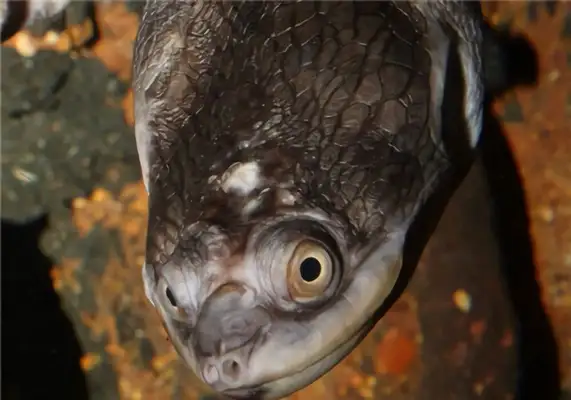
In the wild, snake neck turtles are carnivores, but some plant feed is also consumed under artificially raised environmental conditions. So when fed, some turtle food and meat can be selected, and some vegetables and fruits can be added, while ensuring the health of water quality.
I. Food choices for giant snake neck turtles
Viper neck turtles are predators, and food includes snails, aquatic insects, fish and amphibians. Snails, aquatic insects, worms, snails, shrimps and small fish, etc., as well as plant leaves. It is usually possible to live on land and in water, and the natural environment has more than a hundred years of life. Like land turtles, crawling animals have evolved around crust. By the dry season, they sleep in the pond mud until the rainy season. The larvae that eat large numbers of mosquitoes are very useful animals for people.
II. Catching by giant snakes
In pursuit of food, which is very similar to that of dead leaf turtles, they are hunted by ambushing or sneaking close to a surprise attack, and their mouths are wide open at the front and bottom of their heads, with their thick necks open, as if a pocket had been full of prey, and when they were hunted, their neck muscles were ejected with precipitous ejection and their mouths were swallowed with food and water. Snake necks are more than twice as long as those of ordinary turtles, so they are relatively easier to catch.