Designation: PET5260
English name: Hyacinthine Macaw
Vulnerability: respiratory, digestive and parasitic diseases
Life: An overview of the species of parrots 10-20
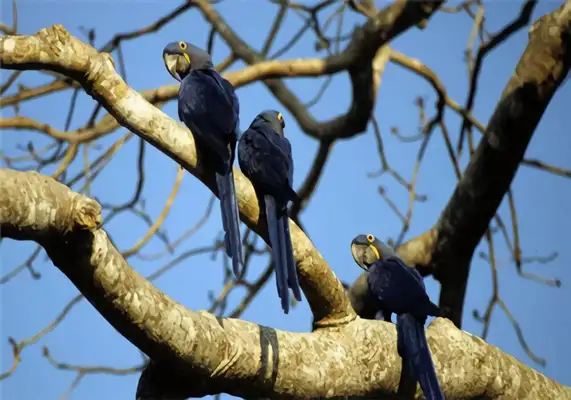
Hyacinthine Macaw, one of the world ' s largest parrots and one of the world ' s rarest creatures, has been the target of hunters because of its high cost and because of which this rare creature is facing a survival crisis.
The wild blue parrots are home to Brazil. Ninety-five per cent of the world's wild blue and blue parrots live here. Many of the stolen blue parrots are traded in the pet market, together with habitat destruction and insufficient nests, leaving only about 3,000 blue parrots in the wild.
Chinese literary name: parrot.
Chinese aliases:
English name: Hyacinthine Macaw
Two words: Anodorhynchus hyacinthinus
Area: Animal
Gate: Phylum Chordata
Amen: Vertebrata
Aves
♪ The world's most beautiful world ♪
Objective: Psittaciformes
Psittacidae is the only parrot, but it is very diverse.
Ako: Ako the parrot
Arini.
It's a macaw.
The blue parrot.
Distribution: The main ethnic groups are located in northern Brazil and have been found in eastern Bolivia and northern Paraguay. The morphological characteristics of a parrot.
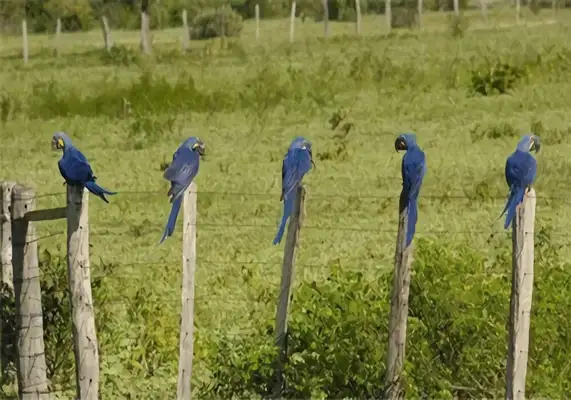
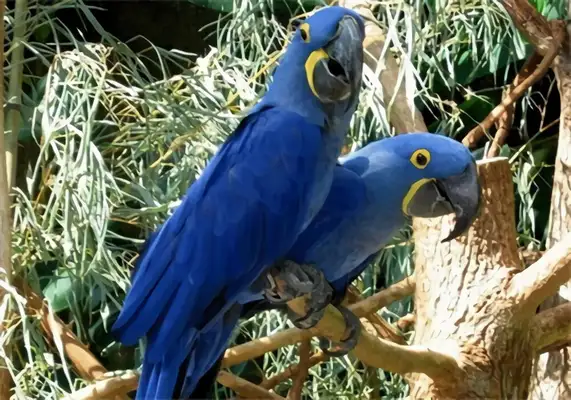
The blue macaws can grow up to about 1 m and weigh almost more than 1.5 kg, making them the largest parrot in the world. Life spans 60 years. The white blue feathers and the giant beaks like the beads make them particularly attractive. The details of the parrots are described below.
The blue macaws are four feet long and spread to four feet wide. Their beaks are black, their back end and their eyes are covered in yellow naked skin. The gender of the macaws is largely undistinguishable, but the females are generally more subtle.
Eye.
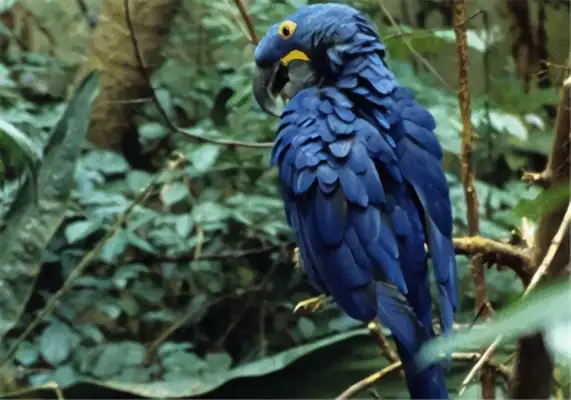
The blue parrot's eyes are covered in yellow naked skin, unlike any other species of parrot.
Selenium
The macaws' beaks, like giant beaks, can easily destroy the iron branches of the cages in a short period of time, and can bite nuts and seeds, even coconuts.
Feathers.
The macaw's feathers are beautiful and bright and pure blue, close to the blue. A parrot living in blue and blue.
The blue parrot made him particularly visible because of her beautiful appearance and her huge size. It's kind of friendly, but it's got a lot of merits, and it's good at communication, naughty and smart. The number of wild macaws has declined sharply for various reasons.
The blue macaws love to operate in open forests, avoiding the humid forests of the year, in palm trees rich in kernels, usually in pairs or small groups, and rarely find single blue purples to operate alone.
The size of the cage is 4 (wide)* 8 (long)* 3 (high) (in feet). In the moderate state of Florida in the United States, cages can be placed outdoors, four feet from the ground, and cages must be solid enough to prevent the destruction of parrots. The nest can open a 7-inch diameter hole on one side of the nest with a bucket of whiskey and connect it to the cage. This cave is about three inches from the top of the barrel. When nesting a bird, as part of the nest, clean wood graft, about six inches deep. The drums shall be placed on the other side of the cage relative to the cisterns and drinking water. At the same time, in order to protect the nest from rain and heat, the cage must have a roof. The blue macaws feed the food.
The macaws are relatively late in their sexual maturity, usually at around four years of age, and are more edible, usually non-selective and easily rearing. It is recommended that papagodas be raised for the purchase of juvenile birds to facilitate the management of education. What are the dietary requirements for a parrot like this?
When they reach the age of 10 weeks, they can eat soft monkey or dog foods, and also feed with no grapes. Care must be taken, however, to prevent parrots from eating too much. By about three months of age, the blue parrot can live independently.
Forage selection.
Parrots feed on seeds, nuts, fruits and vegetables. For some wild macaws, their diet is special and they have to eat a palm fruit, which is not available on the market. It is proposed to replace it with large coconut shells and fruit meat. Vegetable grains, coconuts and monkey and dog foods, soft food mixed with wheat bread, mixed fruit, milk powder, honey, vitamins, eggshells, etc. are good foods during reproduction. In general, the first nest may be handed over to its adoptive parents or transferred to the incubator. Because blue parrots usually destroy their first eggs. Privacy is one of the most important factors in the reproductive period, and besides keeping strangers close to your cage, it is important to show your love and care for the birds so that they will soon be used to and like you to come to the cage.