Title: PET5201
English name: Heniochus diphreutes Jordan
Origin: Indian Pacific Region
Epidemic diseases: anchor disease, aqueous disease, albino disease
Life: 5-6 years of overview of the species of marina fish
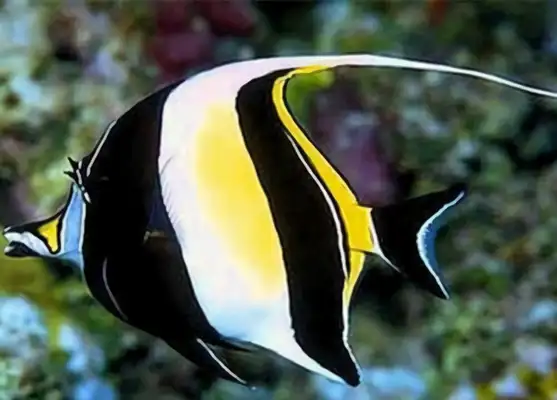
Pyramid fish, also known as white-sharp knives, mainly inhabit the slopes of outer reefs, is a high-value fish viewer and is not used as food. Pyramids operate mainly at depths of 15 - 210 metres and are predatory.
Chinese literary name: Pyramid.
Two words: Heniochus diphreutes Jordan, 1903
Context: Animals
Gate: Trondata Gate
Actinopterygi
Perciformes
Sub-Saharan Africa
C: Butterfly Fish Section
It's Heniochus.
Scraper H. Dipreutes
Distribution: Characteristics of the shape of the salmon in the Indian Pacific
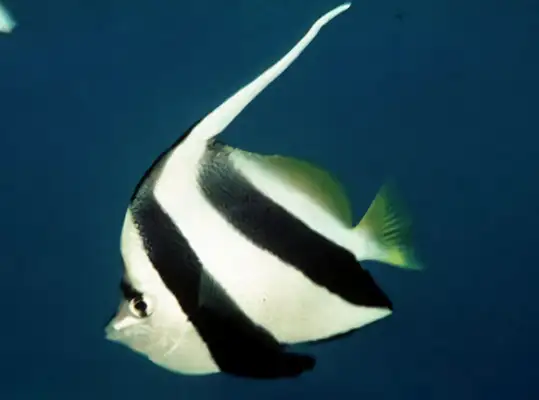
Cognac marinas, which are highly valued sea-viewed fish, are distributed mainly at depths of 15 to 210 metres, and are mainly found on the slopes of outer reefs, and what are the physical characteristics of so many of them?
Pyramid fish are white, with three brown-slashed stripes on their sides, the first from the top of the head to the upper eye; the second from the back fin base to the abdomen; and the third from the back fin hard to the hips. The back and tails are yellow. 12-13 back fin rough; 23-25 back fin soft; 3 hip rough; 17-19 hip rough. It can be 21 cm long. A larvae fish breeding environment
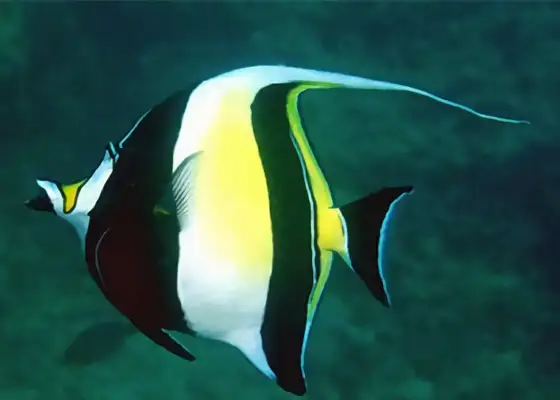
Pyramid fish are mainly distributed in the Pacific region of India and can reach 21 cm in size. They are highly valued and not food. Artificial breeding of marinas requires not only the preparation of a suitable aquarium for them, but also the provision of suitable water quality to ensure the stability of the growing environment.
Pyramids, which are marine fish, gather in groups to feed plankton in areas of intense water flow. Animal baits can be fed, fish are more gruesome, and they are caught in net fishing to prevent their flashlights and injuries from falling off. Pyramid fish are mainly found on the slopes of outer reefs, where the swarms of juvenile fish are around isolated reefs, and fish form large groups of fish that move in the sea some distance from the bottom of the reef. Pyramid fish.
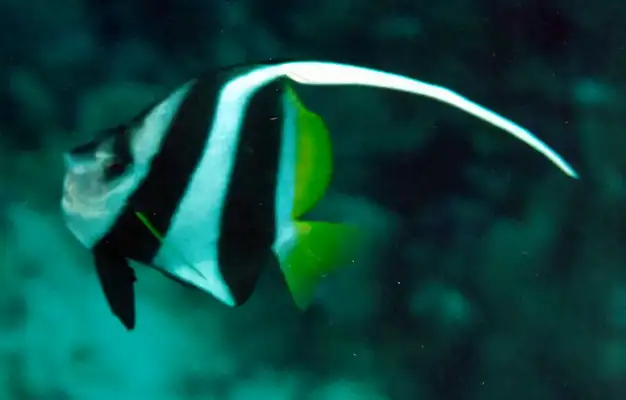
The marinas are seawater fish, which many fish friends find difficult to feed because of the high demand for water quality. Pyramids are highly valued and not used for food purposes.
Pyramids are predatory fish that feed on plankton, coral worms, etc. If there is a situation in which the marina fish do not eat, it is possible that the following may occur:
1. Sick fish species - possibly because they are caught in the ocean alone because of internal injuries caused by inappropriate methods of capture, or because they are infected by diseases caused by transport and mishandling.
2. Environmental water quality - Where changes in the water quality of the breeding environment, water temperature are too large, or when new fish enters a tank of “water-to-water” operations are not appropriate, they also tend to cause fish to adapt and stop eating.
3. The group of breeders - some of the fish that live in groups, or fish that are raised in pairs, are raised alone, or are ill-treated by other mixed fish in the rearing environment, resulting in “urgent” food denial.
4. Environmental space - If the size of the fish is too large and the size of the environment is small, it can also cause delays in the opening of fish.
5. Nutritional problems - this problem often occurs when some fish that already eat at first or change the environment stop eating. In addition to the adaptation of the new environment, other possible reasons are the weakness of the previous long-term single nutritional supply, which suddenly manifests itself when accumulated to a certain extent.