No.: PET1327
English name: Satin
Vulnerability: ballworms
Life: 5-6-year profile of hare species
In our country, where hares are a species of meat, which is not raised in very small quantities, the main reason is not the variety itself. In our country, there are many options for rabbits, so there is no need to choose the species. Shaggy Rabbit Form Characteristics
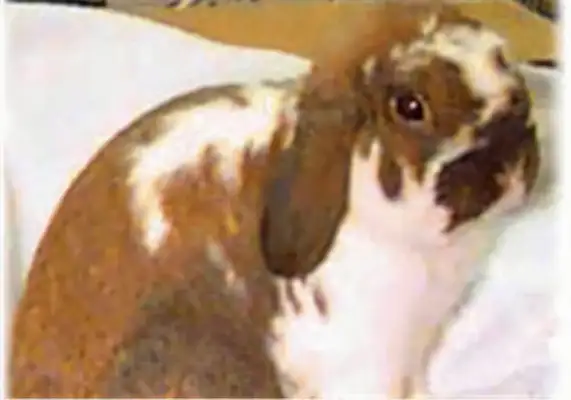
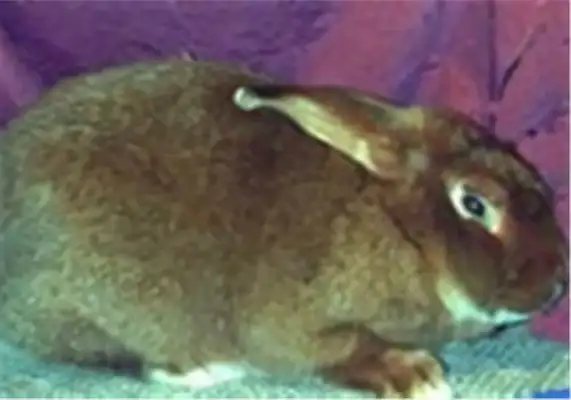
The hare, which weighs about 5 kg, belongs to large rabbits, which are thick and soft and typical meat rabbit species. The hares have small ears. They look cute standing behind their heads and can be raised as pet rabbits.
There are more than 150 rabbit species in the world, with different types of rabbits with different appearances, like different species with different characteristics and different types of dogs, rabbits with very large, very small, long and very short hairs, and hairs like silk, many different hair colours and different eye colours, different ear lengths, different head-styles, and general rabbits are classified primarily on the size of rabbits, which are divided into four main categories.
The hares are one of the large rabbits, as well as the British perch rabbits, the New Zealand rabbits, the American rabbits, the American Giggilla rabbits, the Caribbean rabbits, the German Angolan rabbits, the parrot rabbits, the Hoda rabbits, the silver foxes, the black mink rabbits, the V-ear rabbits, etc. Knowledge of hare care
There is no speciality in the raising and care of rabbits, as long as the principle of raising rabbits for meat is followed.
I. RESPONSIBILITY MANAGEMENT
The rabbit from birth to weaning is called the rabbit. The growth of the rabbit body is not yet complete and the regulation of resistance to the outside environment is poor, and care must be carried out for the following two periods.
Sleep period: the period between the birth of a good rabbit and the opening of a good rabbit is known as the period of sleep. Rabbits sleep at this time except for milk. Mother rabbits feed only once a day for five minutes each. So every day we check the rabbits for milk. With milked rabbits, the skin is red and radiant.
2. For the opening period: 12 days after the rabbit was born, from the opening to the weaning period, known as the opening period. The early and early eyes of rabbits are relevant to their development and are well developed. If the rabbit's eye is glued to the eye, it can be watered with medicine and slowly washed away. In this period, rabbits experience a shift from milk to vegetable feed, often leading to death if the shift is too sudden. Therefore, the emphasis should be on the refilling and weaning of rabbits.
II. rearing of juvenile and young rabbits
Three months after the rabbit's weaning, the rabbit is called the rabbit. At this stage, rabbits grow fast, but are less resilient, paying special attention to care, otherwise stunted and prone to disease and death.
The summer feed is mainly grass-fed and fed to wheat, corn, sorghum, etc. The feed is water-rich and needs to be tanned in the sun to reduce moisture. This allows effective control of diarrhoea and swelling among young rabbits. In addition, care is taken to regularly feed onions or onions, garlic leaves, etc. The utensils are disinfected once with potassium permanganate water for three to five days, thus avoiding the contamination of the pygmy cysts with gasp and utensils. The living environment of the hare.
The hares ' sweat glands are underdeveloped and rely mainly on respiratory fever, leading to large-scale deaths in wet environments that are chronically hot (over 35°C). The ideal ambient temperature for adult hares is 14-20°C, and the temperature within the first-born hare nest is 30-32°C, and drying and cleaning are good for the health of the hares. The hares are also hygienic and often use their front paws to “wash their faces”, eat, shit, pee and saliva. In case of abdominal, oral or nasal defects, the disease is described and the cause must be identified and treated as soon as possible. What do you want?
As the hare is a meat rabbit variety, care is taken to produce fat, which is what is known as the provision of overnourished food during the period before the ban, the accumulation of rabbit fat and the increase in meat production.
I. Fertilizer method for young rabbits
That is, when the rabbit is weaned, fattens it for sale after l~l.5 months and weighs 4~4.5 kg. This is done by aggregating fat rabbits, fenced for grazing, giving young rabbits full opportunities to move and promoting the full growth and development of bone muscles. Until the last half-month to one-and-a-half months, cages are being held to limit the movement.
Fertilizer feed requirements are 20 per cent coarse protein, 16 per cent fibre, 2.5 per cent very fat, 1 per cent mineral, 13 per cent water and 100 to 200 grams daily. Fertilizers begin to be predominantly green, supported by precisions, which are gradually being added to the future, and are finally fully fed for the last l~2 weeks. If the appetite drops, you can feed some green. Forages suitable for fatting include corn, rough rice, barley, millet, beans, peanuts, potatoes, potatoes (the latter two are better cooked and fed).
II. Fertilizer for adult rabbits
This refers to species that have been eliminated during reproduction, production and development, young rabbits, etc. Fertilizer is generally 15 to 35 days and is well-regulated, increasing by l ~ 1.5 kg. Some fungus, celery leaves, platinum, cargrass, etc. may also be added to the fertile period. After 20 days of fertilisation, if a diet show is discovered, it means that the fertilisation has taken place and should take place in the morning or be slaughtered. The rabbits are expected to be fattening in order to reduce feed consumption and improve meat production.