Title: PET3461
English name: Hydrophis cyanocincus
Vulnerability: oral inflammation
Life: A brief description of the species of Cyclops 10-15 years
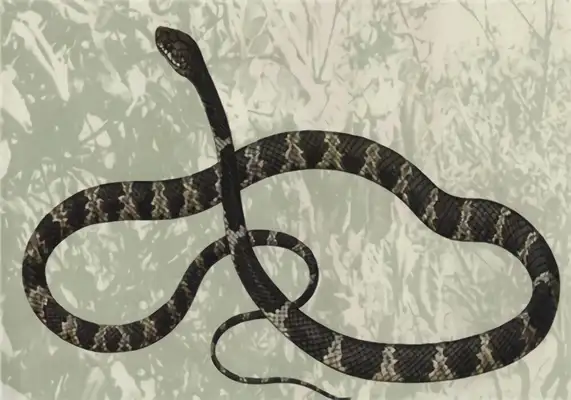
The Cyanocincius (Hydrophis cyanocincus) is a toxic snake that lives in the ocean and is good at swimming and eating fish. It has a black ring, and the snake is mainly located off the coasts of Liaoning, Jiangsu, Zhejiang, Fujian, Guangdong, Guangxi and Taiwan.
There are 23 types of sea snakes off our coast, of which Guangdong and Fujian have a wealth of resources, with the largest number of them in the northern bay, which can catch more than 50,000 kilograms per year. The coastal districts of Fujian Pinggang, Hui An and Dongshan can catch up to 10,000 kilograms per year.
Chinese literary name: Cyan Cyclops
Two words: Hydrophis cyanocincus
Area: Animal
Gate: Phylum Chordata
Amen: Vertebrata
A: Reptilla
Aim: Squamata
Asia: Serpentes
Section: Hydrophiidae
Yes: HYdropis
Cyanocinculus
Distribution: From the Persian Gulf to Japan and the Indo-Australian Sea, Taiwan and mainland China, Liaoning, Shanghai, Jiangsu, Zhejiang, Fujian, Shandong, Guangdong, Hainan and Guangxi. Cyan Cyclops morphological characteristics
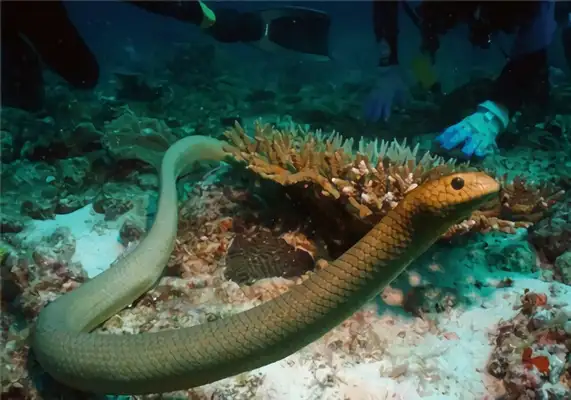
The individuals of the Cyclops are hardly large, and they are used to the marine environment with varying degrees of adaptation to water awareness, with most Cyclops toxic, but also a small proportion of them non-venom-free.
The Cyclops are about 60 centimetres to 1 metre long, their muscles are soft, their bodies are brown and their surfaces are thinly pellets. Viper's cardiovascular and respiratory physiology is well suited to life in water, and its haemoglobin oxidation is particularly efficient, and its heartbeat can be reduced to less than 1 per minute during diving. It can be lurking in water for up to five hours, while 13 per cent of its respiratory function during this period is performed through the skin. The tissues and scales of the lips of the snake keep their mouths covered with water, and the jaws have a brackish gland gland that is used to share the heavy burden of excretion of the kidneys. Viper is very rare. Blue Rings of Sea Snake Living Environment
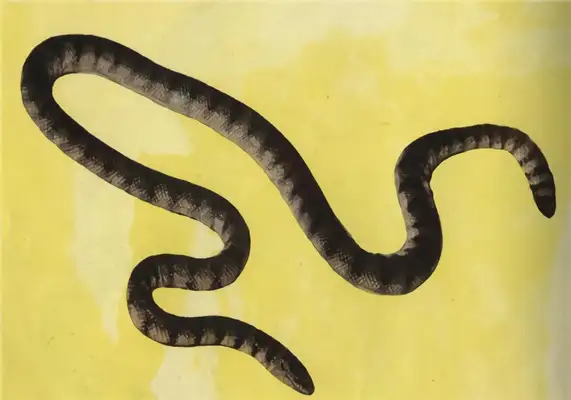
Blue-ring sea snakes prefer to live in shallow waters around the continental shelf and islands, rarely in open waters with depths exceeding 100 metres. Some of them prefer to stay in sand or muddy water, while others prefer to operate in clean water around coral reefs.
The depths of dives by Cyclops range from deeper to shallow. Cyclops were seen at a depth of 40 and 50 metres. Low-water green sea snakes typically dive for no more than 30 minutes, and stay on the surface for a short period of time, each time showing their head, quickly taking a breath and sneaking into the water. Deep water and sea snakes stay longer on the surface, especially in the evenings and nights. They can dive for two to three hours. The Cyan Cyclops are clustered, often drifting together to facilitate fishing. It is also luminous, and more is captured at night with light. Green Sea Snakes
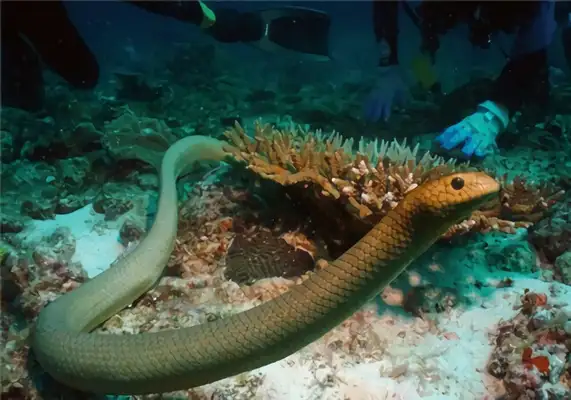
A water-dwelling cyanide snake breeds in an embryo, and during the reproductive season they like to gather. Together, they form a long snake line that stretches tens of kilometres and covers the ground. This is the phenomenon of the reproductive period of the Cyclops. Now, let's find out about the food requirements of the Cyclops.
The food is selective for the food, and many of the feeding habits of the rims are related to their size. Some are thick and big, but their necks are thin and small, and they are almost exclusively for the purpose of eel digging. Some cyanide sea snakes feed on fish eggs, and such cyanide snakes have small and small teeth and are not large in fangs and poison glands. There are also some Cyclops that are very fond of eating poisonous fish, and there is a Cyclops that eats exclusively on eeltails in the northern coast of the Philippines. The stinging on the eel-tails is very painful and can even cause serious injuries, but the Cyclops don't care. In addition to fish, Cyclops attack larger organisms.