Designation: PET1151
English name: GlassCatfish
Origin: Thailand, Malaysia, Indonesia, Asia
Vulnerability to diseases: albino disease, rotting tail disease
Life: 3-4-year overview of catfish species
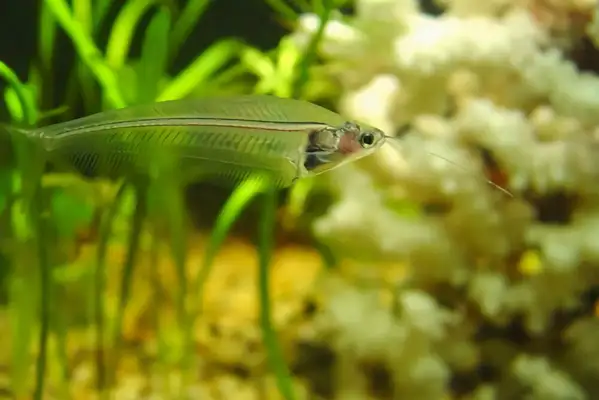
The glass cat is transparent, and two beards in the mouth of the glass cat are very much cat-like. The glaucoma swims very fast, and when the glaucoma stays, the whole body rises to 40 degrees. Occasionally, a glass cat will have a rainbow-like colour under the light of the right angle.
Chinese literary name: Glass catfish
Context: Animals
Programme: sauna
English name: GlassCatfish
Name: 1839
Difficulty of breeding: easier
Water quality alkalinity: pH6.3 ~ 7.0
Latin name: Kryptopterusbicirrhis
Gate: Pipeline gate
Distribution: Thailand, Malaysia, Indonesia in Asia
Named by: Valentinnes
Eating: Loves live bait
Water quality hardness requirement: gH3-6dGH
Fits to water temperature: 20-25°C glass cat shape
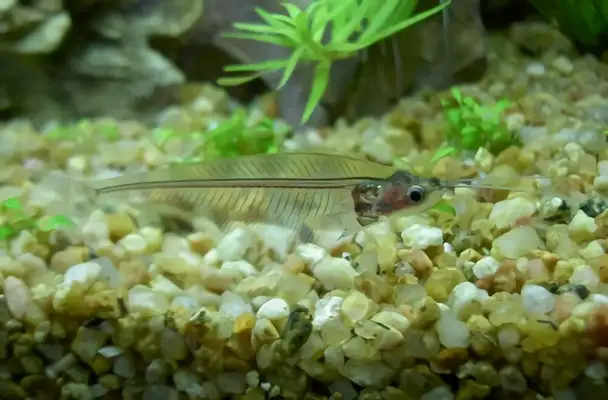
The shape of a glass cat is so special that it is transparent and has two beards in its mouth, and it is not easy for a glass cat to detect them if it does not look closely. It is also called a “ghost fish” because it can be seen in the water as the fish bones are floating.
The average glass cat is 12-18 cm long. The name of the glass cat comes from the two long cat-scarved tentacles that are transparent and growing in the mouth. They travel quickly, remain at an upward angle of 40 degrees, have a slightly smooth crystal-transparent body, and occasionally, with a reflection of the light suitable for the angle, they reflect a rainbow-like flaunting of the sun like a prism.
The glass catfish is 10-12 cm in size and looks like a willow leaf. Heads are sharp, with two long tentacles at the mouth, often stretching forward or moving freely, detecting water flows, rivalries, obstacles and helping to feed. The chest is extremely short, with only a quarter of the total size of the chest. The tail handle is very short, the tail fin fork. The back fins are degraded, the hips and hips are long and the fins, etc., are wide. Transmutation is transparent and visible, such as spines, pricks, fins and internal organs. It's as green as it looks. It's like a high-quality jade sculpture. Glass cat-breeding environment
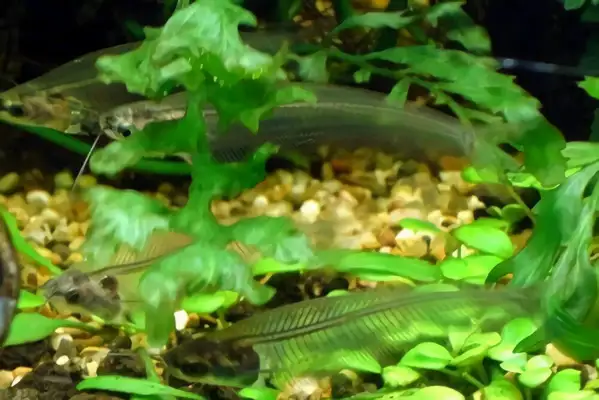
A glass cat is gentle and likes to grow with the same species, otherwise a single glass cat feels lonely and causes death. It can also be combined with mild, slow small fish. The water required to feed a glass cat requires a certain degree of hardness, but cannot exceed 10°dh and the glass cat has a suitable water temperature of 22 - 26°C.
In fact, the water quality of the glass catfish is sufficient to keep the nitrite concentration. Glass cats are temperate, timid, and do not like to swim, often hiding in dark corners, so they are well suited to grow large quantities of water and grass in their breeding environment for shelter and shelter. Glass cats are more sensitive to changes in water temperature, and when water temperatures are below 18°C, their previously transparent bodies will become white, and if water temperatures continue to decline, their entire body will die as a result of collage rigidity. Glass cat feed.
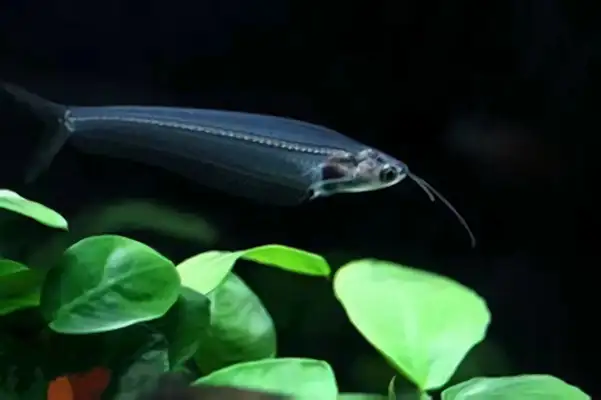
Glass cats are easy to feed and feed, and general live baits, such as earthworms, horns and halogenesis, can be eaten by glass cats that grow up under natural waters up to 8 cm.
The newly hatched fish are yellow, with a beating heart under anatomy mirror, a flow of blood, and a large, unabsorbed ovarian pellets in the abdomen. The first 2-3 days of the fish are under water, and there is no need to feed them. Note the timely extraction of ovaries and white dead eggs, the replacement of new water on a daily basis, the placement of seedlings in greenhouses at a temperature of 25°C (which can be placed in air-conditioning rooms). At the age of 3 to 4 days, the fish can swim freely (on a level) and begin to feed, when a small amount of egg yolk can be drawn from the gill net, which can be slightly disturbed in the water, until the water is light yellow. Properly fed calcium sheaths, compound vb liquids, thocin, etc. to improve the survival of fish seedlings. I'll take a few meals, three or four times a day. The 7-10 day-olds are fed to herbicides, beer yeasts, etc., and the three-week-olds are fed to the indiscretionous larvae of halogens, and are gradually fed to feed. Care should be taken in the feeding process to ensure healthy growth of fish seedlings through changes in water quality and reduced feeding.