Designation: PET5698
English name: CommonAngelfish
Origin: Sea
Vulnerability to disease: end-of-life disease
Life: An overview of fairyfish species from 4 to 5 years
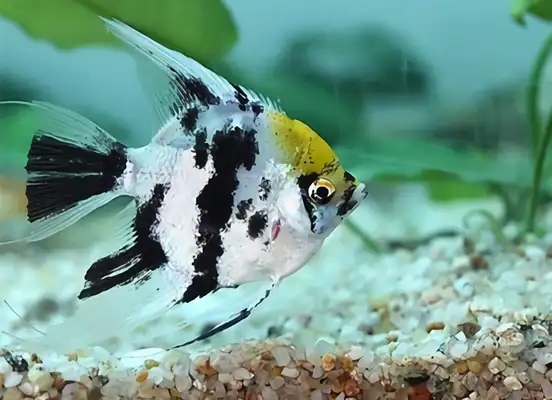
The fairies are called swallow fish, angel fish, etc., and they are called swallow fish because they swim and soar like swallows. Fairyfish are so elegant that they were once loved by aquarium lovers that they are now almost synonymous with tropical fish.
Chinese literary name: Swallow Fish
Context: Animals
Amen: vertebrate Yaman
Region: Sea
Yes: Fish
Latin
Gate: Pipeline gate
Syndicate: Sculpture
Don't call it swallow fish, angels, fairies, finfish.
Ko: The shape of the fairfish of Rico
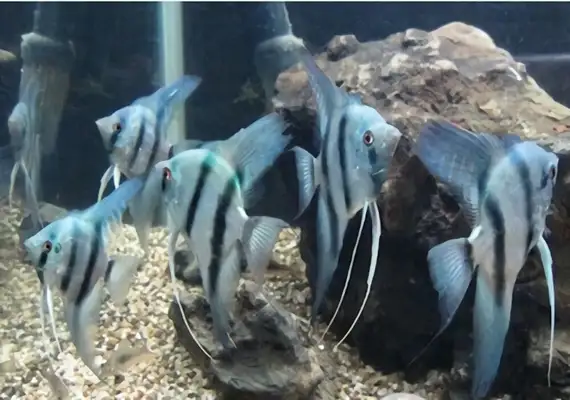
Fairyfish are called swallow fish, angel fish, and by name we can see that the shape of the fairyfish and the way it swims must be beautiful. In fact, not only are fair-looking but they are also very gentle in character, but in order to keep the fair-looking shape of the fairfish, it is recommended to avoid mixing the fairfish with other lookers.
Fairy fish are 12-15 centimetres long, 15-20 centimetres tall, their heads small and their sharp sides flat, and have a diamond shape. The back fins and the hips are very large, rather like dhows, so they are called little finfish. From the side, the fairyfish swims, as the oscillating sarcophagus, as the sarcophagus, as the swallows fly in the water, and thus as the “swallfish” in northern China.
Despite its elegance and beauty, though it is not colourful, the popularity of aquatic enthusiasts is comparable to that of any tropical fish, and there seems to be no example of a tropical fish enthusiast who for many years has not raised a fairyfish, which is almost the name of a tropical fish, and who, when it comes to tropical fish, tends to be, at first thought, a fish that travels through the water force and is beautiful and free of the dust. Fairyfish breeding environment.
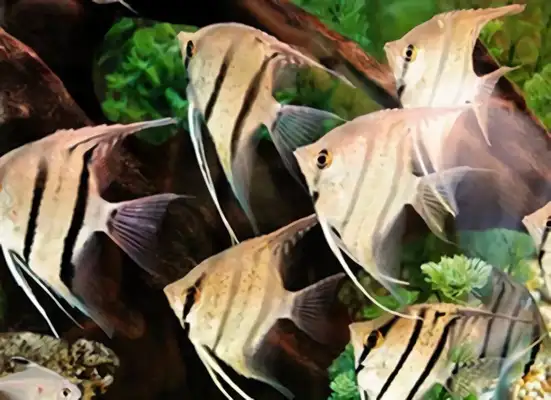
Fairyfish are less demanding in terms of water quality, and they are supposed to be beautiful and elegant in their state, which makes raising them less difficult, so they are very popular with fish friends. It is recommended that water temperatures of 24-27°C, total hardness (gH) of 3-6GH and PH of 6.5-7.0.
Since some domestic breeding fisheries use soft water (i.e. water with a lower mineral content and a lower total hardness in the water quality environment) which is treated with a yin ion by reverse osmosis during the time of the breeding of fairyfish. Although this treated water quality has been extremely helpful in the hatching of fairies, juvenile fish growing in this water quality environment, transported over long distances to the high-density rearing by aquatic distributors and in a vending tank with very different water quality, during which periods of upswing increases the vulnerability to disease and death of already weak juvenile fish. Therefore, it is not urgent to select new fish to be handled by “technologically highly skilled” aquatic distributors that are adapted to the quality of the water and are removed from the onset of the disease. In 7 to 10 days, the fish will survive in the aquariums in an extremely stable way, saving the trouble. Psychics.
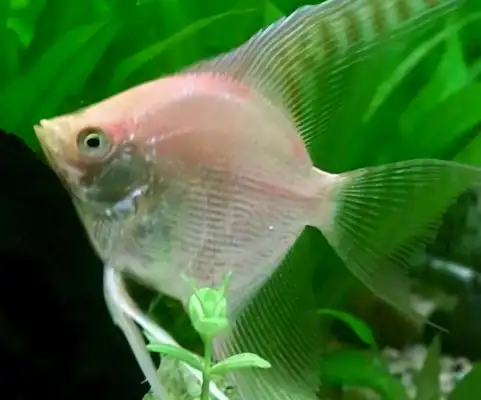
When the water temperature of the fairyfish is within 24-28°C, the food of the fairyfish is strong and growing very quickly, so if you want the fairyfish to grow healthy, try to keep it in a relatively stable environment.
The baits of fairies include fish worms, earthworms, fibreworms, yellow powder worms, small live fish, granular feed, etc. For fairyfish, which are 3-12 cm in size, the bait is predominantly tortoise-based, supported by earthworms, red worms and yellow powder. For fairyfish over 12 cm in size, tortoises with small individual size and poor orality, slightly larger individual baits should be selected, mainly red worms, earthworms, yellow powder worms, small live fish, etc.
The amount of bait delivered by fairies is determined by the size and quantity of the fish. Households tend to feed fairyfish only one or two times a day, with a proper dose of 5 to 10 minutes. Large quantities of fairyfish require two to three baits per day; fish species during breeding are used as baits 3 to 4 times per day. Owing to the small size of the fairies and limited diets, each drop is suitable for 7 to 8%, and the increase in the number of drops contributes to the rapid growth of fish. Most of the species of fairyfish, the bait is dominated by insects. When the bait is mainly used by the worms, its delivery is controlled to be finished within 10-30 minutes. When the bait is dominated by earthworms, it is fed in 5 to 10 minutes, two or three times a day, and the earthworms fed are washed up. When the bait is dominated by shrimp, it should, in principle, be fed more and less, and when the fairyfish replaces the new bait, the amount of the bait will gradually increase. Fairyfish must stop before transport for a day or two.