Designation: PET4706
English name: Acanthosculria geniculata
Origin: Overview of white knee varieties in Brazil
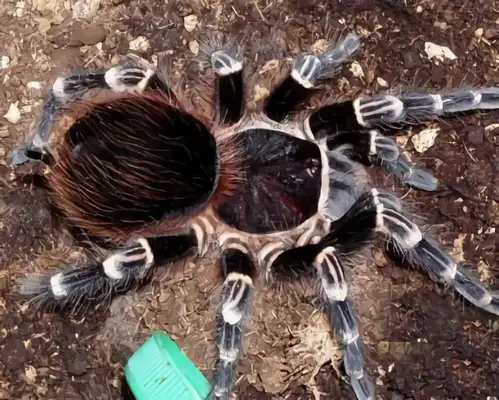
Brazilian white knee, Latin called Acanthosculria geniculata, not called Brazilian black and white striped spider. Mostly in Brazil, it's a more common pet spider.
Context: Animals
I'm looking at spider eyes.
Section: Birds and spiders
Speculation of bird spiders
Habitats: grasslands, forest areas
Temperature: about 27°C
Humidity: 75%
A little.
Total size: about 7-9 inches
Growth speed: Medium
Main food: Cricket, interspersable to feed first-born rats
Practising: Always kicks, likes to escape the white knee appearance of Brazil.
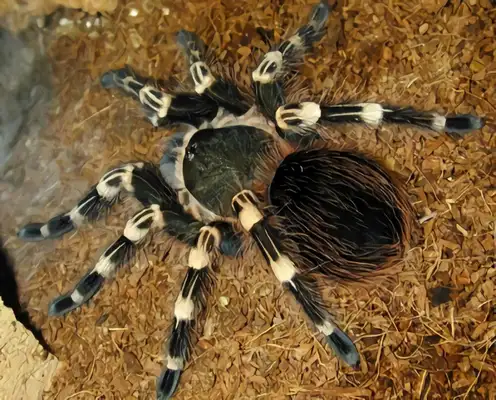
Brazilian white knee spiders are a common pet catcher, which is characterized most by joints between black and white, and also by red hair in the abdomen. About 18-20 centimetres after foot expansion.
Brazil ' s white knees are prone to irritation and are less likely to bite, but they can be kicked very frequently, and the data indicate that their shaving may cause more visible allergic reactions to human skin.
Brazil's white knees and all other species of bird-fishing spiders originating in Brazil have long been classified by the authorities as being protected against any export. What can be seen in the world, whether small or large, are the descendants of individuals who were previously smuggled to Europe and the United States through artificial reproduction. Because production is relatively high and growing faster, it does not belong to the expensive species of bird-catching spiders, but they are definitely one of the classics among bird-catchers, before, now and in the future. We'll raise a white knee in Brazil.
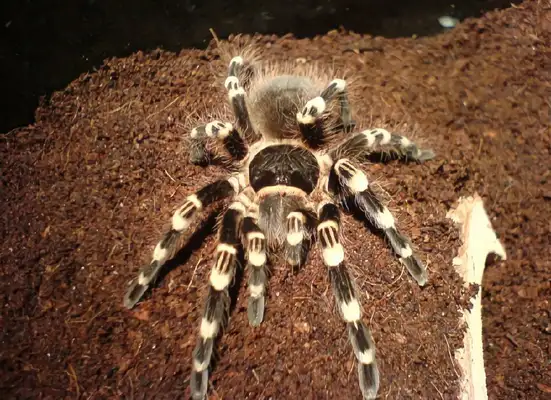
Brazil's white knees belong to a more easily ploughed spider species, and for pet spiders, too much emotional communication is less important to them if they are given the right breeding methods.
1. Some of Brazil ' s white knees will roll over and lie on their skins, and it must not be disturbed at this time, as this may be fatal;
2. Remember to change food every other time, not for long enough, and not too much;
3. If there is no ventilation, the failure to clean up the food residue in a timely manner may give rise to the Brazilian white knee mites as a result of the presence of a small white spot that requires constant observation of the Brazilian white knee body;
4. The raising of Brazilian white knees requires the capacity to meet their growing environment;
5. The young Brazilian white knee requires a wetter environment than the adult Brazilian white knee. Environmental requirements for white knee raising in Brazil
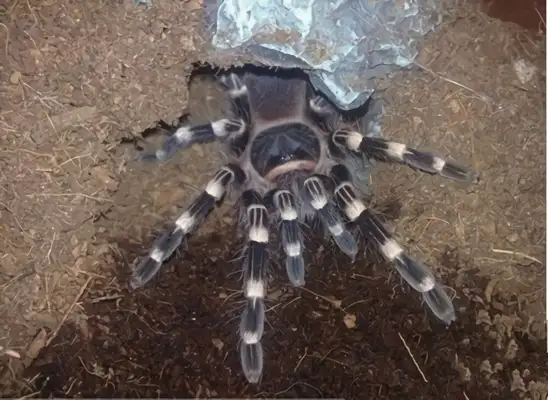
Brazil's white knee is of a gestationary nature, and the bird trappers in Brazil are now raised as pet spiders by players.
Brazilian white knees are generally suitable for temperature: 28-30 degrees for humidity: 80-85 per cent. Brazil's white knee is a little ferocious, and it needs to be raised in boxes with a base of about two inches of soil, a tree hole for him to hide, and a plate for him to drink. Brazilian white knee feeding requirements

Brazil ' s white knee is a very famous bird-hunting spider whose adaptability is very strong and who can adapt in a timely manner to a young child, but Brazil ' s white knee has a very bad temper and is easily irritated.
Brazilian white knees can feed food such as cricket, but Internet users do not recommend that new players who have never had pets to catch bird spiders directly raise the bulk of Brazilian white knees because of the toxicity of the spiders and the enormous force created by the bites.