Designation: PET6232
English name: Poecilotheria subfusca
Vulnerability: eating diseases
Life: 5-6 years of ivory rainforest species profile
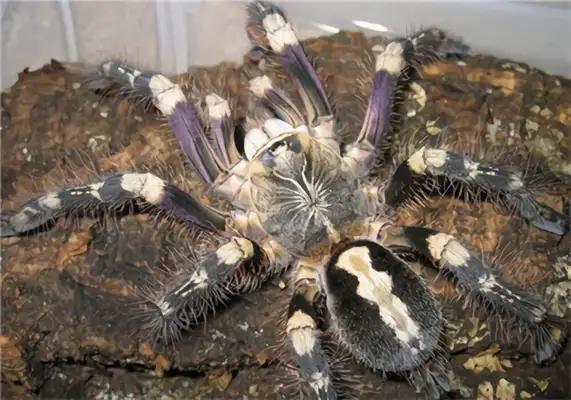
Poecilotheria subfusca is a more valuable species, especially in the form of radiationed white stripes on the back (or of lowland sub-species) which represent the largest difference between their appearance and that of the same species. The abdomen of the adult ivory rain forest will also have unique black and white spots of the same kind, which are very visible.
The species had been listed by Sri Lanka in 1993 as prohibited for commercial collection and export. The World Conservation Union (IUCN) is included in the list of species whose existence is threatened.
Chinese literary name: Ivory Rainforest Spider
Latin name: Poecilotheria subfusca
Area: Animal
Door: arthropod door
Synopsis
Objective: Spider-Man.
Speculation: Ivory Rainforest Spider
Distribution: Characteristics of the ivory rainforest in Sri Lanka
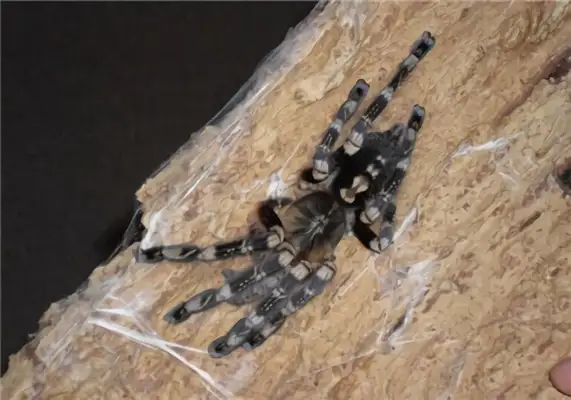
When Ivory Rainforests grow up to about 19 cm, the spider is very vicious, agile, aggressive and often gnawing without warning, and they are more toxic than normal hair spiders, so they are not fit to touch or play.
The colours on their feet are actually somewhat similar to those of Sri Lanka ' s luxurious rainforests, although the grafts on their backs and abdomen are exciting and unique. As a Poecilotheria class, they are relatively aggressive and toxic, which makes them not a new type for entry, but only for those who love “pokies” and have relatively rich experience in breeding. Ivory rainforest breeding environment
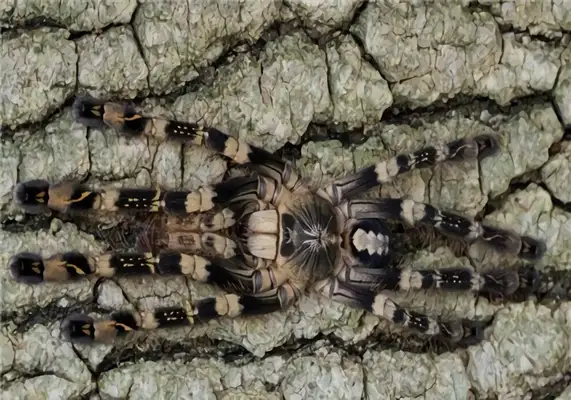
As lizards generally have a preference for climbing, as do ivory rainforests, families should consider putting a piece of wood into their climb when setting the environment. Due to the relatively high offensive and toxic properties of this species, extra care must be taken in raising them.
When raising ivory rainforests, a small water-drinking plate is placed in the rearing box, preferably cold water. Attention is drawn to the circulation of the air in the rearing boxes, so that the soil is not too wet, as long as there is enough water in the small puddles. The breeder needs to pay special attention to keeping the highland species at a temperature below the appropriate temperature for other bird spiders. It is, of course, appropriate to keep it within 22-25°C in order to keep it normal.
It is recommended that the base material be used: wet peat/coconut rearing provides a higher rearing box with a tree bark to climb and hide. Their little larvae may dig some holes (perhaps they hide in the roots of the nearby ground at their origin). Ivory Rainforest.
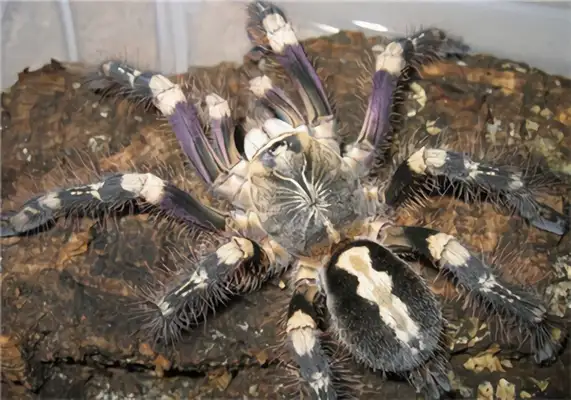
Because of the relatively late prevalence of ivory rainforests, the difficulty of artificial reproduction, coupled with relatively low yields, has contributed to their price being “ivory”-like, as also revealed by their Chinese names.
Although the species is on the verge of extinction in the wild, in recent years it has become more sophisticated in domestic reproduction techniques and has been able to buy cheaper artificial rearing. Any breeder is obliged to refuse to purchase wild individuals.
The ivory rainforests can consider feeding crickets, bread worms and barley worms in diet. The body feedes the rats.