No.: PET4730
English name: Dutch
Character: lively, good.
Nationality: Netherlands
Predisposed: Rabbit bug disease, foot inflammation
Life: 5-7 years
Price: A brief description of the Dutch rabbit species, $80-100
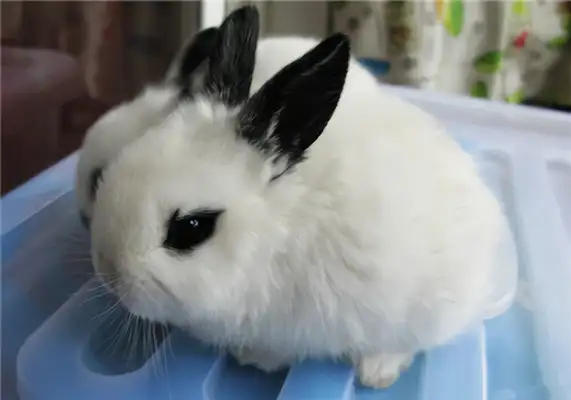
Dutch rabbits are a huge variety, and this is because Dutch rabbits have many and many names, such as Dutch rabbits, panda rabbits, rat rabbits, etc., all about Dutch rabbits, so don't let their owners lie about their names when they buy them.
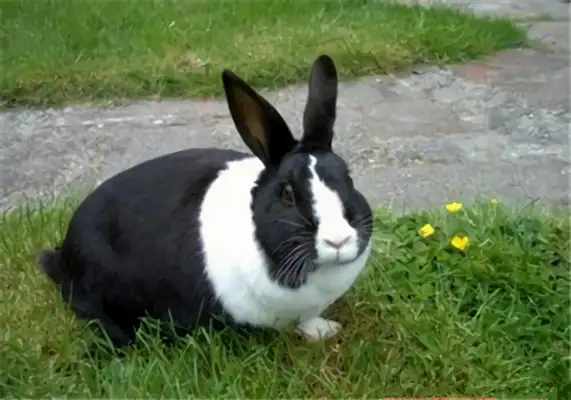
The Dutch rabbit has a v-shaped white block that extends to the lower part of the jaw. Small, short ears, white around the nose and neck to the front, and a mix of black, blue, chocolate, gray, copper and iron, among others, are currently in some dozen colours. Dutch hares have a high degree of imagination of space, making them very popular pet rabbits in Europe, America and Australia.
Chinese: Dutch hare
Famous alias: Hollan Rabbit, Dodger Rabbit, Rat Rabbit, Bear Rabbit.
English name: Dutch
Context: Animals
Gate: Pipeline gate
Amen: vertebrate Amen.
Programme: Lactation Programme
FIND: RABBITS
Origin: Netherlands
Varieties: white + black, blue, chocolate, grey, yellow, and copper.
Body size: around 2kg weight; around 40cm size
Life expectancy: 8-10 years
Reproductive mode: birth
Prices: Prices vary considerably, with pure seed prices of around $300, and the average is only $80-100. Dutch rabbit form characteristics
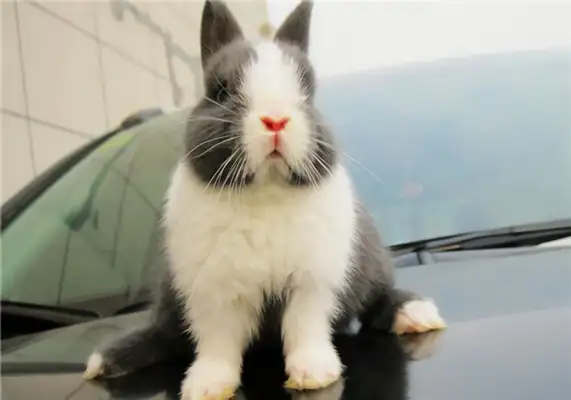
Dutch rabbits are very common in the form of pet rabbits, which are called common because we often see pet rabbit vendors selling, and if you don't know Dutch rabbits, you'll buy ordinary rabbits home, because there are many fake Dutch rabbits, and real Dutch rabbits have the following characteristics.
I. Color classification of Dutch rabbits
Dutch rabbits are a pet rabbit variety with a standard body weight of 3.5 to 5.5 pounds, which is smaller in medium-sized rabbits. There are about a dozen colours of Dutch rabbits, but only six are recognized by ARBA: black, blue, grey, chocolate and iron grey.
Dutch rabbits have a unique distribution of hair, with a reverse V-word white hair on their faces, extending to the first half of the body, while the first half and the second half of the body have a clear colour line, while the foot is white, the back foot and the back half are equally clear, and they are round and vertical, while the hair is shorter and smooth and glitter.
II. Distinguishing characteristics of Dutch rabbits
First, the Dutch rabbit has a white block in V shape on his face, extending to the lower part of his jaw. Second, Dutch mini-rabbits don't smell, they don't smell. The first half of the body is clearly separated from the last half of the hair. Finally, Dutch rabbits have very short ears and rough feet, usually black or brown eyes. Dutch hare conservation knowledge
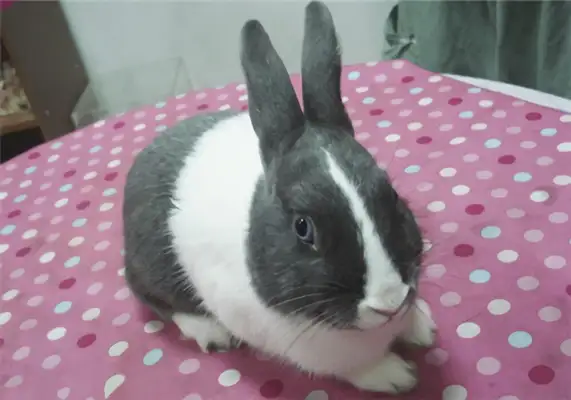
Dutch rabbits are cute and cute and a very smart animal. When raising Dutch rabbits, he can only be provided with reasonable food and cages, and he will become increasingly popular by accompanying him more often and training him in small skills.
The Dutch rabbits are always busy and you are slowly wasting, perhaps because of their nature in a stimulating and dynamic world. They want us to spend time sitting there looking at them and then doing nothing for ourselves. In addition to a well-trained Dutch hare, your efforts will give you a little time every day to see the world's most charming creature leaping in the face of you, leaping happily, using all its skills to please you.
2. As Dutch rabbits have a habit of grinding their teeth, there is a need to prepare a tooth grinding wood for Dutch rabbits to grind their teeth. If they do not grind their teeth, there will be a series of problems. If they do not grind their teeth, two Dutch rabbits will grow continuously, and if they do not grind their teeth, they will be too long, resulting in a closed mouth, i.e. oral ulcers that will not feed and die.
Drinking water is essential (e.g. cool water), and running water carries parasites. Some mineral waters add some so-called nutrients and are therefore not recommended for Dutch rabbits. It will be available on a 24-hour basis and fresh daily.
4. The Dutch rabbit, a small thing, was born afraid of water, so it was generally not given baths. There's no taste in Dutch rabbits if they're right. If you want to bathe, use a Dutch rabbit for bathing or a Dutch rabbit for foam washing. It would be better to use pets for dry-cleaning, etc., without easy cold or diarrhea. Dutch hare living environment
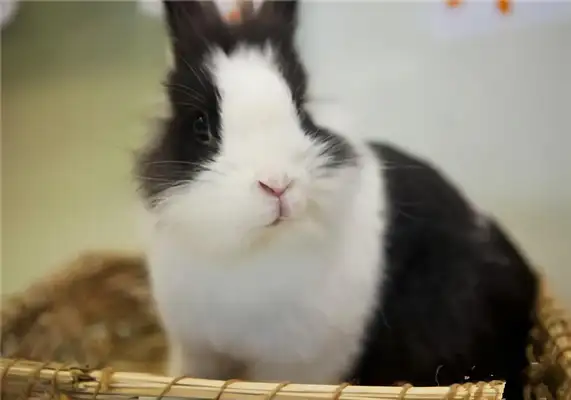
Many people believe that rabbits can only be kept in cages, which is not the case, and that the setting of cages is also an academic one, and that some of the cages used to buy pet rabbits are not practical and need to be given a larger space for Dutch rabbits to live.
I. Netherlands hare environmental requirements
Dutch rabbits are very fragile animals, fearing not only heat but dampness, so their nesting needs special attention. The suitable temperature for Dutch rabbits is 25 to 32°C, with a humidity of 40 to 60%, and the environment in the incubators is dry, warm and well ventilated. Squirrel cages, large bird cages and cat cages are available on the market to feed Dutch rabbits. Better make a cage with metal.
II. Dutch hare cage setup
The side of the rearing box can use barbed wire to ensure good ventilation. If conditions permit, the rearing box should be as large as possible to ensure that Dutch rabbits have sufficient space to grow too fat. Dutch rabbits are insatiable to heat and damp. Care should be taken not to place cages in hot rooms, not to tan in the sun, and not to let Dutch rabbits get rain. The first-born rabbits are prone to cold, so it is best to be covered with soft cloths and to keep them as warm as possible in their rooms and places.
It needs to be prepared with electric fans during the summer heat in order to avoid heat, and in winter it is best to cover the cages with clothes, blankets, etc., and a light bulb to keep it warm. However, be careful where the light bulb is, and don't burn the rabbit or bite it into the wire.
Arsenals are used to suck urine, as well as to keep the shrouded rabbit hair from rising and constantly changing. Otherwise, rabbits are vulnerable to skin diseases such as toe-toe stripping, cocoons, etc. It's best to put a wood in the rabbit toilet. To train it to use the toilet, it is best to take it to the toilet as soon as it takes a shit, and it will know what is “convenient”. Dutch Rabbit Feed Points
The Dutch rabbit's intestinal tract is very fragile, a species that has no choice about food, and he'll be happy to eat if you keep giving him chicken legs, but rabbits are grass-eating animals, with too many snacks causing intestinal burdens, so as masters they have to lead rabbits to normal food.
Choice of staple foods
The grass is the main diet of Dutch rabbits. Timmsi is suitable for more than a month, especially for Dutch rabbits, where weeds are the main force, and low protein high fibres prevent all diseases. Babies and pregnant rabbits can eat, are too nutritious to be rabbits and are prone to overnutrition leading to obesity or indigestion. Others include cargrass, dung, Timothy grass, weeds, fruit grass, rye grass, oat grass, wheat grass, etc., depending on the diet of Dutch rabbits. The main purpose of the provision of dry grass is to help Dutch rabbits grind their teeth and increase cellulose for intestinal creeping.
II. Selection of snacks
Young rabbits are unable to eat fresh vegetables and fruits, and rabbits whose staple diet is grass and rabbit food can add a little vegetable to the daily diet, which accounts for 5 per cent of the diet. Too many sugared fruits can lead to Dutch rabbit teeth, puss, and fruit is minimized. You can't eat rabbits.
Food-feeding concerns
1. Food that cannot be eaten in large quantities: maize, peanuts, potatoes, flour foods, nuts, meat, honey, glucose, oatmeal, sweet bamboo branches, etc.
Food that cannot be eaten: chocolate, coffee, wine, onions, onions, onions, garlic, etc.
Dutch rabbits eat as little fruit and vegetables as possible, and their intestinal and digestive characteristics make them unfit for over-digestion of carbohydrates! Too many fruits and vegetables are prone to intestinal discomfort in the Netherlands, especially in the case of young rabbits, where premature eating of fruit and vegetables is prone to intestinal discomfort, diarrhea, and adult Dutch rabbits eat as little as 300 g per day, and when different Dutch rabbits eat, there will be a change in faeces, with food adjusted for their own Dutch rabbits, and if unusual, the feeding of fruit and vegetables will cease immediately.