No.: PET6026
English name: Celebes Tortoise
Nationals: Indonesian Islands, Sulawesi Island, Hammahra Island.
Vulnerability: gastrointestinal disease, flu
Life: 30 to 50 years
Price: Summary of Indian land turtle species 50-2000
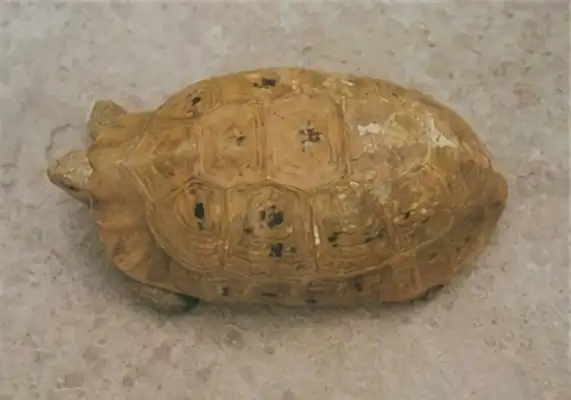
Indian turtles, also known as Silibes, are more likely to be called Indian turtles, originating in islands of India, which can be winterized, food-fed, not difficult to feed, with a similar appearance to the mainland, which is bigger in form than the mainland.
Chinese literary name: Indian land turtle
Chinese alias: Sulawesi, Sulawesi, Silibes.
English name: Celebes Tortoise
Two words: Indotestudo forsteni
Context: Animals
Gate: Pipeline gate
Amen: vertebrate Amen.
Programme: climb
Apogee: Apogee
Tortoises.
AAA: Tortoises
Section: Marine turtles
Yako: Tourako
Land turtles in Myanmar
Crop: Indian land turtles
Distribution: Indonesian Islands, Sulawesi and Hamahra.
Appearance characteristics: 15 cm ~ 18 cm, turtle shells become light gray, with squared textures on them, four feet like turtle feet.
Lifestyle: Temperature of the environment is appropriate at 22°C, 25°C is the best suitable temperature, temperature is about 15°C and temperature is about 10°C.
Reproduction: Eggs.
Eating: Under artificially raised conditions, Indian turtles enjoy vegetative baits, which are its foods, such as cucumbers, bananas, apples, cabbage leaves, watermelon, etc. Indian land turtle morphological characteristics
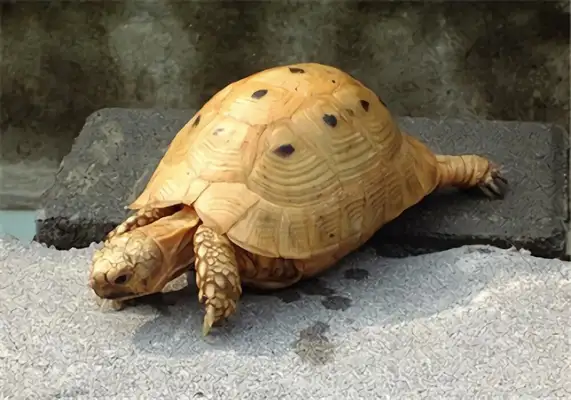
Indian turtles' backscarves and sizes are extremely similar to those of Myanmar turtles, so many people can't tell the difference between these two turtles. Let's start with the look of Indian turtles.
I. Looks of Indian land turtles
Indian turtles have a yellow back, with a small number of black spots raised in the centre; yellow abdomen, thick front edges, yellow necks, masts on top, serrated teeth, no neck shield; and four limbs, with no toes and yellow tails. The male turtle is smaller in size and the mother is more round. The male tortoise has a thick and long tail, while the mother tortoise is the opposite. Tortoises are dim, mother turtles are flat. Turtles grow slowly and are smaller than mother turtles.
II. Distinction between land turtles in India and Myanmar
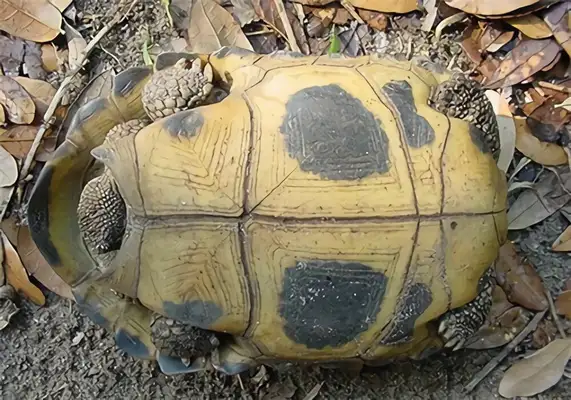
The difference between land turtles in India and Myanmar, to put it simply, is that there are some and some do not. Head marks and chest shields will be more accurate, with black spots on the head of Indian turtles, narrow chest shields, wide and narrow insides above and below the chest shields, and mostly parallels on the mainland. In addition, Indian turtle abdomen have two symmetrical large black spots that walk horizontally, all of which are vertically arranged. The difference between land on the ground and land on the ground can be seen in the neck shield, where there is a narrow piece of nail above the neck, where there is no print, and where there is a stitch on the neck. However, it is also said that it is not safe to look at the shield, as there are individual areas of the country where there are no. Indian Turtle Care Knowledge
India's land turtles are not complex to raise, and in general, wild Indian land turtles adhere strictly to the concept of time and eat some plants, so it is sufficient to follow these principles of life in Indian land turtles when it comes to raising and caring.
The Indian turtle habitat is dominated by humid forests, and its eyes adapt to the weak moonlight at night when the time of activity tends to pass out or after sunset. As for their wild foods, including fruits, wild leaves, insects and animal decomposition, their edible nature is very widespread and almost any food available, which is consistent with Myanmar turtles. Indian turtles are herbivorous and prefer yellow fruits such as mangoes, cucumbers, etc. They also occasionally eat animal foods, such as worms or earthworms, so they can supply cat and dog or fish feed in small quantities. Indian turtles are more sensitive and timid in their personality, and are therefore more vulnerable to stress, as they belong to turtle species that require more care and are more difficult to reproduce than the mainland.
The most important problem facing wild Indian land turtles today is the disappearance of habitats, most of which are covered by tropical rainforests in Indonesia, which are second only to Brazil, but which have disappeared at an alarming rate as a result of logging and agricultural reclamation, while large amounts of abandoned dry wood and debris from logging operators have led to forest fires, while the loss of forests and the ensuing haemorrhagic rains are all linked and the main cause of the shrinking of Indian land turtle habitats. Land turtle living environment in India
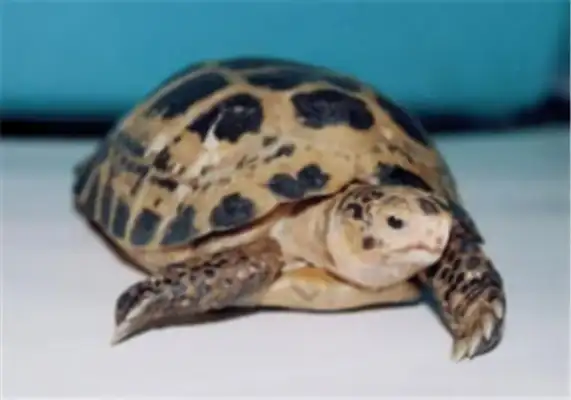
India's land turtles live on islands in India where the air is wet and the temperature is more appropriate, but in recent years, the balance has been undermined by environmental destruction and the number of wild Indian land turtles has decreased.
Indian land turtles are scattered in the Indonesian islands, with abundant rainfall and a humid climate. Only a small number of islands in the southern part of Sulawesi are relatively dry. Most of the islands are tropical rainforest weather. High rainfall and tropical climates make their habitats very warm and humid. Mostly, except in the high-altitude mountain areas, all the islands of Indonesia are warm throughout the year, with an average annual temperature of around 28°C, while between November and March they are clearly heavy, which is also the breeding season for Indian land turtles, with conditions that are not far removed from Myanmar's land turtles.
The most important problem facing wild Indian land turtles today is the disappearance of habitats, most of which are covered by tropical rainforests in Indonesia, which are second only to Brazil, but which have disappeared at an alarming rate as a result of logging and agricultural reclamation, while large amounts of abandoned dry wood and debris from logging operators have led to forest fires, while the loss of forests and the ensuing haemorrhagic rains are all linked and the main cause of the shrinking of Indian land turtle habitats. The point of Indian turtle breeding
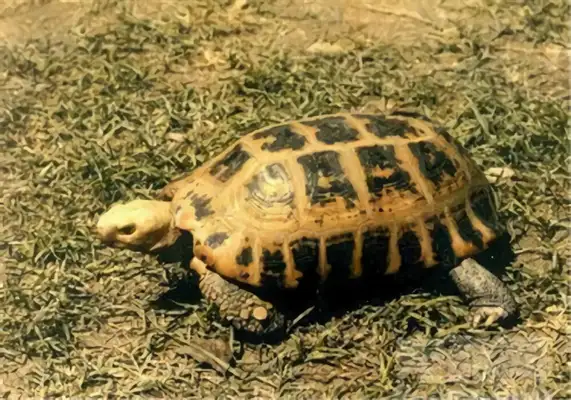
Indian turtles do not pick food and generally prefer to eat more vegan food, with the exception of Indian turtles, which catch meat to supplement their nutritional needs, whether in wild or artificially raised environments.
Indian turtles have established habitat. When raised or dispersed, they prefer to climb and rest in fixed positions. Indian land turtles are milder than other turtles and do not find each other torn apart, but there are predators and foods or companions that are useful. Ciribes land turtles are grass-fed and prefer yellow fruits such as mangoes, cucumbers, etc., and also like mushrooms. They also occasionally eat animal foods, such as worms or earthworms, so they can supply cat and dog or fish feed in small quantities.
In the wild, Indian turtles eat flowers, grass, wild fruits and fungus, and slugs. Under artificially raised conditions, vegetables that enjoy melon fruit and vegetables, such as vegetables (with garlic, onions, pickles, peppers and spicy foods, as well as spinach foods, are often fed in the form of oilseeds, ravioli, purple-backed sunflowers, purple cabbage, blue flowers, apples, watermelon, grapes, tomatoes, bananas, and fruits, because they prefer sweet food, and watermelon is less watered and less abundant. No fish, liver, beef. Indian turtles are more sensitive to red, and prefer red foods such as tomatoes.