Designation: PET5784
English name: Testudo kleinmanni
Character: Silence, moderation
Origin: Egyptian land turtles were scattered in Egypt and Libya
Vulnerability: gastrointestinal disease, flu
Life: About 80 years
Price: An overview of the species of Egyptian turtles at about $1,000 to $2,000.
Egyptian turtles are one of the most vulnerable and most difficult to raise in the Mediterranean family. Minor changes in the environment or diet can result in forced death. The resistance to bacteria is worse, so it is better not to mix with other turtles. Experts also have limited knowledge of this category. It was only in recent years that professional research programmes were being developed. Characteristics of land turtles in Egypt
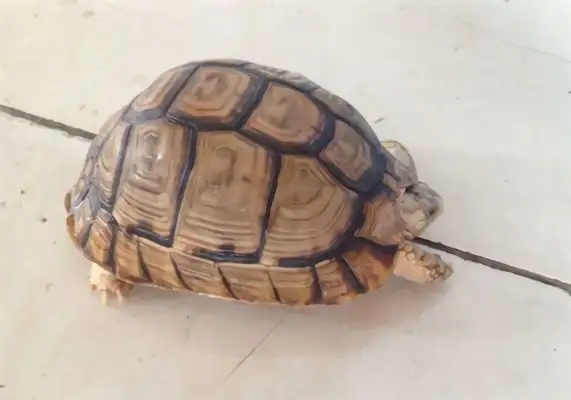
Egyptian turtles belong to one of the smallest and hardest-to-serve species in the Mediterranean. Because of its small size and extremely special climatic requirements, this variety is highly suitable for breeding in biorearing boxes. However, since the species is protected, it is recommended not to try farming.
Egyptian turtles are the smallest turtle in the northern hemisphere, with 14.4 cm in length. The female is bigger than the male, the male is younger, and the tail is longer, the high arch of the Egyptian turtle, ranging from tooth to light gold to dark brown or yellow. This colour, Gloglell, can help them control the effects of sunlight, and lighter turtles will remain in the desert for a long time and will also be an effective disguise in the desert. The chest armour is light yellow and each abdominal plate has two dark triangles. The dark edges on their tortoise plates disappear with age. The head and limbs of the Egyptian turtles are pale ivory to yellow brown.
Owing to unrecognized characteristics, the recommended sub-Asian Pseudotestodo is not valid. It was also suggested that Egyptian land turtles should be formed into Chersus because their common ancestors were Greek land turtles. The DNA sequences of the first two are similar and more similar to those of Greek land turtles. Biogeographicly, this may be due to distribution across the Mediterranean Sea or to convergence evolution.
As a result, the Negev sub-clan became an independent ngev turtle. But they are not unique and correspond to the communities where Egyptian turtles are extinct in Egypt. The ngev turtles are local adaptation patterns, with different appearances. They may be the subgenerous species of Egyptian land turtles. As gene flows have ceased, their care must be treated differently. Egyptian knowledge of turtle care
Because they live in the Mediterranean climate zone, they are more adapted to a dry and cool environment. If the temperature exceeds 30°C, the activity force decreases. It is active during the winter, and it is likely that the summer temperatures above 30°C will reach the state of summer sleep. Control the temperature, 17 degrees at night and 24 degrees during the day. Because they live in the sand, they are less humid and are generally 40 per cent sufficient. Living environment for Egyptian turtles
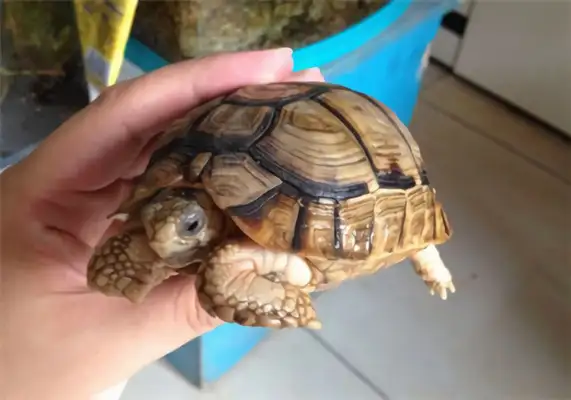
The environmental requirements of Egyptian land turtles are high, especially with regard to temperature, high temperatures are easy to sleep and low temperatures are not active, so temperature control is important for Egyptian land turtles, and the environmental configuration of Egyptian land turtles is described below.
I. Living conditions for wild land turtles
In the wild, Egyptian land turtles inhabit desert and semi-arid environments such as sandstone plains, rocks, sandy dry valleys, dry forest lands and coastal marshes. Trees and savannahs in northern Libya are the main habitat for this community. In NilDelta in Egypt (the central part of Egypt, where Egyptian turtles are extinct), Egyptian turtles live in fertile, wet and green communities, on beaches and farms and in the Akazien forest. The temperature of the turtle to survive in natural wildlife is 17-30°C and the surface temperature is 20 32°C. Active individuals are confirmed at 21-24°C and at 2832°C. Egyptian turtles are not active in very cold or very hot environments. In the cold season, they go out at noon. In warmer seasons, they are more active in the morning and at night. For the rest of the time, they hide under the grass or in the nest of rodents.
II. Environmental requirements for rearing
First, you make them wooden boxes, both of which are better than glass, and two for ventilation. Control the temperature, 17 degrees at night and 24 degrees during the day. Because they live in the sand, they are less humid and are generally 40 per cent sufficient. To control the temperature, they go to sleep, not more than 30 degrees. Food should not be fed to the cabbage, which is too unnourished, but to be fed to lettuce, oatmeal, oatmeal and pruning. It would be preferable to have a UVB light or to enhance the sunlight so that the turtles can't leave the sun. ELEMENTS FOR GREENHOUSE TREATING
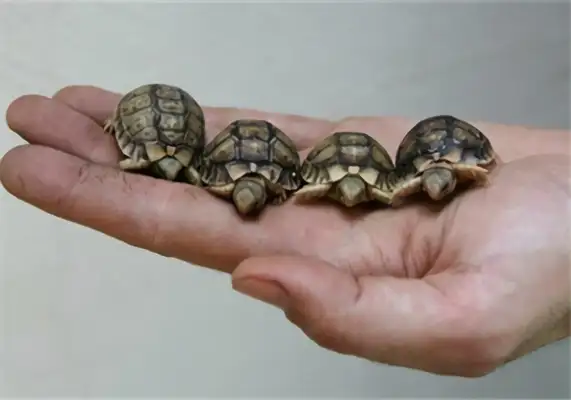
Egyptian turtles are more food-intensive, often dominated by vegetables, which may be related to the environment in which Egyptian turtles live in the wild, where they have abundant reserves of plant resources, so that in raising Egyptian turtles, attention is paid to the availability of vegetables.
Food choices
Egyptian turtles have sawn teeth on their upper and lower beaks, and Egyptian turtles eat like other desert turtles. Kale, in the summer, can also feed the wildly plum, car lawn and sauna, but Egyptian turtles are not very receptive to sauna, and Egyptian turtles prefer purple kale, but because Egyptian turtles are small, care is taken not to feed them.
The second is oatmeal, which is the main food for Egyptian turtles, after purple kale, and which is well received. They are particularly fond of the raisins that eat the raisins, which bites the crumbs; they are even higher than the raisins, which are acceptable to them, whether they are young or old; they are also very fond of the raisins; and they are followed by the raisins, cargrass and carrots.
II. Frequency of feeding
On average, one meal a day, or two days a day, can be fed with any combination of foods and no deliberate control ratio, and there is little mix at home and very few single dishes. There is also feed, and Egyptian turtles have a high degree of acceptance of feed, which can be given to three large grains of hay twice a week.