No.: PET1675
English name: Introduction to Cuban Parrots of the Amazon
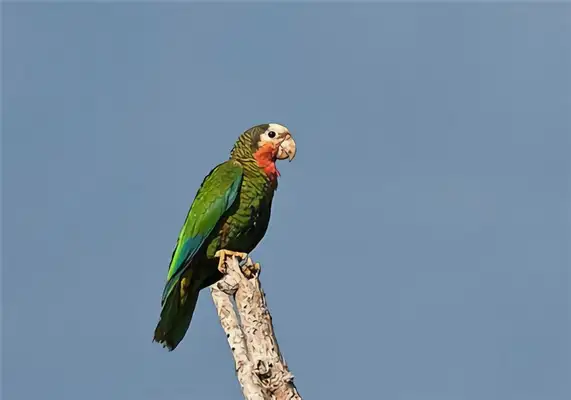
Cuban macaws, typical of climbing birds, are listed as Appendix 1 to the Washington Convention's level of protection, and are endangered parrots of primary care. Cuban macaws have four sub-species, mainly in mountain forests and low latitudes.
Chinese literary name: Cuban Amazon parrot
Latin name: Amazona leucocephala
Not to mention: Cuban Amazonian parrot, Cuban white parrot.
Context: Animals
Gate: Pipeline gate
Programme: Birds
Look: Parakeet.
Section: parrots
The Amazon parrot.
Cast: Cuban Amazon parrot
Asian: 4
Named by Linnaeus, 1758
English name: Cuban Amazon
English name: Bahamas Parrot
English name: Caribbean Amazon
English name: Cuban Parrot Cuban parrot
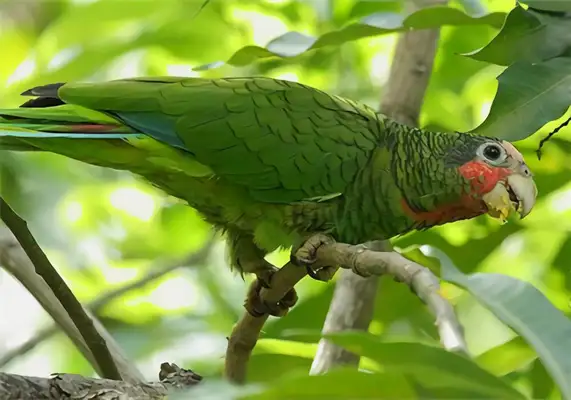
Cuban macaws, typical of climbers, have toy-toe feet, two toe-toe-toe-toe-toe, and are suitable for grabping. It's also very popular because of the colourful and handsome looks of the Cuban Amazon parrot.
Cuban macaws are 30 to 34 centimetres in length and weigh 240 to 262 grams according to different subgeners. The body of the bird is green and has a black side outside each feather; the area around the forehead, head and eyes is white; the cheeks, throats and chests are pink; the overwhelms near the ears are dark black; the distribution of the dark red feathers in the lower abdomen is dark; the edges of the main flying feathers and wings are blue; the feathers inside the tails are yellow green; the beaks are white and the rainbows are red brown.
There are four sub-species, the main difference being the hair color of the head and abdomen. The subspecies are named deep green, with wider abdominal stripes and deeper red throats; Caymanian subspecies are yellower or greener, have more visible fan feathers with blue on the chest and hips, with white heads limited to the forehead, with greens on both sides of the neck separated from the red to the abdomen, with larger individual shapes; Cayman Baker Island subs are generally yellow green, with more visible abdominal stripes on the birds, with deeper cheeks and throats, and smaller bodies; the Bahamas has smaller or untagged abdominal strips, with a more far-reaching white crown extending back, with direct eyes first and upper cheeks, with fewer red tails and larger tails. Cuban parrot breeding environment
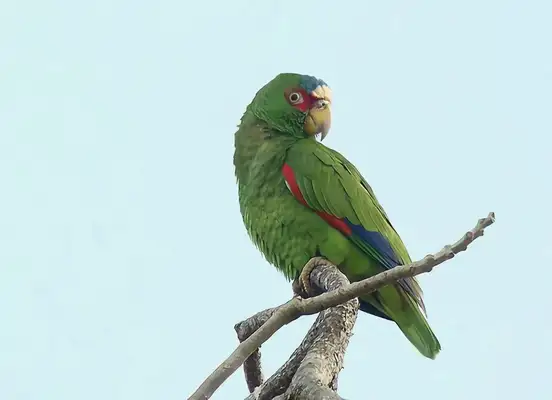
Cuban macaws are more shy than some of the large Amazons, more likely to be in a state of urgency and gold, and are not close to humanity. It was therefore important to feed Cuban macaws and provide them with a rational diet and environment.
While it is desirable to breed only in a small number of cases, when the mother is 2 years old and the male is 3 years old, the size of the nest box is at least equal to the length of their body, its depth is at least three times the length, four or five times the height, the entrance is preferably narrower than the height of the body, the reproductive period may be offensive to the feeder, the reproductive period is better to minimize unnecessary interference, as the pro-bird field is strong and sensitive to the owner's nest, with two to three eggs usually born in one nest, with an incubation period of approximately 28 days, and young birds growing up in about 8 to 10 weeks. Food for Cuban macaws
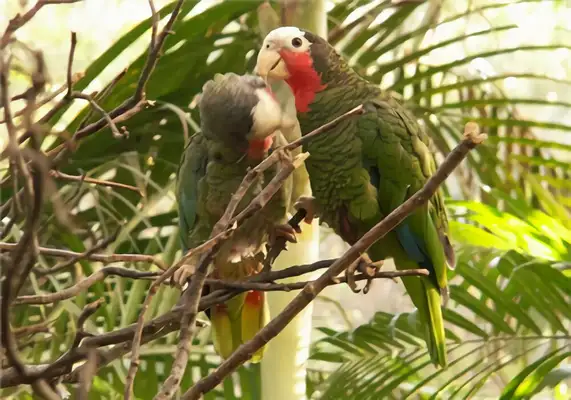
Since Cuban macaws are listed as Appendix I to the Washington Convention ' s level of protection, which is an endangered first-class care parrot, it is relatively rare for individuals to be raised. How do we feed the Cuban Amazon parrot? We can refer to their food requirements in a wild environment.
The Amazon of Cuba, which survives in a wild environment, is dominated by seeds, fruits, berries, nuts, flowers, pine nuts, leaves and young seedlings of plants. Occasionally, they go to farming areas for cereals and to garden or orchards for fruit.