Designation: PET1416
Name: Orthopsittaca manilata
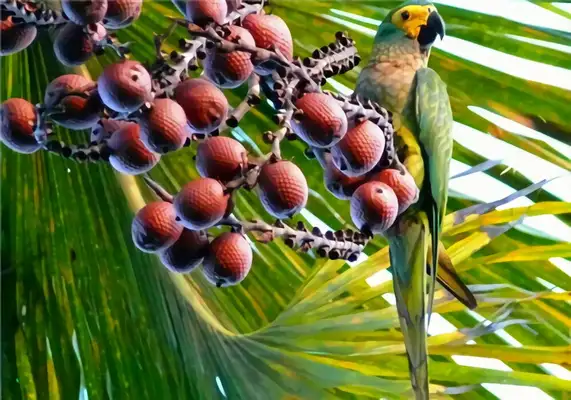
Orthopsittaca manilata is a larger size than other smaller parrots. It's almost covered in green feathers, very beautiful. Faces are free of feathers, stripes are covered, a little like the face of the opera, and can turn red when excited.
It is widely distributed in the northern part of South America, from the highlands of Guyana via the northern and south-eastern parts of Venezuela to Colombia, from the eastern part of Peru to the northern part of Bolivia and Brazil, and also on the island of Trinade.
Chinese literary name: parrots
Orthopsittaca manilata
Area: Animal
Door: vertebrate door.
Platform: Birds
It's a parrot.
Section of parrots
Family: Nautilus
A hybrid parrot.
Distribution: Central America, between North and South America, morphological characteristics of parrots
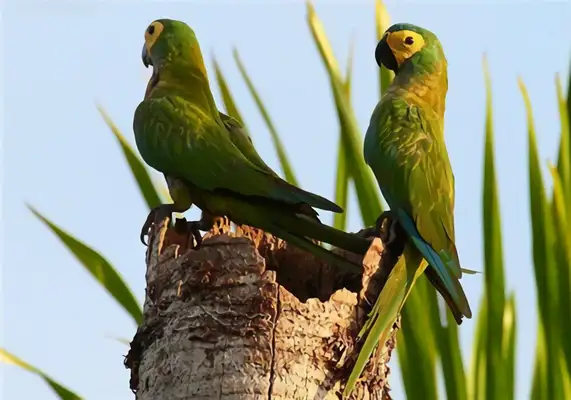
The ideal length of a red-breathed parrot should be around 46 cm and the ideal weight should be around 300 g. The bird's body color is green, and the moment of its small shape is very clever and one of the more common viewers.
The lower abdomen of the red-breathed parrots are olive colours with dark red brown feathers, and the neck, the back, and the upper side of the tail are olive green. The forehead and beaks are blue and green, with a little gray on the chin, throat and top of the front chest, with green rolling sides on the outside of each feather. The main flying feathers of wings, as well as the plumes, are blue green, with the inner side of the plume yellow; the tail plume is blue green; and the top of the tail is green and the interior is olive yellow. The beaks of the birds are black and the skin of the face is slightly white. The beaks of young birds are slightly white, and red brown is less visible in the abdomen. A parrot living in a red belly.
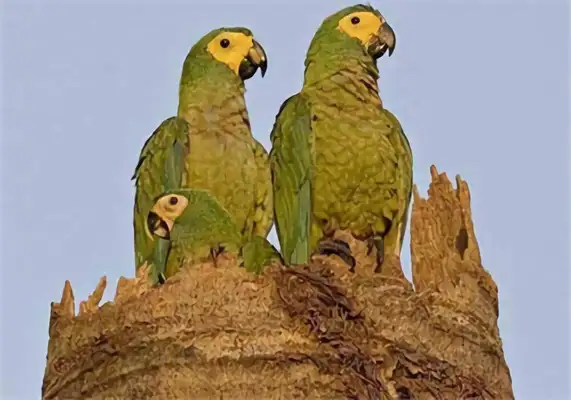
Those who really like red-breathed parrots are not greedy to buy cheap red-breathed parrots because many merchants come out of their homes with wild parrots. This parrot is absolutely incapable of breeding in an artificial environment. Even artificially bred birds remain cautious and shy in nature, so that they must never be exposed to imminent conditions, or remain vulnerable to death.
For small parrots, whatever the climate, the warmth and humidity of the climate at the beginning of the rainy season and at the end of the rainy season each year is a good time for birds to reproduce. By analogy, the turn of spring and summer in China and the autumn are the seasons of bird breeding. Then the birds you raise must be careful to provide a near-climate environment. Over-humid weather must be indoor, over-cooled weather must be indoor, with essentially less than 10 degrees below temperatures not being outdoor, and the breeding birds must be careful not only that the temperature is not too low, but also that the temperature differential is too high. In spring, for example, daytime temperatures in Guangdong can reach more than 20 degrees Celsius, but only about 10 degrees in the evening, which is as high as 10 degrees in the day and night, although it is good compared to the North. Such temperatures are not relevant to parrots in general, and they pose a great threat to spawning birds. They are too hot, they are less adaptable, they are difficult to protect themselves, and they don't have to mention breeding. So, although the diet is good and the environment is quiet, the prodigy remains abandoned.
It's about the big environment. The birds must be well fed and quiet, in addition to eating and drinking well. Too noisy an environment gives the bird a sense of insecurity, heated and restless, always on alert and unable to grow and reproduce well. Birds during reproduction are therefore particularly careful to keep the environment quiet, to place them in less disturbed places in their homes, where conditions are limited, to cover them slightly with dark-colored cloths or to cover them better with green plants. The parrots raise knowledge.
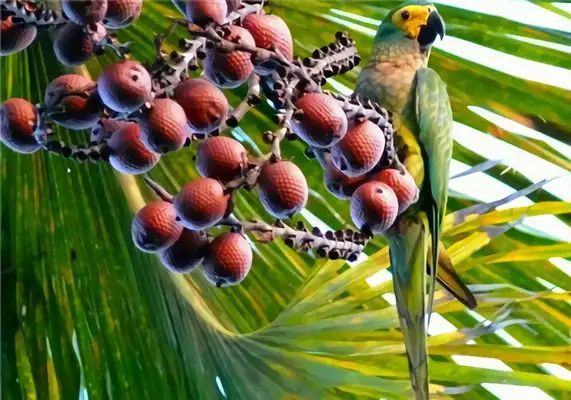
Red-breathed parrots are less daring and often have neurotic symptoms, and their food requirements are neither high nor high, except for the fact that most of them eat only palm trees. It is therefore necessary to understand the behaviour of the parrot when raising it.
Red-breathed parrots are eating, nesting, resting and moving almost exclusively around a very special kind of palm tree, which is known as Italian palm (also known as Morris Palm) and grows only in the highlands of the marshes, so that Red-breathed gold only lives in the marshes along the water. Their food is 100% the fruit of this palm tree, and they eat almost nothing else. During the breeding season, they will separate themselves into small groups to find appropriate caves to nest, and sometimes they will see hundreds of communities operating together, occasionally with orange-wing Amazons and chestnuts, and at night, the entire community gathers to spend the night near palm trees. Screams are sharp, high-security and difficult to detect during the day when feeding around palm trees.