Designation: PET197
English
Origin: Pacific Ocean, Western Strait of Malay
Vulnerability to diseases: fish plague, white cloud disease, skin disease, rotting tail disease, etc.
Life: Overview of butterfly species 4-5 years
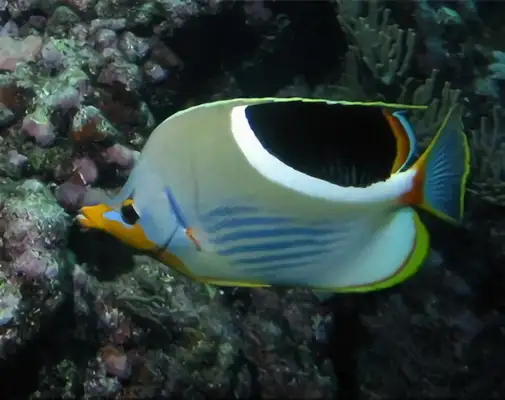
Butterflies are also known as three butterflies and saddled butterflies. Butterflies are mild, seawater fish are not very difficult to raise, so new fish friends who like them can raise them. Butterfly is a viewer, not food.
Chinese literary name: Butterfly
Chinese alias: saddled butterflies
English
Two words: Chaetodon Leetensis
Context: Animals
Gate: Pipeline gate
Amen: vertebrate Amen.
Syndicate: Sculpture
APOA: Apocalyptic fins
I'm sorry.
C: Butterfly Fish Section
For butterflies
Crop: Butterfly fish
Distribution: special features of butterflies in the Pacific Ocean, from the Strait of Malay to Hawaii and the Social Islands, to Australia in the South, to China in the North, to Taiwan and to the Xisha Islands and the South Sand Islands in the South
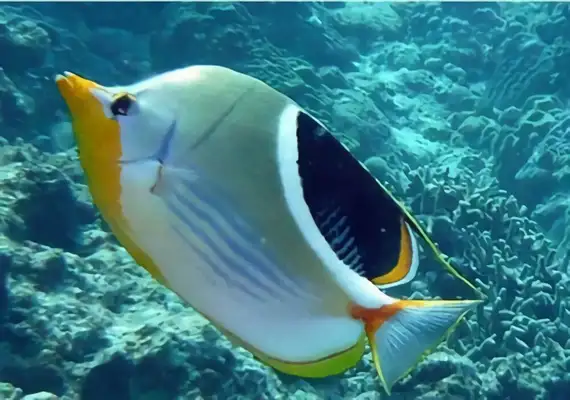
Butterfly is a seawater fish, and it is not difficult to raise it manually. Butterflies are mild, so they can also combine some of the other fish. So, what's the shape of butterflies?
The saddled butterflies are white, covered with black vertical stripes, the latter part yellow, a black spot where the tail is connected to the body, with two large black stripes on their bodies and black stripes on their eyes. It's just that black spots don't have three Indian butterflies deep.
The fourth fin of the bowfish has a silk extension. The upper body has a blue and black pelvis, with a wide white edge and orange red. There are six to seven blue strips on the side. Twenty centimeters long.
Butterflies are flat on their sides and their kisses are prominent. The fish are yellow and green, with large black spots on their backs and broad white edges on their lower edges, and yellow on their lower kisses to their abdomen. The juvenile fish were black-eyed and had false eyes on the tail.
Butterflies are tall and have an egg cylindrical shape; the contours above their heads are flat. The kiss is sharp and prominent, but it does not extend to a tube. The front nostrils have nose petals. Ex-gill bellows have fine sawn teeth; gills are connected to the isthmus. Two lined dentures, 6-8 rows for upper dentures and around 7-10 rows for lower dentures. The body is covered by large and medium scales; the sideline rises upwards to the bottom of the back fin, under the IX-X thorn, and falls below the bottom of the back fin base. Single back fins, hard thorns XII-XIV, soft bars 21-24 (usually XIII, 23-24); rough ass fins III, soft bars 20-22 (usually 21). The front of the body is brown, the back is yellow; the lower part has 6-7 columns of longitudinal brown print; the upper part of the body has a large egg-shaped black spot covering the bulk of the back fin, and the lower part of the body has a light white edge. The young fish have black eyebands, which are disappearing as they grow, leaving only a slight trace in the eye; the juvenile fish tail handles also have a disguised eye, but disappear as they grow. The end edge of the back fin is long as silk and is bound to the orange band with the tail handle; the ass fin is white with the orange band and the yellow edge; and the top and bottom of the tail fin are bound to the orange edge. Butterfly breeding environment
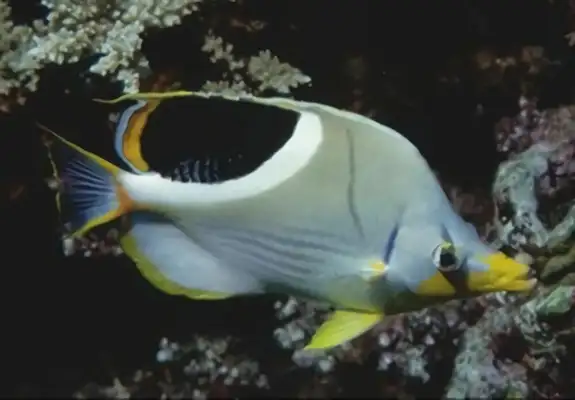
It is recommended that more than 250 litres of aquariums should be used to feed butterflies, although the butterflies are mild and can be co-fed with other butterflies, but care must be taken to observe their fighting. Try not to put it in a coral tank, and butterflies eat a lot of coral worms.
The fight between butterflies is also fratricidal, and the elixir uses a dumpling to stab the fish, while the stick cuts the fish with the tail, while the butterflies hold up their backs as a weapon, and usually can easily push the scales down, if he dies quickly. Even when it comes down at the same time, it can be dangerous, sometimes if it's not today and suddenly it's not tomorrow, and when it's discovered, it's already dying, and two of the same species must pay special attention.
Early perceptions of fresh water farming were incorrectly passed on to seawater farming, resulting in some blind spots, with the fact that the ammonia toxicity of seawater was much higher than that of fresh water, the nitrite toxicity was much lower than that of fresh water, the safe concentration of nitrite was around 20 ppm for most seawater fish, calculated on the basis of one tenth of the exposure time LC50 for 96 hours, and, for example, the concentration of nitrite fish at 200 ppm was 20 ppm, but the safe concentration of total ammonia was less than 0.25 ppm. It's not as easy as you think it is, but it's possible because of changes in the environment, such as changing dirty cotton, sucking bottom sand, entering a fish, or feeding some more, and it's a good habit to measure ammonia day by day at an early stage, and it's probably possible to sum up what happens when the ammonia rises, unless the environment changes or the fish is measured again.
The most important contribution to water quality optimization is the nitrosis, which is supported by proteins, which are weak in terms of the power of water quality optimization. The technique to optimize protein performance is to wet bubbles, allow the rapid elimination of dirty water to be replaced by water, and make it much better to refill water every day than to change water once a week or two or once a month. Butterfly feed the order.
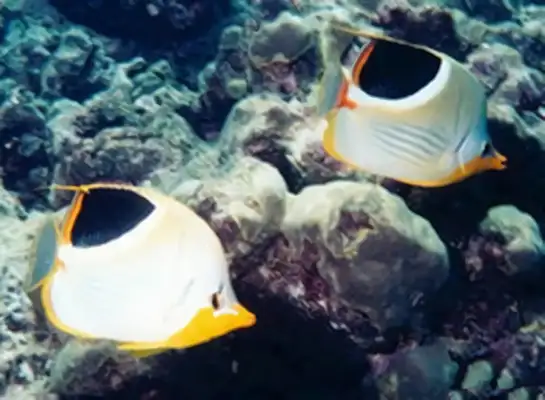
Butterfly is a more easily rearing butterfly, but since seawater fish are mostly impregnable, many find it more difficult to raise butterflies because they are very special and support soft or hard corals. It's not very difficult for a netizen to train butterflies to feed on particles.
Usually, in resource-rich environments where animals eat easily, ecological habitats are easily ad hoc, with a reduced variety of foods taken, special foods are adhesive, while the high difficulty butterflies have become so squeaky under these conditions, and the unchallenged butterflies are completely uninterested when they eat only soft ones (which do not run away), when the butterflies eat only soft ones, they search on the sand for any food that can be eaten, which is deeply rooted in the practice of pecking down the water, and they are totally uninterested in the granary feed that floats up or falls down.