No.: PET1764
English
Origin: Pacific Coral Reef Area
Vulnerability to disease: end-of-life disease
Life: An overview of the variety of redtail butterflies 5-6 years
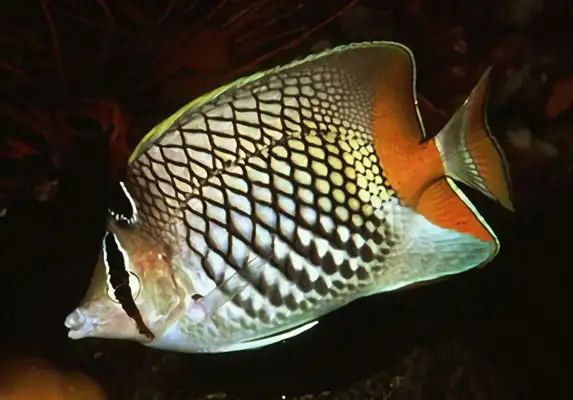
Redtail butterflies, also known as butterflies, are seawater fish and coral reef butterflies. Redtail butterflies are mainly located in coral reef areas of the Western Pacific, and butterfly fish and clownfish can be said to be the more common species of tropical ocean-viewed fish, and the shape of the redtail is also special in butterfly fish.
Chinese literary name: Butterfly Fish
Don't call it "Redflies."
Context: Animals
Amen: vertebrate Amen.
APOA: Apocalyptic fins
C: Butterfly Fish Section
Crop: butterflies
Latin name: Chaetodon xanthurus
Two words: Bleeker, 1857
Gate: Pipeline gate
Syndicate: Sculpture
I'm sorry.
For butterflies
English name: Perlscale butterflyfish
Redtail butterflies are impregnable fish, but animal feed is also available, and they have a more moderate character, but also a certain geographicality, where fighting happens occasionally, but not often.
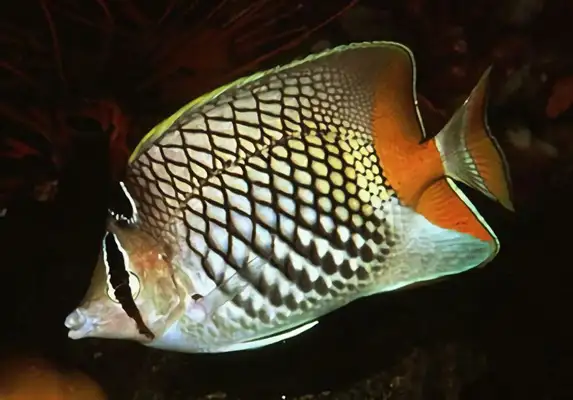
The length of a red tail butterfly is 14 cm, and five to six arrow-shaped black stripes (head-to-head) are found on the side of the fish-tailed fish. The back fins have red bands behind the tails to the hips; the tails are red, the tails yellow and white with red strips and yellow edges; the chest fins are transparent and the abdominal fins are white. A yellow ribbon with a head narrower than the eyelid, which extends down to the gill lid; a light yellow forehead with a black spot. The waters that inhabit coral reef and gravel areas are 4-30 metres deep and usually live in pairs or groups. Red-tailed butterfly breeding environment
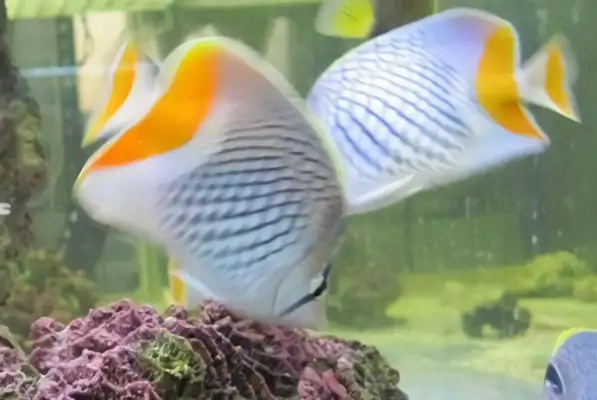
Since the redtail is a seawater fish, the water quality environment is very important for the successful breeding of healthy redtails. It is recommended that the share of redtail butterflies be 1.022 and that water temperature be 26°C. In addition, the red-tailed butterflies are mainly found in coral reef areas and can be properly planted in aquariums.
Redtail butterflies are actually a species that is testing our level of breeding, and when we used to raise fresh water fish, we used to say, “Little flatfish are more difficult to feed than simulators”. The idea of using a red-tailed butterfly is certainly not wrong. Redtail butterflies are challenging because of their appetite and habits and because of their poor ability to adapt to the new water quality environment. It has proved to be a high demand for water quality, and if it survives on a stable basis, make sure that the established water quality conditions are maintained. In doing so, we should be patient, careful and timely in taking stock of successful experiences and in obtaining data on the quality of water in the best-stated state (see also below).
Anyway, you don't start raising them at first, and then you start raising them when your aquariums are safe and ready. Moreover, they cannot feed invertebrates because they eat the corals and molluscs in the casks, and the aquariums that feed them are ideally water-intensive, filter well-equipped aquariums, and place some rocks or coral stones in the casks, i.e. they can look at aquariums and they can provide a place to hide them. Red-tailed butterflies.
Since redtail butterflies are dominated by algae and sponge corals, scientific feeding is required when raising redtail butterflies. Some redtail butterflies also eat small animals and plankton, and if they are to succeed in helping the redtail butterflies with bait, attention needs to be paid to some of the baiting methods.
The commonly used baits are frozen shrimp meat, mussels, red clams, red shrimps, which are less recommended, because bacterial seafish from the freshwater environment are not exposed and have no antibodies. They must be cooked for their use, fish who don't eat cucumber shrimp are usually not good enough to eat redworms, which are mostly poorly nourished, and experimental sea-water parasites are unable to survive the frozen environment, so no worry about the parasites.
The focus of the training for redtail butterflies is to stick food to what they know to eat, not to feed. A little high-strength S sticks to a shell or coral bone, and a tasting bait must also use “teacher fish”, and a bowl of fish would be better served by a plate of fish, for example, a little green that is easy to flush on forage, a blue dish, a piece of pasta, a piece of fish that attracts his attention to go and see or peck, but if you use a clown's sparrow as a teacher's fish, it may only be fat, but it doesn't work.