Designation: PET3489
English name: Southern Flying Squirrel
Vulnerability: gastrointestinal diseases
Life: 3-5 years ' overview of Japanese species of moles
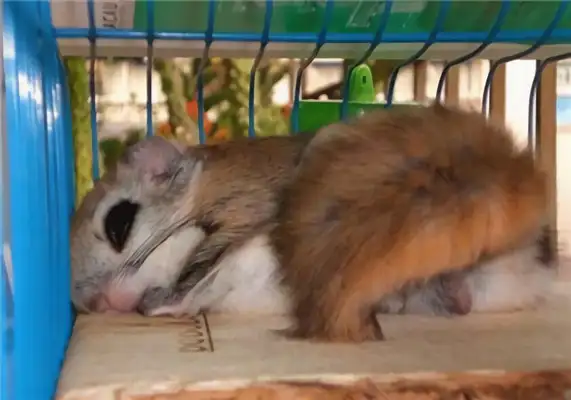
Japanese mice, alias Japanese flying mice, shrimp razing mice, flying rats, mole rats, by definition, are of Japanese origin and are mainly located in Hokkaido, Four Countries and Kyushu, Japan.
Chinese literary name: Japanese mole
Chinese aliases: Japanese flying mice, shrimp flying mice, flying mice, owls
English
Two words:
Area: Animal
Door: spinal animal door
Amen.
Programme: Breastfeeding Programme
The rodents.
C: Rodents
A Japanese mole.
Distribution: Asian Japanese morphological properties
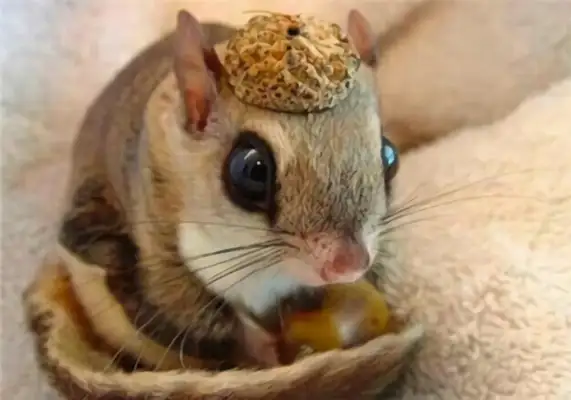
The body weight of the adult Japanese mole is around 100-150 g, and the ideal length should be around 15 cm, with the tail length approaching about 12 cm. It's very cute. The big eyes of God fit for nighttime activities and are the favorite food of many night owls.
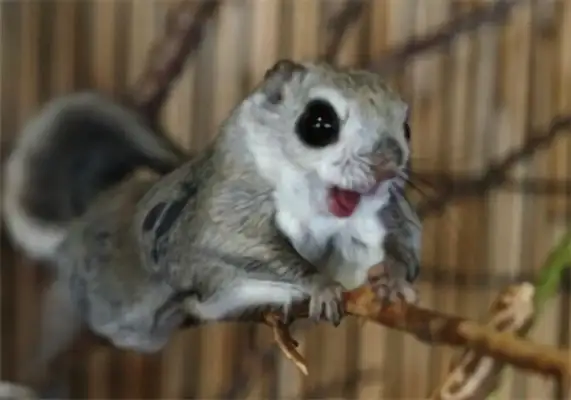
Japan ' s gills are brown gray or purple black in summer, with a small number of brown hair mixed with light yellow in winter. On glideing, his limbs stretch out flat, his tail stretching up slightly, with the help of the hand stretching muscle of the front wrist, and control of the cortex. When landing, the head is raised up, vertically, and the front foot grabs the trunk. If the slope is larger, so is the glider distance. Life conditions for Japanese mice
Japanese mice prefer to live in high mountain forests in the wild and are typical night animals. Home-breeding is best raised indoors or outdoors with roofs in hot summers, and water is best sprayed when it is too hot. No protective measures are required in winter. Japanese mice are very lively, particularly in climbing trees, and have more stereotypic space, and should use as wide and high cages as possible. As Japanese mice are used to nesting in trees, nesting boxes should be installed at the height of the cage. The nest box may be replaced by a nest box with a high entrance to and from the bird. Japanese rat breeding knowledge
Japanese gills belong to a variety of predators and enjoyable plants. Some fruit and squirrel feed could be considered for pet breeding. Some animal food is also occasionally fed. Here's what we know about raising Japanese mice.
Feeding can be given to pines, sorghums, melons, sunflowers, pears, apples, etc., and, depending on seasons and regions, provide as many feeds as possible. Feeds can be distributed in a few places so that they do not compete, with two to three days of dry food being added to it and fruit being supplied every day, so that they can be eaten that day. The basin needs fresh water at all times.
The technical points for reproduction in Japanese mice must be selected for reproductive use when animals are introduced, with a ratio of 3 to 4 to 1. To single out the weak, especially the weak male, may be attacked by other males. Some animal food, such as ripe eggs, bread, etc., can be given during reproduction to see if they like it. In addition, clean leaves, frags, twigs, etc. are placed in the circle for their sheltering or sheltering. Children born six months old must be separated so that they do not become too dense.