The Prevention of Epidemic Act drives the pets industry to heat up.
In recent years, there have been many risks associated with dog walkers.
On 1 May this year, the newly amended Law of the People ' s Republic of China on Animal Disease Prevention came into force. The new regulation clearly states that dogs should be allowed to leave the household only with them, and that they should be required to wear dog tags and adopt such measures as canine ropes, in order to prevent the spread of the disease as well as injury to humans.
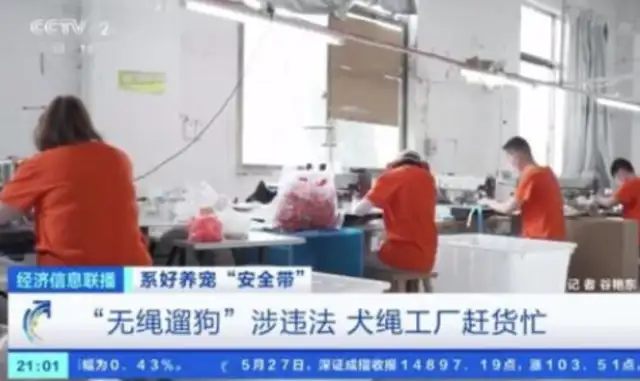
That means walking a dog without a leash, suspected of breaking the law. As a result, the pet supplies industry, such as canine ropes, is in a state of fire.
The director of the pet plant revealed that the related orders had been added at the end of April and that the plant was currently working overtime to catch up, that workers were often working overtime until around 10 p.m. and that the overall order volume had increased by more than 50 per cent in the five-year period.
At the same time, thermal sales of canine ropes have led to an increase in the sales of other pets.
According to data from the Electrician Platform, in the one-month period before and after the introduction of the new dog-keeping regulations, canine-line sales increased by 30 per cent and pet pushers by 85 per cent. As a result of the introduction of the new regulations, there was an increase in the number of pet-owners travelling with pets, which directly led to an increase of up to 300 per cent.
“The volume of the canine ropes is always better, and in the week before and after that, there was a marked increase in the number of clients consulted online, mostly new ones.”
In Kim's view, the new customer means an increase in sales: “The canine rope is not expensive, usually more than ten dollars and more than twenty dollars. When new customers look at the dog ropes, they tend to look at the bite rods, auto-diplomatic pots, pet ice pads, etc., at various prices. In the end, the billing will exceed their previous plan.”
In Chengdu, a local cat slave snower also told reporters: “Pups travel mostly as durable consumer goods, with relatively low frequency of purchases; however, some of the little things are fast and expensive and have a higher repurchase rate. I spend almost $400 a month on pets and more on holidays or promotions.”
Industry segmentation will be a big trend.
In fact, the fireable canine-line industry of the Act is only a microcosm of the 100 billion pet market.
According to the 2019 White Paper on the Chinese pet industry, the market for the consumption of Chinese urban pets (dogs and cats) exceeded the 2000 billion yuan mark in 2019, reaching an overall size of 202.4 billion yuan, an increase of 18.5 per cent over the same period.
It is anticipated that by 2023, the market size of the Chinese pet industry will experience an average annual increase of over 20 per cent, reaching $295.3 billion by 2020. Market size doubled in 2015-2019 and the compound growth rate exceeded 20 per cent annually.
In terms of the overall pet industry industry chain, its main coverage is seven sub-tracks upstream and downstream: upstream products include pet trade, pet food, pet supplies, downstream services mainly pet medicine, pet beauty, pet training, pet insurance, etc.
In the view of industry, the breakdown of the pet industry will be a significant trend in the future. The emerging pet service market is emerging, especially as the pet market consumer group continues to rejuvenate and becomes the mainstream of new generations after 90.
At the same time, a number of new consumption practices are likely to develop at a rapid pace, including pet education and instruction, paper diapers for dogs, environmental spray and fast consumer goods such as wet towels.
Journalists noted that in recent years there has been an unprecedented increase in capital interest in the pet industry.
According to the capital market, there are currently two pet food companies in stock A, namely, the medium-sized pet stock (002891) and the Petit share (300673). Among them, Petty shares are also the lead for pet bites. Both companies have earned more than one billion.
In contrast, pharmaceutical units such as Reep Biology (300119), Gin River Biology (002688), Biological Shares (600201), Pre-Cutting Biology (688526) are involved in pet medicine.
The area of pet supplies is also receiving considerable attention. The relevant data show that in 2019, the market for pets in China was about 25 billion yuan, including sanitary items, washing products, tractors, mattresses, clothing, toys, edibles, toilets, etc.
Among them, the main camp, which consisted of shares in pet nursing products such as pet mats and pet diapers (001206), successfully landed on the capital market on 18 May.
According to the AIDS Counseling Analyst, many domestic pets have been affected by the epidemic, with fewer outings and a great deal of attention being paid to pet household goods. Smart products, such as self-cleaning cat sand basins, automatic doors, electronic pet fences, are also favoured by an increasing number of young consumers.
“This industry has too much space to go beyond the baby market. Traditional foods, medical care, clothing, beauty and supplies are still the main sectors, but I find that some derivative services have begun to be organized, such as pet cremation and burial. In the future, intermediaries, logistics and even pet tourism may appear.” A person would say so.
This is from the Financial Investment Report.