The dark body, the strong stem, the cold eyes and the unending look of pride are the impressions of the Dobins. Such a cold image has kept the legend of the Dubins dark.
In the West, it's often told that their brains grow faster than their skulls, which makes them crazy sooner or later and one day they throw their brains out of their skulls. Another legend relates to their origin: The Tobins were an experimental dog created by Hitler himself, with the aim of creating a fierce and extremely aggressive killer. In many of the films, the dubins are a symbol of brutal Nazi soldiers (except for the Tigers, which is a German mirror).
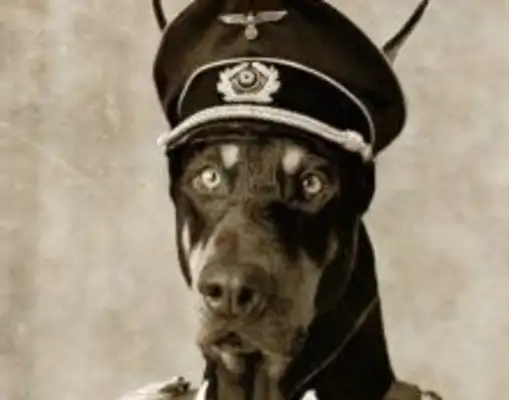
But is that true? Is it really Hitler who created the Tobins? Of course not.
The name of the Doberman, the Doberman, the Doberman, the Doberman, the Doberman, and so on, is from its true creator. - Karl Friedrich Louis Dubern (1834-1894), a German tax officer.
Dubes are very young compared to many species: Its origins date back to the end of the nineteenth century, when the tax officer Dubrovin took on the task of developing new dog varieties through a series of hybrid species. His goal was to obtain a dog who could protect him and other tax officers, because at the time, tax work meant that he was often threatened by outlaws and could even be robbed by thieves of taxes that he could easily collect.
One of the world's best escorts was born through the cross-fertilization of a variety of dogs, including German bins (German Pinscher), Rottweiler, Weimar, Manchester terrier and French shepherds, loyal, courageous, persistent, energetic and human friendly, and excellent guardians of attractive and unique functions.
And in countries other than their home country, Germany, especially in the United States, the Dubins are popular. The Doberman Pinscher ClubofAmerica, DPCA, founded in 1921, believes that the first Dubing Dog in 1908 came to the United States and was registered with the United States Dog Club. At that time, the dubin dogs were not very popular, but their heroic behaviour during World War II helped to improve the situation (in 1922, the number of people registered to raise dubin dogs in the United States was over 100, and by 1941 the number rose to 1637, ranked fifteenth among the pure dogs) and gradually became one of the most popular species in the United States. In the Pacific, they have been used to carry out tasks that are difficult for humanity to carry out, such as guarding, reconnaissance, mine clearance and delivery. In 1994, the statue of “ever loyalty” fashioned by a deep Dobing dog was placed in Guam as the highest tribute and permanent tribute to the loyal and courageous Dubing dogs who served the United States and the United States Marines during the Second World War. Now they remain important participants in many military and relief operations.
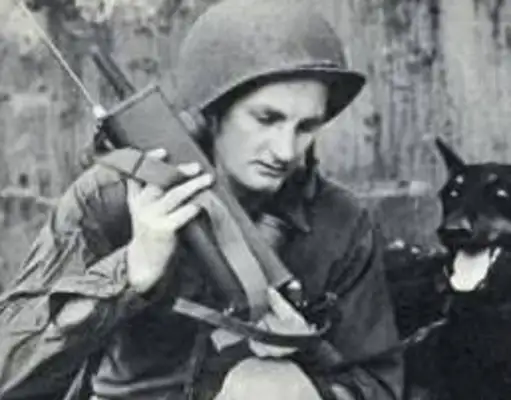
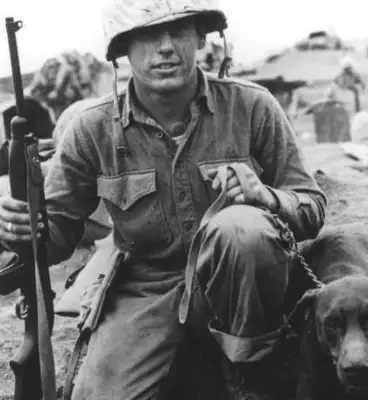
There can be no doubt that the history of the Dubins, which has existed for more than a hundred years since their birth, tells us a story about courage, loyalty and the selfless dedication and even sacrifice of humankind.
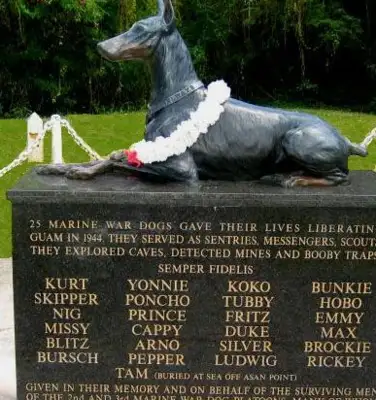
So far, the body-shaped, elegant Tobin dogs have long been able to say goodbye to the misunderstandings, the prejudices of dark legends and the ravages of relentless warfare, and have become one of the most beautiful dogs we often talk about. In any dog park, we can see a black figure that pulls the rope, flashes at another dog -- not for attack, but for play.