Sure is good. Let me help you with a detailed introduction to the snake.
A beautiful and challenging pet snake.
Overview of species
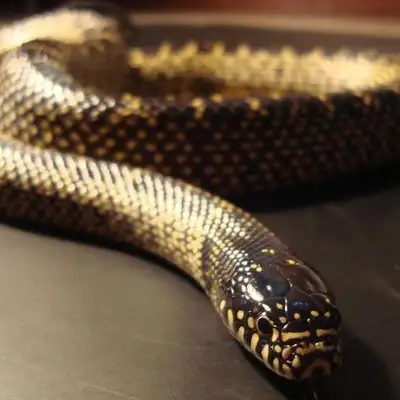
Also known as King Snake, one of the non-venom snakes, has been admired by many snake lovers with his diverse designs and small bodies. They are mainly located in North America, especially in the southern United States and in the coastal areas of Mexico. The king's snake is light and generally has a length of between 90 and 150 centimetres, and some varieties can grow to up to 2 metres, but most of them remain within the range suitable for household maintenance. The colours and patterns of the Wang Snakes are rich and varied, including black and white bands, colour spots and even dark colours, and are highly appreciated.
Character characteristics
The king is relatively gentle, but individual differences are evident. Some are born shy and may hide or contract when confronted with a new environment or sudden shock; others are more curious and prefer to explore the surrounding environment. Unless threatened, the snake will not attack himself in the face of humanity. Most of their reactions are escape or defensive, occasionally bites, but usually release immediately after a soft bite. The king snake has a strong hunting instinct and is good at hunting small animals, such as frogs and rats, which is also their reputation as a “rat catcher” in the wild.
Establishment of a culture skills environment: The Wang Snake prefers a dry but wet environment. It is proposed to use a glass or cask as a rearing box, with fine sand or moss laid at the bottom to provide a hiding place. In terms of temperature, it is between 24 and 28°C during the day and is appropriately reduced to around 20°C at night. Temperature can be maintained by heating pads or heat lamps to ensure that the temperature differentials are appropriate and contribute to the metabolism of snakes. Light and humidity: While Wang Snake is not a snake with strong dependence on sunlight, appropriate light can help it maintain its mental health. The humidity should be maintained at 40-60 per cent to avoid over-drying or over-wetting. High wetness can cause skin problems. Feeding and drinking water: Wang Snake eats small mammals, frogs and eggs. Young snakes are usually fed protein-rich food once a week, and adult snakes are fed every fortnight. Do not feed too much or too often to cause indigestion or obesity. Clean drinking water basins must be replaced and kept clean every day. Reproduction and health management: Provide appropriate temperature and hidden space during reproduction. Good nutrition and a healthy environment are key to successful reproduction. Attention to the behaviour and appearance of snakes, such as changes in skin colours and declines in appetite, means health problems.
Hair care (a snake's physical care)
Snakes do not have hair, but “physical care” can be understood as caring for their skin. Every year the skin of the king snake is changed, and when the skin is changed, it displays dimness, stagnation and even bites itself, requiring special attention. Usually light wipe with wet cloths or soft brushes can actually help remove excess skin-skin debris and avoid skin diseases caused by incomplete de-skinning.
Snake lovers should avoid cleaning the body with chemical washing and not forcibly tearing out old skins that have begun to fall off. Maintaining proper humidity and providing a good breeding environment for snakes is an important factor in maintaining their skin health.
Concluding remarks
As a pet, Wang Snake is both noble and challenging. Their diverse character and high demand for the environment and food, but with sufficient space, proper breeding and careful care, they can reap a gentle, beautiful and visible pet snake. Being a good snakekeeper, learning to understand their habits is key.
If you like exploring mysterious and wild pets, Wang Snake is really a worthwhile option. They bring beauty in serenity and a unique life experience.