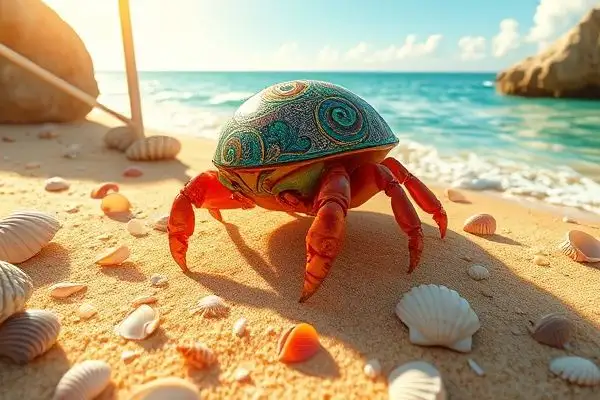
Coenobita is a kind of native crab living on land. Not only are they unique biological features, but they also have a rich habit of living and have become the choice of many pet lovers. It's both interesting and challenging to raise crabs by land. In this paper, we will present an overview of the species of crabs by land, their personality characteristics, their breeding skills and hair care to help you become a good terrestrial host. Overview of species
One of the native crabs is Coenobidae, who relies on the shell to protect their soft abdomen. Unlike sea-based crabs, where terrestrial crabs are required to live on land, most of their activities depend on wet environments. Common terrestrial host crab species include the Red Foot Crab (Coenobita rugosus), known for its red feet and solid shell. They are gentle and well suited for pet breeding. Crabs such as Coenobita violascens are known for their purple and blue appearances and live in a quiet and environmentally adaptable way. Coenobita cavipes are small and adapted to different habitats. They're very active and curious. Crabs (Coenobita brevimanus) usually have more complex colours and spots, with a unique appearance that attracts attention. Personal characteristics are curious to say that they often explore, excavate sand, climb and explore novelty around habitats. This nature makes them very active in the breeding process and gives the breeder a lot of observational pleasure. Socially strong host crabs do not like being alone, and at least two or more are recommended. They meet social needs through contact with their peers and show collective behaviour, such as climbing to higher places or finding food together. Crabs, which are highly sensitive on land, are very sensitive to environmental changes, particularly fluctuations in humidity and temperature. The breeders need to be careful to create a stable environment for them, otherwise they may show anxiety or attack. Although they are gentle, when they feel threatened, they quickly hide in their shells and even protect themselves by attacking. Its unique “neighborship” instinct is one of their defence mechanisms. Crabs, which are suitable for breeding techniques, prefer wet and warm environments at temperatures ranging from 24 to 30° C and should be kept between 70 and 80%. Thus, the wetter can be used to maintain humidity or to place a wet sponge in a box. The size of the shelter box should be at least 30 per cent x 30 x an appropriate increase of 30 centimetres in terms of the number of crabs. Crabs who live in sufficient places prefer to have places where they can put small holes, blocks of wood or orange skin in a shelter box so that they can escape or rest at any time. More than one shell of crab is available to protect their soft abdomen. You can provide them with a variety of shell sizes to help them change at any time. The size of the shell should be selected according to the size of the crab to ensure that they can be successfully replaced. Forage is home to crabs, which are groceries and enjoy fruits, vegetables, dried fruit, dry worms, seaweed, etc. Ensure the availability of diversified food and regular replenishment of calcium, protein and vitamin A, etc., to maintain their health. While terrestrial-based crabs are terrestrial animals, they still need water to keep them wet. Give them a shallow dish, let them drink and bathe. Water quality should be periodically replaced to avoid water pollution and disease in the ponds. Appropriate UV exposures are required for vitamin D, which is necessary to assist in the synthesis of crabs from land. The UVB lamps can be used to simulate natural sunlight and maintain health. Hair care
Although the native crabs do not have hair like a cat or dog, their bodies will have small or rigid hair, especially around the tentacles and legs. These hairs are mainly used for sensory and predatory purposes. While they do not need hair care like pet dogs and cats, they still need some basic cleaning and maintenance: regular clean-up of ground-borne crabs in a damp environment that is susceptible to contamination by outside dirt is important. When cleaning the crab shells, the impurities on the shells are softly brushed with a soft brush. Maintaining adequate humidity not only maintains the health of the native crabs on land, but also avoids the drying and injury of their tentacles and limbs. Therefore, maintaining humidity is within the right range, not only for the health of the crabs, but also for natural cleaning of hair. Avoiding overstretching crabs' bodies is very soft, and often seizing them can harm their tentacles and body hairs. When interacting with crabs, try not to overstimulate their bodies. Summary
Crabs on land are very interesting and challenging pets that have high environmental requirements, but as long as they provide a comfortable and stable living environment, they display unique personality and lovely behaviour. By understanding their variety characteristics, personality characteristics, breeding skills and hair care, you will be better able to take care of your pets and enjoy the good times with them.