No.: PET2847
English name: Upside-down catfish
Origin: Central Africa
Vulnerability to diseases: albino disease, rotting tail disease
Life: 4-5 years of overview of anti-goat species
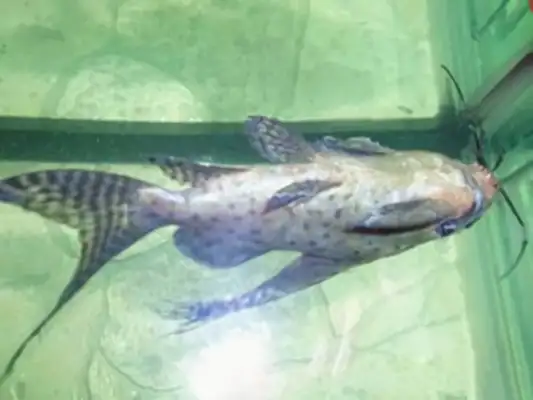
An anti-goat, like their names, is a fish that swims backwards. This type of fish from the Congo River in West Africa belongs to the Tropics and is currently broadly divided into “river-type anti-tracing catfish” and “lake-type anti-tracing catfish”.
Alias: Rewinding catalog
English name: Upside-down catfish
School name: Synodontis nigriventris
Origin/distribution: Central Africa
Fish size: 9.0 - 10.0 cm
Character: Moderate
Appropriate temperature: 22.0 - 26.0 °C
Alkylity: PH 6.0 - 8.0
Hardness (dGH): 4.0 - 12.0°N
Active water layer: bottom
Reproduction mode: osteoporosis
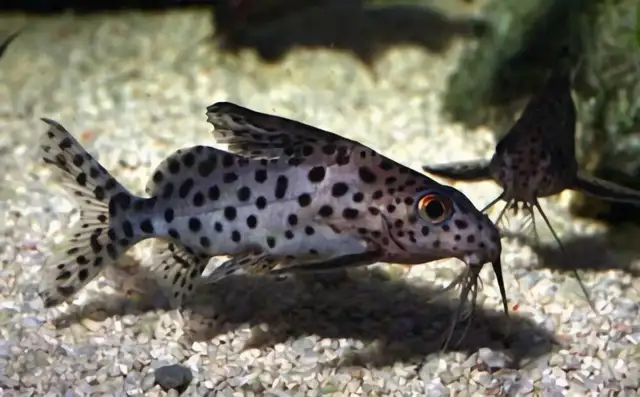
In particular, they are fish that swim backwards, and because of differences in their origin, variety, colour, etc., they can now be broadly divided into “river-type” and “lake-type” anti-travel cats, which may differ in their appearance and habits.
Anti-goats normally move or stationary up their abdomen, with large eyes, preferably with indirect dispersing light, water temperature of 24-25 degrees, preferably soft water, groceries, and proper feeding of plant food. There are currently no successful breeding methods.
I. A river-style anti-Turkish Cat
Riverine-type anti-tasking catfish are mainly located in West Africa in the Lake Nigeria, Lake Niger and Say water systems. Common varieties include Synodontis angleicus and Synodontis schouteeni. This type of species is highly adaptable and requires less water quality and can be well lived, grown and multiplied in weak alkalin to acidic waters.
II. Lake-type anti-goats
The lake-type transatlantic catfish are mainly located in West Africa on Lake Tanganyek, Lake Malawi and Lake Victoria. Common varieties include Synodontis naassae and Synodontis victoriac. Aquatic environmental requirements are high for this type of species, requiring water quality to be alkaline and hard to survive. Inverse cat breeding environment
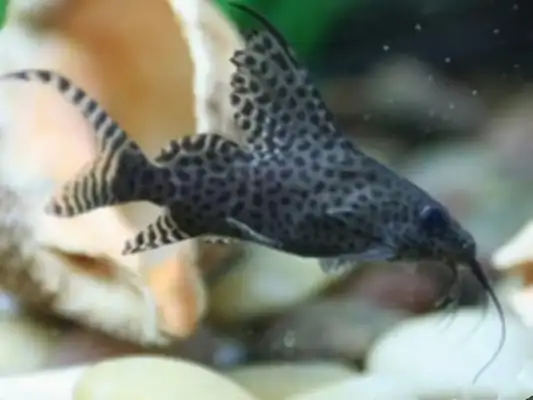
The greatest feature of anti-goats is that they are up in the abdomen at normal times when they move or remain static, and because of this special habit, they are welcomed by many fish friends. Anti-travel cats prefer soft water, but currently there is no way to reproduce successfully.
Anti-Tangan cats are originating in the water systems of Lake Tanganyek, Lake Victoria, Lake Malawi, Lake Nigeria, Lake Niger and Say in Africa. The fish is 5 to 40 centimetres long and suitable for water temperature 23 to 28°C, total hardness for water quality (gH): 6 to 11 dGH, alkalinity (pH): 6.5 to 8.5. Anti-truck cats are combative and, therefore, in the breeding environment, necessary hiding places such as rocks, roots or sunken trees should be set up. Anti-truck fish are prone to white spot diseases, and water quality management should be strengthened at normal times to prevent abrupt changes or deterioration in water quality. Backcat feeding points.
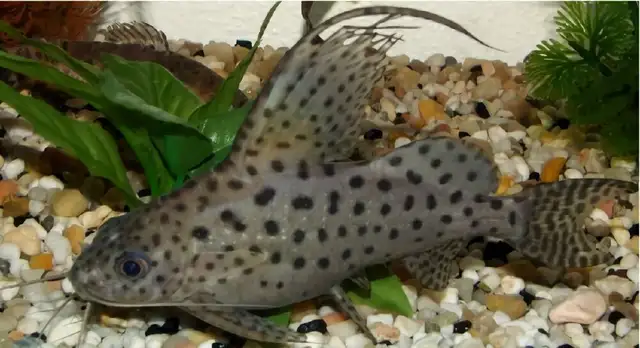
The reason why anti-goats are very popular with fish friends is mainly because they are very different from other fish, they are particularly good at swimmers and swim very fast and strangely.
Anti-Travel Cats can be classified as “river-type” and “lake-type” but, whether river-based or lake-type” anti-Travell Cats, they are not very different in edible fish, but edible fish, edible algae, weeds, shrimp, insects and fresh live baits, as well as artificial feed. Anti-truck cats are combative and, therefore, in the breeding environment, necessary hiding places such as rocks, roots or sunken trees should be set up.