Designation: PET1050
English name: Chinese Strip-nicked Turtle
National origin: Laos, Viet Nam, Southern China, Taiwan, China.
Vulnerability: leukemia, skin diseases
Life: 15-25 years
Prices: 50-2000.
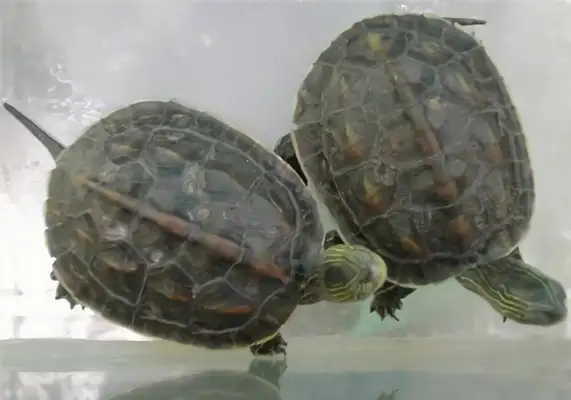
China ' s flower turtles belong to the primary species of water turtles, and although the number of wild individuals is scarce, there are many artificial breeders to be seen in the marketplace, and they are easier to rearing and to buy on the mainland.
Chinese literary name: Chinese flower turtle
Don't call it a flower turtle, pearl turtle, longtail turtle, Taiwan grass turtle.
English name: Chinese Strip-nicked Turtle
Two words: Ocadia sinensis
Context: Animals
Gate: Pipeline gate
Amen: vertebrate Amen.
Programme: climb
APA: Aerobics
Tortoises.
Section: Tidal turtles
It's a flower turtle.
Crop: Chinese flower turtle
Region: Laos, Viet Nam, Southern China, Taiwan, China.
Appearance characteristics: black spots of a larvae mask, like a grain of pearls
Lifestyle: Living in low-altitude waters such as ponds, canals, slow-moving rivers Medium
Reproduction: Chinese flower turtles reproduce 7-17 eggs per nest each year in March-May, with an incubation period of about 60 days.
Eating: Fish, shrimp, plants in water, etc., for predatory animals. They are not the same as the Chinese grass turtles and the red-ear Brazilian turtles. China Fleur Form Characteristics
The Chinese turtle's back is 20 cm long and 16 cm wide. The skin of China's flower turtles with bright green and black stripes on their heads, necks and limbs, their small heads, their smooth backs, their fine teeth and their dents in the centre. The larvae is grey and green, with three obvious vicissitudes. The adult backs would turn to brown, and two of the backs would disappear. The abdominal tan, each of which has a large ink stain, is missing on the back of the abdomen. It is clear that the cavity of the back armour is connected by a bone stitch. The chinese vests are taneous and a little archy, and their rear edge is not sawn. knowledge of care for Chinese flower turtles
Chinese flower turtles are highly aquatic and live in low-lying ponds, swamps and streams. When shocked, they dive into the water but are also drought-resistant and land without water can survive. The temperament, occasional combat, non-absorption, adaptability and vitality. The Chinese turtles have the habit of living in groups, usually in two dens together, with 78 in one. China's neck turtles are thermogenic animals whose activities are influenced by temperature, with hibernation periods from November to March of the following year, and an outing in April. Living environment of Chinese flower turtles
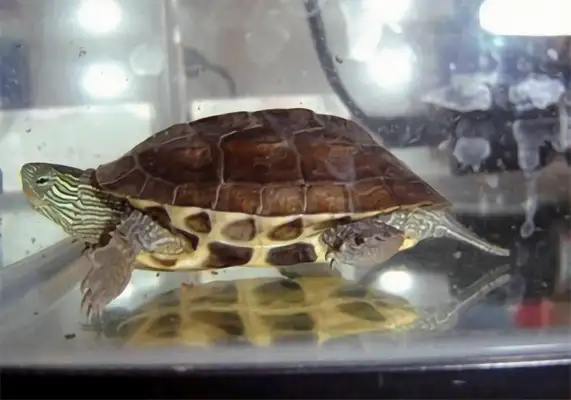
China ' s flower turtles do not require a very high standard of living, but they need a good water quality environment. Generally, the water that feeds them is subject to sunlight, and water that does not follow this step can easily cause turtles to rot and decomposition, which can lead to death.
In winter, Chinese turtles use heaters to warm up, with temperatures of 26-30 degrees, and they can all grow well. The excreta should be cleaned up in a timely manner, so that it can be pumped out with straws to avoid contamination of water quality. Vegetable turtles are also impregnable turtles, who can feed small fish, shrimp and some fruits and green leaves on a daily basis, with greater attention to be paid to the regular feeding, timely adjustments, gradual maintenance of diets, regularity, and high levels of feeding, which can lead to faster water quality pollution, as well as indigestion.
China has a high demand for water quality, and if they are raised directly by piped water, they are prone to decomposition of skins, rotting nails, etc., it is best to keep running water for more than two days. When the weather is clear, let the turtles sun up. Tortoises and the Brazilian turtles we mentioned earlier, turtles, are easy breeds to raise, and are good for beginners. Finally, it is hoped that these three little turtles will accompany the joyful little ones through their happy childhood and make good memories. What's the point?
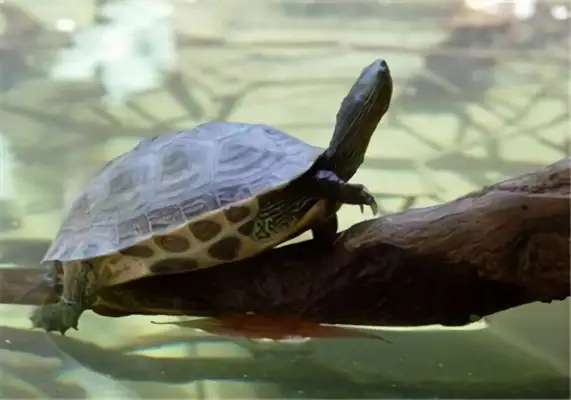
Chinese flower turtles do not have special requirements for food choices, unlike other turtles, which prefer to eat some meat, although they can eat some turtle food, but this does not provide for all their nutrients, so they feed some fish, etc.
Under daily conditions, Chinese flower turtles can feed pork, fish, shrimp, etc., especially young rice shrimp, which can be fed three times a week, with an appropriate increase of 5 per cent of the weight of the turtle, but not suddenly, and should be gradually adapted to avoid indigestion. Feeds of Chinese turtles, whether animal or plant, must be fresh and prevent corruption from spoiling. When temperatures are low, they can be fed in the morning, and not too much to feed, to prevent debris from contaminating water quality.
In summer, when water temperature is around 34°C, turtles eat more, they should be fed more in order to accelerate their growth and, if they do not need to reproduce, can be fed two to three times a week. The day-to-day shift of water (which can take place before feeding) is not possible to use well water in order to avoid excessive temperature and adverse consequences. Fall is the key to raising turtles. It is said that the success or failure of winter sleep is directly affected by the amount of nutrients stored in spring bones, autumn larvae and turtles. Therefore, in the autumn, higher feeding is needed, followed by the addition of vitamin C and composite vitamins to bait to improve turtle resistance.
Daily attention should also be paid to changes in ambient temperatures, which are around 18°C at night, so as not to be counterproductive and cause disease. In autumn, good breeding, good hibernation for turtles, can be put on wet sand in winter, or in 10 cm deep water casks. Water temperature cannot be below 8°C. Otherwise, the hibernation safety of turtles would be threatened.