Designation: PET5880
English name: Gramostola porteri
National origin: Chile
Vulnerability: eating diseases
Life: Overview of the species of red rose spiders for about 12 years
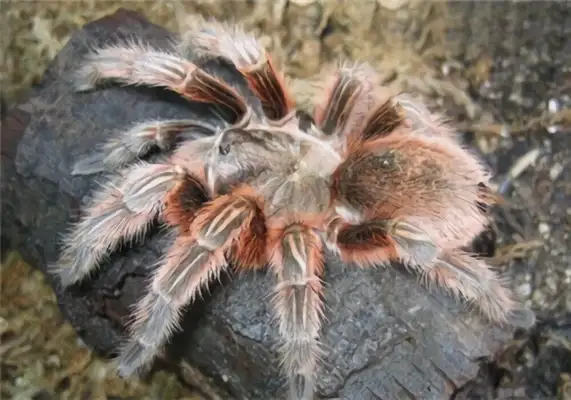
Gramostola porteri, born in Chile, loves living in the desert. Such a cobweb is mild, adaptable and market-priced and suitable for primary breeders. Even their names are attractive. They're the most popular pet spider in the insect market.
Chinese literary name: Red Rose Spider
Latin name: Gramostola porteri
Don't call it "Chilean red roses."
Context: Animals
Gates: arthropod doors
Platforms: spiders
I'm looking at spider eyes.
AAMA: OTA
Section: Bird-catching spiders
Name: Melo-Leitao, 1936
English name: Chilean Rose
Life: about 12 years of red rose spider morphology
The red rose spider, by name, the spider's skin color is dark red, very charming. It has very low toxicity, but it needs to be careful when raising it. In most cases, red rose spiders are very gentle and can play with their hands, but it cannot be ruled out that there are accidents. The total size of the red rose spider is about 7-8 cm and the total length is about 10-15 cm. Red Rose Spider Living Environment
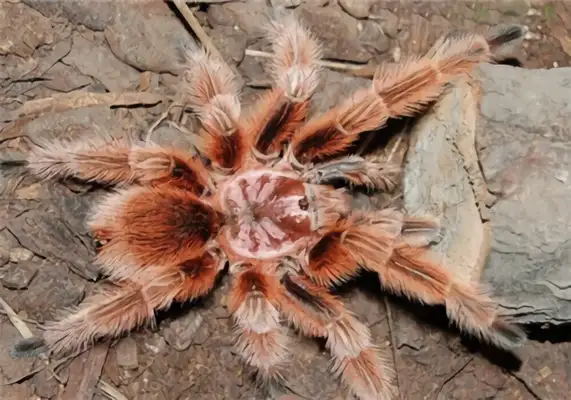
The red rose spiders are very attractive, so many of them choose glass boxes to watch. Because of the large size of the red rose spider, the rearing box should not be chosen in such a way as to look at the appearance of the box, the size of which is paramount and should be provided with a sufficiently large rearing box (usually 50 x 30 x 30 cm).
5-10 centimeters of clean sand or cylindrical stones are laid in the rearing boxes. Like other animals living in deserts, they do not need higher humidity (usually around 70 per cent, at least 40 per cent). The method is to place a light and steady disk containing wet sponges, which regulate the temperature and humidity of the rearing box and absorb spider excreta. It must also be provided with a shelter for its hideout, which can be made from branch bark or coconut shells. It is best to choose a large fish tank with a basin view in it for ease of appreciation.
Each Chilean red rose is to be raised independently in a covered rearing box, with the base being laid with cactus mud with a higher amount of sand (which can be bought at the florist market or, if not, with other soil or with direct use of river sand, although the sand is to be disinfected) or with sand mixed with non-bacterial soil, with two to four inches of thickness and pressure, with a tree hole or a small flower pot placed in the rearing box as its hideout and a diskette to provide water.
Temperature requirements: Low humidity of Chilean red roses, suitable for about 70 per cent or less, suitable for temperatures of about 25-27 degrees Celsius and reduced by about 3-5 degrees at night. During the winter, blankets can be used to warm (except for individual differences, spiders are not recommended to heat with light), while no heat protection equipment is required in the summer. Red Rose Spider-Breeding Knowledge
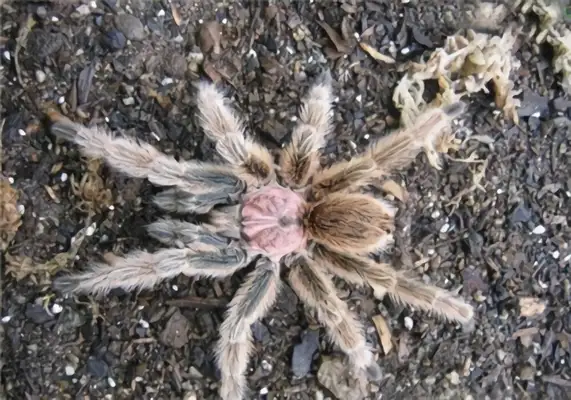
Red rose spiders should be one of the easiest spiders to feed, but careful care is essential. They are gentler, they do not attack people for no reason, they are not too demanding in their diet and they have a strong lifespan. The ability to adapt is also extraordinary.
Red rose spiders are less toxic, but don't look down on them. Don't play with spiders, they're arthropods. Unless it's allergy, the venom is harmless to humans.
It should be recalled that raising red rose spiders requires the preparation of a long sling with a water bottle for refilling or watering, for feeding, cleaning of residues and excreta, cleaning of internal hygiene, etc. The second is that the red rose spider needs water in the environment, so it needs to put a water basin in its rearing box, and also spray internal water to ensure moisture. And most hairy spiders don't like wet air like chameleons, so we don't recommend sprayers, but rather big-eye canteens. Where no canteen can be found, it can be replaced with plastic mineral water bottles with small holes on them.