Designation: PET6197
English name: Maureens iversoni
Character: lively
Country of origin: We have specific species. We only found Fujian and Guizhou.
Vulnerability to diseases: corrosive nails, white eye disease
Life: 30 to 50 years
Price: Price between $500 and $2,000 and price of seedlings around $100 for an avionic profile of turtle species
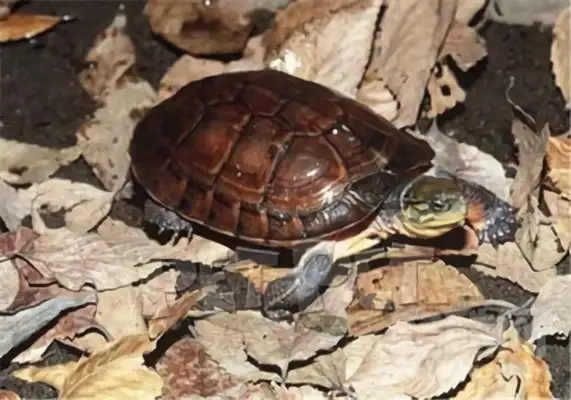
Aphids, also known as Fujian, are a unique species in our country. Only Fujian (South Ping and Jianyang) and Guizhou (in the centre, near Guiyang) have been found to be very rare and have been included in the List of Land-based Wildlife under State Protection, which was published by the State Forestry Administration of China on 1 August 2000 and is of great economic and scientific value.
There are now many workers who raise the farm of the avid turtle, where we can buy the turtle, whose shape is similar to that of the yellow throat turtle, which is widely distributed in the country, but more so in three main groups: Vietnamese rock turtles, large green head turtles (Aiwei turtles), and small green head turtles (Hiannan rock turtles). Turtle lovers generally refer to Vietnamese rock turtles as southern turtles (southern region) and to large and small green turtles as northern turtles (northern region).
Chinese name: Aphid turtle
Anonyms: Fu Jianjian, Green Head Turtle
Latin name: Maureens iversoni
Biology classification: vertebrate doors, reptiles, turtles, turtles, aphids.
Distribution: We have specific species. Only Fujian (South Ping and Jianyang) and Guizhou (Central, near Guiyang) were found.
Habitat: aquatic
Lifestyle: Aphid turtles have a suitable water temperature of about 22°C and water temperature of about 12°C enters the hibernation phase. Eichmann's turtles are gentler, not afraid of people.
Eatability: Aphid turtles are culinary, enjoyable meat, fish and shrimp, and small edible plants.
Size of body: 189 mm male, 193 mm female.
Reproduction characteristics: Eggs, but no information on the reproduction of aphid turtle has been reported.
Difficulty of raising: general
Hibernation: hibernation
Prices: Prices range from $500 to $2,000, depending on size, and the price of seedlings is around $100. Asterix drew on the morphological characteristics of the turtle.
Axe has 189 mm male and 193 mm female. The back is ambiguous, and the back is clear. On the back, the abdomen are stitched to the bone, if the abdomen are shorter than the abdomen; the larynx is prominent and the front end is dim; the back end of the anal shield is missing deep; the cortex and the abdominal shield is the longest, almost the same, and the condensation is the shortest. Toes are full. Seven cones, four sides of the first vertebrae; six sides of the 2nd to 4th vertebrae, with short sides behind; five sides of the 5,6 vertebrae, six sides of the 7th vertebrae, with short sides in front; and a medium-sized inner plate, with a ecstasy slit in one of the latter four parts. Eichmann's knowledge of sea turtle care.
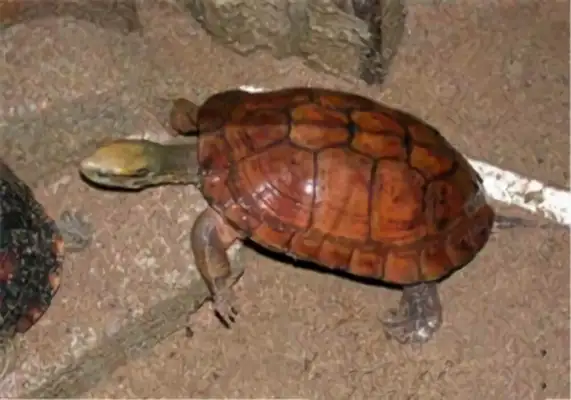
Aphids live in flashwater buffers or backwaters in hilly mountains. A variety of fruits, including fish, shrimp, snails, insects, and bananas. The eggs were laid in May-September, 2-3 times a year, each with a weight of about 13 grams. Turtle's head is blue, and it's called the Green Head.
Selection
In the selection of a parent, the individual is selected to be over 900 grams, complete, bright and healthy for seeding. The males are flat, their limbs are strong and their tails are thick. Owing to the nutritional adequacy of artificially grown turtles, rapid growth and even growth of the backnails, the annual wheels on the back armour are not clear and the actual age of the turtle is not easily judged.
It is important to know the actual years of breeding, since most of the proposed turtles are four weeks old before they mature to test eggs, and many warmer farmed turtles have reached 900 grams of weight for two or three years, but are unable to produce eggs for years, and the acquisition of such turtles will affect the recovery of investment benefits. In addition, it would be preferable for the selection of a parent turtle to be acquired in both farms at the same time and, upon return home, to feed the male tortoise swap pool to prevent the degradation of the next-of-kin breeding species.
Conservation
The majority of the areas in which the avionic turtles live are tropical monsoon climates, characterized by high temperatures and heavy rainfall, marked by dry and rainy seasons. The average annual temperature is 23-27°C, 23-25°C in the northern region and 26-27°C in the southern region. This temperature is suitable for the growth of turtles, so they grow faster and larger in natural conditions. In farming, therefore, the temperature is controlled as much as possible, with hibernation below 15°C, hot turtles at 35°C and hot turtles at 38°C for more than two hours. It is important to keep the temperature under control when artificially raised during winter. Asterious sea turtle living conditions.
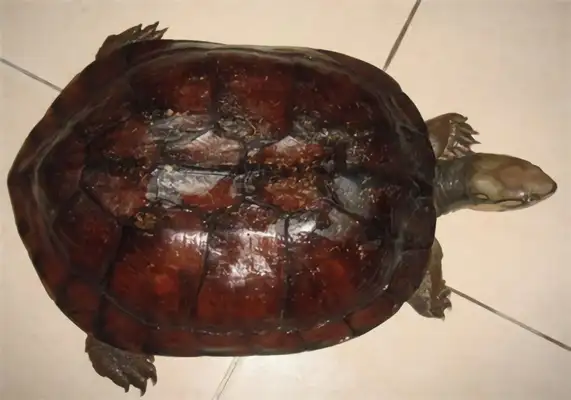
There is a debate about the species effectiveness of the Asterix turtle, which is located in places such as Fujian and Guizhou, China, at an altitude of 500 metres, and in ponds where the water flow is flat; however, according to the British magazine NATURE, the American scholar James Parham and the Chinese scholar Shi Seatao tests confirm: Aphid turtles are hybrid species of yellow throat turtles and three-line closed-hull turtles.
I. FIELD CONTEXT
Aphids are found occasionally in paddy fields, either in flash-flow buffer areas or in water return in hilly mountains. A variety of fruits, including fish, shrimp, snails, insects, and bananas. Turtle's head is blue, and it's called the Green Head. In mainland China, it is located in Fujian, Guizhou, etc. The species has its model origin near Nanping, Fujian.
II. ANNOUNCEMENTS
At present, turtles are mostly fed by turtles. The ponds used to mix turtles can be larger and fit 667-2668m2 per pond. The overall size of farming depends on the production plan. Farming sites require an open sun with sufficient water and no contamination. The pond is typically rectangular, with two parts of the pool and the beach. The pool accounts for three quarters and the beach for one quarter. The beach is connected to the pool at 25-30 degrees. Pool depth 2 ~ 2.5 m, constant water depth 1.5 m. Water intake and drainage systems are disaggregated, self-contained, and drainage is self-contained. 20-30 cm thick sand on the beach. The pond is surrounded by an open area about 1 m wide. It's also 20-30 cm thick. The perimeter is covered with a 60cm wall of bricks, zinc metal or asbestos debris. Inside the wall is smooth. Several platforms have been set up at the beach interface with the pool as bait platforms. The ponds are fenced in and out of the water to prevent turtles from escaping. Eichmann's idea of turtle breeding.
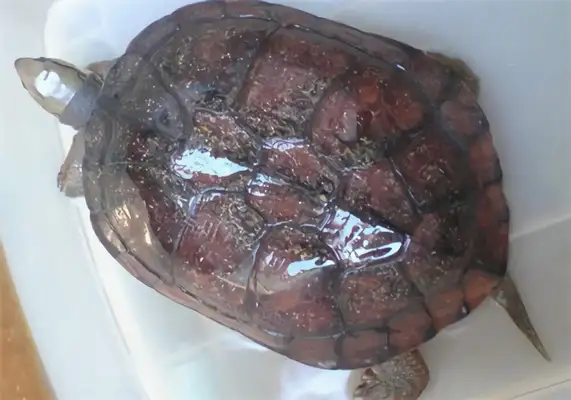
Aphid turtles are sea turtles, inhabiting mountain hills and rivers, most of the time hounding in the water, sometimes in the bush for food, impurity, wide range of food, wild insects, arthropods, small fish, shrimp, snails, wheat, rice, guacamole.
I. Optional foods
Aphid turtles living in nature eat aquatic insects, fish, amphibians, molluscs, aquatic plants, chain animals, shrimps, etc. We can match food according to their diet in their natural state, with as much respect as possible for nature, and turtle food can be properly supplemented.
Food consumption
1. Teenage: Asterix grows fast in larvae and needs timely food supplementation to acquire sufficient energy for body growth needs. The digestive system of seedlings is shorter and the digestive and absorbent functions are weak, so it is more appropriate for the seedling to eat less. While ensuring adequate food for the seedlings, it is important to maintain sufficient motion to consume the energy, if the seedlings survive in a smaller tank, with a small flow, and in order to remain in shape, the amount of food must be controlled.
2. Acoustics: Acoustics grow at a very slow pace, have been largely stereotyped and can be fed with appropriate lengths, but also with a relative balance of motion and food, a large environment, high mobility, high consumption, a relatively shorter feeding cycle and a relatively longer feeding cycle.
3. Seasonal and temperature-changed feeding common sense: The spring temperature is changing rapidly, the accelerator is passing through a long hibernation, and the digestive system is still in an inactive state, eating less, feeding more easily digestive foods and stretching the feeding cycle. Higher summer temperatures and faster digestion can increase food consumption and reduce the feeding cycle relatively. In the autumn, as the temperature slowly decreases, it is necessary to eat less and feed relatively good foods for hibernation. The average indoor temperature changes in family farming are small, but when the minimum temperature is below 16 degrees, care is taken to reduce or stop feeding, and the marked changes in temperature are during the spring and autumn seasons, which are frequent intestines.