No.: PET4465
Character: Very violent
Origin: Guyana in South America, Venezuela and the Amazon Basin in Brazil
Epidemic diseases: anchor disease, aqueous disease, albino disease
Life: Overview of map fish species 4-5 years
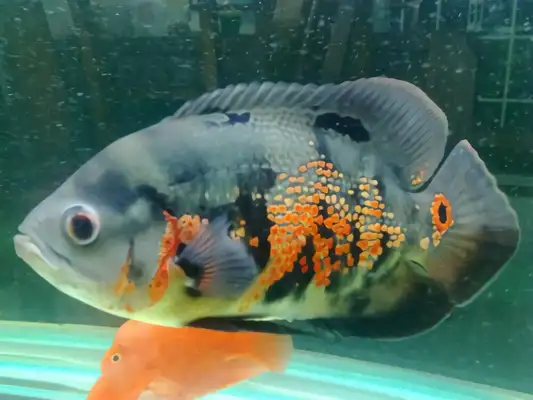
Mapfish is a relatively common tropical fish, which is larger in size and slow in movement, and which, although it is not customary, is an amazingly large diet. Experienced fish friends are also trained in map fish, even in the sense that they recognize the master, and in the case of well-trained map fish, who even jump out of the aquarium to receive bait from the master.
Origins: Guyana in South America, Venezuela, the Amazon basin in Brazil.
Fits to water temperature: 18-25°C.
Water quality requirements: alkalinity (pH): 7.0-7.5
Alias: Pigfish, tailfish, black pigfish, starfish. Leighfish.
Character: Very fierce, sometimes killing each other or eating their own little fish. But if it stays with other species of fish, it will protect its map fish shape.
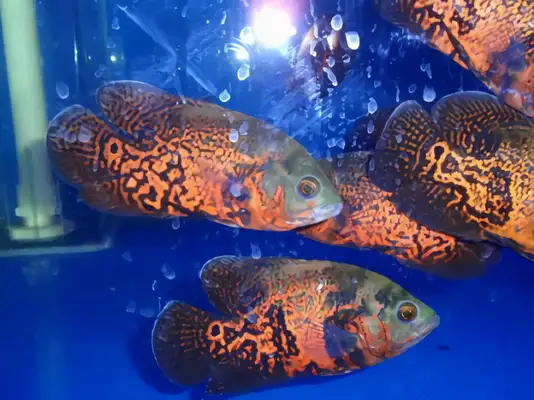
Mapfish are very special fish viewers, and they can also recognize their owners through their domestication. Although the mapfish are extremely aggressive and fights with other fish, other fish will be protected if they stay with other general species for a long time. It's interesting to raise a map fish, so it's more widespread.
Mapfish, a larger fish in tropical fish, can be as long as 30 cm under artificial rearing conditions and there are several different species. Map fish are large, thick, elliptical, tall and flat, tail fan, large, basically black, yellow or black, with irregular orange and red stripes on their sides, which are like maps. Large black dots on the red and yellow edges of mature fish tails, such as eyes, can be protective and attractive so that their prey cannot be separated and run away. Owing to its dark colour, also known as the black pigfish; the base of its tail is also composed of a middle black, golden-coloured fin, made up of shorter sawn-toothed thorns, the latter half consisting of longer fins; abdominal fin protractations; and arcs of the outer edge of the tail fin.
Mapfish colours, though monotonous, are unique in their form and have unique value for viewing, while at the same time their meat tastes beautiful and their food value. It was described that the map fish were very emotional after being ploughed and that when people approached the aquarium, they would swim and welcome it. Map fish breeding environment
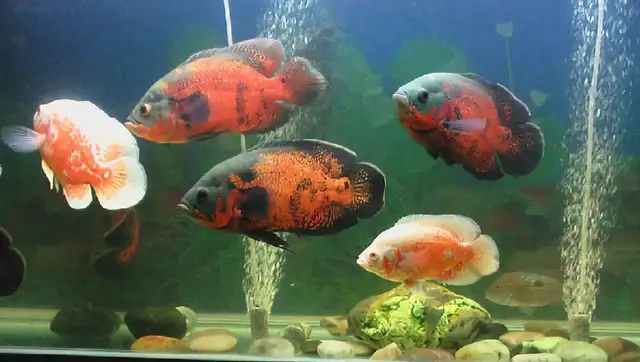
Mapfish are not highly water-intensive and are of a larger size in tropical fish, which under artificial conditions can reach 30 cm, so it is important to select larger aquariums for breeding.
Mapfish are easy to breed and are not difficult to breed and are therefore popular. It is not demanding water forage and is able to live normally in a weak acidic, neutral and alkaline water with a water temperature of 22-26 degrees Celsius. Mapfish appear to be clumsy, actually swimming with flexibility, agility, appetite for predatory animal baits, predatory fish, earthworms, quail, fish, shrimp, so it is not appropriate to mix with other fish. When feeding a family, care is taken about its groceries and, in addition to the small fish, shrimp, calf, etc., it can be fed with thin meat in order not to cause it to eat monolithic, non-fish shrimp.
Because of the size of the individual mapfish, larger aquariums must be chosen when raising the fish, which can plant some grass and replace one fifth of the new water per person. The colour of the map fish varies according to age, the brightness is closely related to the light, and adequate light should be given when raising the fish. Mapfish species are fast growing and have a long lifespan of more than 10 years, a long-lived tropical fish. Map fish feeding points
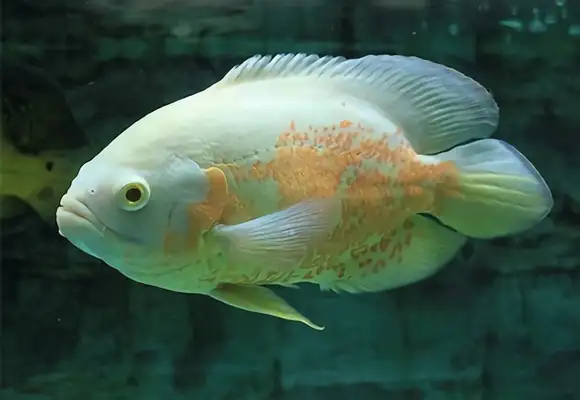
Mapfish are less demanding in terms of water quality, but because they are very greedy, they need to be fed with some attention. Science feeds to make mapfish more beautiful and healthy.
Map fish have a large diet and a high excretion capacity, so they grow fast, growing about 3 cm per month. However, as a result of the high levels of excretion, which result in serious contamination of water quality, they should be fed in groups, less at a time and not more than 10 per cent. When feeding a family, care is taken about its groceries and, in addition to the small fish, shrimp, calf, etc., it can be fed with thin meat in order not to cause it to eat monolithic, non-fish shrimp.
Mapfish are more gruesome, enjoyable animal baits, predatory fish, earthworms, pickles, small fish, shrimps, so it is not appropriate to mix them with other fish.